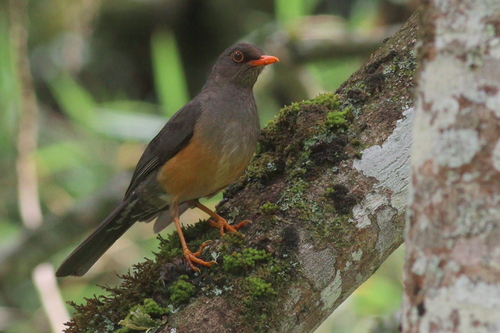
Somali Crow

Somali Crow

Corvus edithae

Silhouette: Peileppe · PhyloPic

LCLeast ConcernNTVUENCR
Daily sighting probability ~10% · With luck
at Bale Mountains National Park

In 3 days ~20% in a week ~40%

13 Verified sightings at Bale Mountains National Park From 2019 to 2026
28 In all 2 parks
November Best month
☀️ Diurnal When it's spotted

About the Somali Crow

The Somali crow, or dwarf raven (Corvus edithae), is approximately the size (44–46 cm in length) of the carrion crow, Corvus corone but with a longer bill and a somewhat more brownish cast to the feathers, especially when worn.

This species occurs principally in Somalia, Djibouti, the Ogaden and the Northern Frontier District in the Horn of Africa, and can be distinguished from the larger brown-necked raven C. ruficollis by its call, appearance and differences in its behaviour.

It was formerly considered a subspecies of the larger brown-necked raven (C. ruficollis), but is now considered to be a distinct species. This crow is thought to be closer to the pied crow C. albus by some authorities, especially in its behaviour, than to the brown-necked raven. Hybrid birds between the pied crow and the Somali crow appear to reinforce this close relationship where the two species meet.

The nest is a ravenlike bulky structure set in either a lone tree or on telegraph poles. It will nest on cliffs in coastal regions or areas where trees are unavailable. The 3-5 eggs are laid in April and early May. The voice is described as a harsh "caw" rather like the rook, Corvus... Wikipedia →

Sounds

Call0:20

Ethiopia · 2015

© Andrew Spencer · XC267772 · CC BY-NC-SA 4.0

Call0:12

Ethiopia · 2015

© Peter Boesman · XC300159 · CC BY-NC-ND 4.0

Call0:30

Somalia · 2010

© Bram Piot · XC66957 · CC BY-NC-ND 2.5

Global Distribution

Parks Where Found

# Park Country Daily sighting probability
1 Awash National Park 🇪🇹 Ethiopia
~10%
2 Bale Mountains National Park 🇪🇹 Ethiopia
~10%

Before you go

What are the chances of seeing a Somali Crow in Bale Mountains National Park?

With luck

About 10% of wildlife watchers report a Somali Crow sighting in Bale Mountains National Park on a given day, based on 13 verified sightings from GBIF citizen-science data from 2019 to 2026. It is the 84th most-seen of the 117 birds we can rate there. Over three days the chance rises to about 20%, and over a week to about 40%, if each day is a fresh chance.

When is the best time to see a Somali Crow in Bale Mountains National Park?

January, July and October–November

In those months about 10% of wildlife watchers report a Somali Crow in Bale Mountains National Park on a given day, against under 5% in February, April–June, August and December, the lowest months. March and September have too few records to rate.

What time of day is best to see a Somali Crow?

Between noon and 3 pm

Across all the parks we cover, that three-hour window holds the most Somali Crow sightings with a recorded time, and about 8 in 10 of them come between 6 am and 6 pm: it is a daytime animal.

Is Bale Mountains National Park the best place to see a Somali Crow?

Among the best

Of the 2 parks where we can rate Somali Crow sightings, Bale Mountains National Park ranks 2nd at about 10%, level with the leaders once rounded. The best odds are in Awash National Park (Ethiopia, about 10%).

Which relatives of the Somali Crow live in Bale Mountains National Park?

Same genus: Corvus

The closest relatives of the Somali Crow that you can see in Bale Mountains National Park (genus Corvus, Crows and Ravens) are Cape Crow (about 50%), Fan-tailed Raven (about 30%) and Thick-billed Raven (about 20%), with each one's daily chance of a sighting.

Where does the Somali Crow sighting chance come from?

GBIF citizen-science records

It is estimated from how often the Somali Crow is recorded against all the birds logged in Bale Mountains National Park (13 verified sightings from 2019 to 2026), calibrated against known sighting rates. Figures are rounded to the nearest 10% because citizen-science data supports honest approximations, not decimals, and months with records from fewer than five people show "—". How it works.

← Back to Bale Mountains National Park