Black Banded Bee Fly

Black Banded Bee Fly

Hemipenthes morio

Daily sighting probability ~10% · With luck
at Bavarian Forest National Park

In 3 days ~20% in a week ~30%

9 Verified sightings at Bavarian Forest National Park From 2019 to 2026
88 In all 6 parks
June Best month
☀️ Diurnal When it's spotted

About the Black Banded Bee Fly

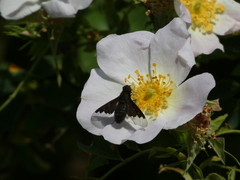
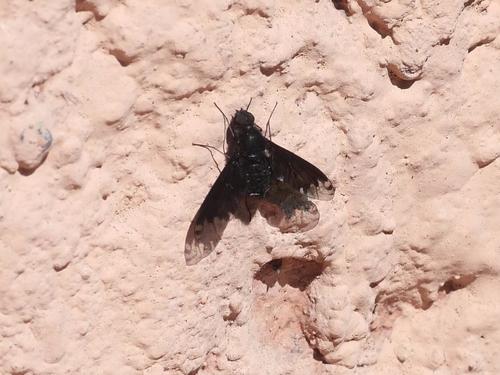
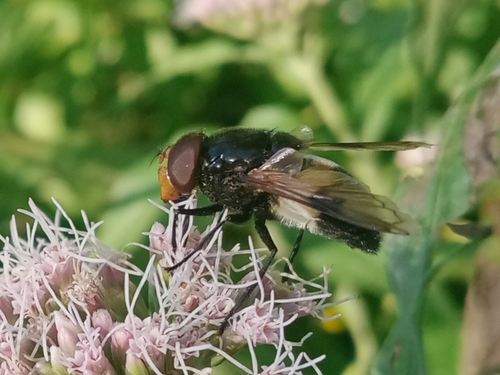
Hemipenthes morio is a species of bee fly belonging to the family Bombyliidae subfamily Anthracinae. This common bee-fly is mainly present in most of Europe, the eastern Palearctic realm, and the Near East. It is extremely similar to H. morioides, a species found in North America which was previously considered to be the same species as H. morio.

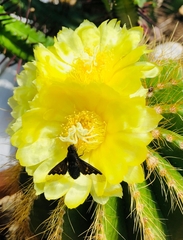
The adults grow up to 7–10 millimetres (0.28–0.39 in) long, while the wingspan reaches 5–15 millimetres (0.20–0.59 in). They can mostly be encountered from May through August feeding on nectar and pollen of a variety of flowers (for instance of Lavandula stoechas, Cytisus scoparius, Thapsia villosa, etc.).

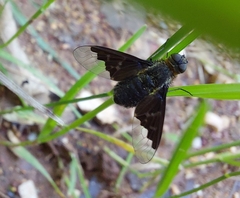
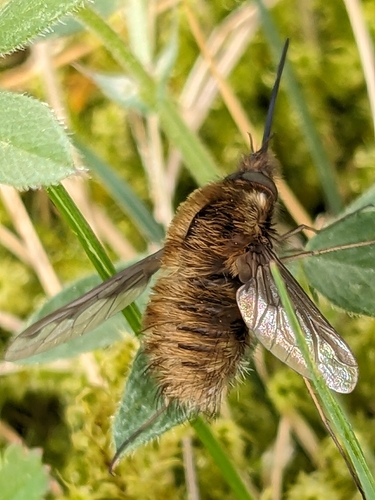
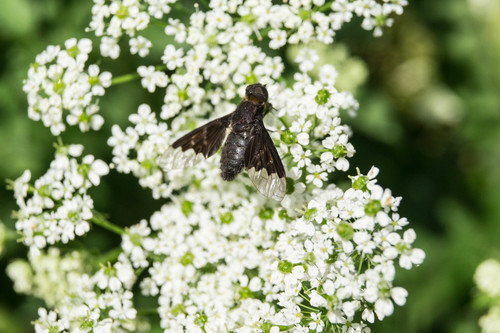
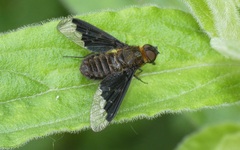
Their body is dark-brown and hairy, especially on the side of the abdomen. The wings have a light area located near the apex and a dark area close to costal margin, separated by a zig-zag division. The apex of cell R1 is hyaline. The dark area of the wings almost reaches the end of the abdomen.

The larvae are hyperparasites (parasites of parasites), mainly developing in larvae of flies (Diptera, Tachinidae), as well as in wasp larvae (Hymenoptera, Ichneumonidae) parasitizing caterpillars moths (Noctuidae). Wikipedia →
Global Distribution

Parks Where Found

# Park Country Daily sighting probability
1 Sierra Nevada National Park 🇪🇸 Spain
~10%
2 Cévennes National Park 🇫🇷 France
~10%
3 Fertő-Hanság National Park 🇭🇺 Hungary
~10%
4 Sierra de Guadarrama National Park 🇪🇸 Spain
~10%
5 Bavarian Forest National Park 🇩🇪 Germany
~10%
6 Pyrénées National Park 🇫🇷 France
<5%

Cities Where Found

# City Country Daily sighting probability
1 Kyiv 🇺🇦 Ukraine
~20%
2 Kharkiv 🇺🇦 Ukraine
~20%
3 Warsaw 🇵🇱 Poland
~20%
4 Sofia 🇧🇬 Bulgaria
~10%
5 Budapest 🇭🇺 Hungary
~10%
6 Vienna 🇦🇹 Austria
~10%
7 Athens 🇬🇷 Greece
~10%
8 Cologne 🇩🇪 Germany
~10%
9 Berlin 🇩🇪 Germany
~10%
10 Paris 🇫🇷 France
~10%

Before you go

What are the chances of seeing a Black Banded Bee Fly in Bavarian Forest National Park?

With luck

About 10% of wildlife watchers report a Black Banded Bee Fly sighting in Bavarian Forest National Park on a given day, based on 9 verified sightings from GBIF citizen-science data from 2019 to 2026. It is the 585th most-seen of the 1115 insects we can rate there. Over three days the chance rises to about 20%, and over a week to about 30%, if each day is a fresh chance.

When is the best time to see a Black Banded Bee Fly in Bavarian Forest National Park?

May and June

In those months about 10% of wildlife watchers report a Black Banded Bee Fly in Bavarian Forest National Park on a given day, against under 5% in July to April, the lowest months.

What time of day is best to see a Black Banded Bee Fly?

Between 11 am and 2 pm

Across all the parks we cover, that three-hour window holds the most Black Banded Bee Fly sightings with a recorded time, and about 9 in 10 of them come between 6 am and 6 pm: it is a daytime animal.

Is Bavarian Forest National Park the best place to see a Black Banded Bee Fly?

Among the best

Of the 6 parks where we can rate Black Banded Bee Fly sightings, Bavarian Forest National Park ranks 5th at about 10%, level with the leaders once rounded. The best odds are in Sierra Nevada National Park (Spain, about 10%), Cévennes National Park (France, about 10%) and Fertő-Hanság National Park (Hungary, about 10%).

Which relatives of the Black Banded Bee Fly live in Bavarian Forest National Park?

Same family: Bombyliidae

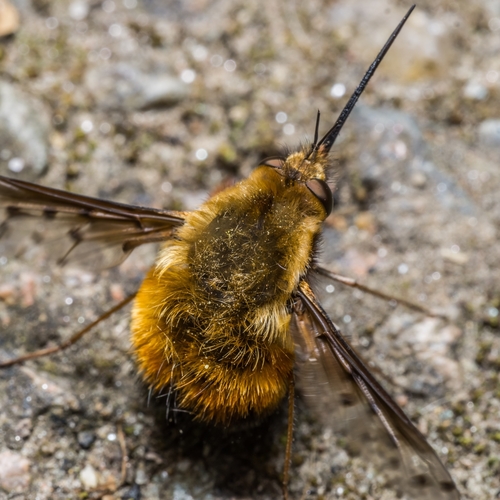
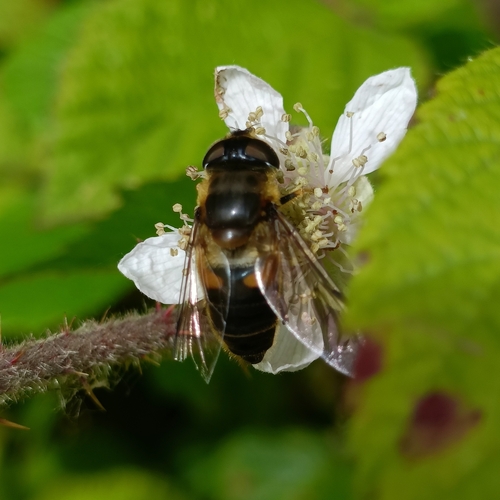
The closest relatives of the Black Banded Bee Fly that you can see in Bavarian Forest National Park (family Bombyliidae, Bee Flies) are Greater Bee Fly (about 10%), Anthracite Bee-Fly (about 10%) and Dotted Bee Fly (about 10%), with each one's daily chance of a sighting.

Where does the Black Banded Bee Fly sighting chance come from?

GBIF citizen-science records

It is estimated from how often the Black Banded Bee Fly is recorded against all the insects logged in Bavarian Forest National Park (9 verified sightings from 2019 to 2026), calibrated against known sighting rates. Figures are rounded to the nearest 10% because citizen-science data supports honest approximations, not decimals, and months with records from fewer than five people show "—". How it works.

← Back to Bavarian Forest National Park