Marbled Carpet Moth

Marbled Carpet Moth

Dysstroma truncata

Daily sighting probability ~10% · With luck
at Bavarian Forest National Park

In 3 days ~20% in a week ~40%

16 Verified sightings at Bavarian Forest National Park From 2019 to 2026
116 In all 6 parks
June Best month
☀️🌙 Day & Night When it's spotted

About the Marbled Carpet Moth

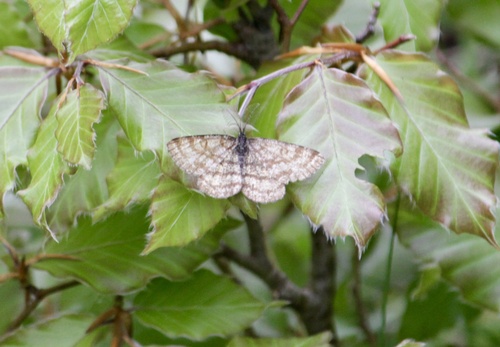
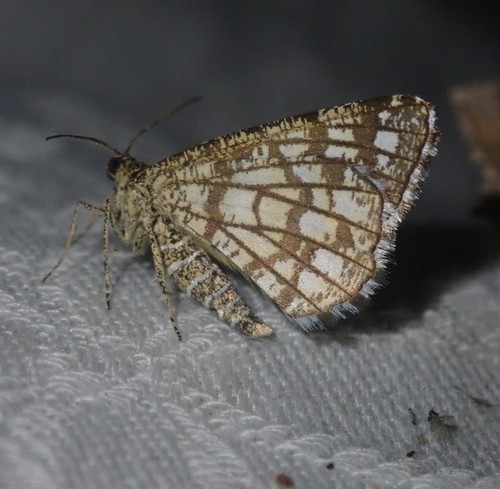
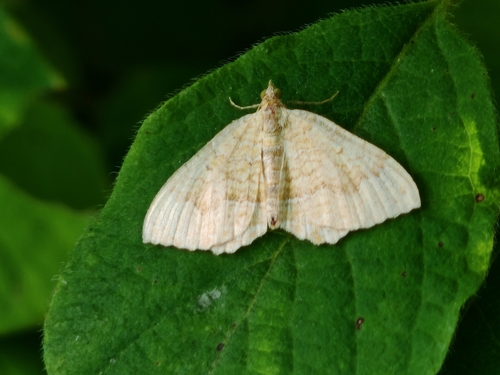
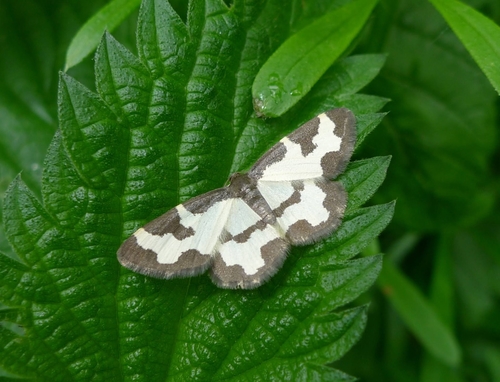
The common marbled carpet (Dysstroma truncata) is a moth of the family Geometridae. It is sometimes placed in the genus Chloroclysta. It is very common throughout the Palearctic region and the Near East. The species was first described by Johann Siegfried Hufnagel in 1767.

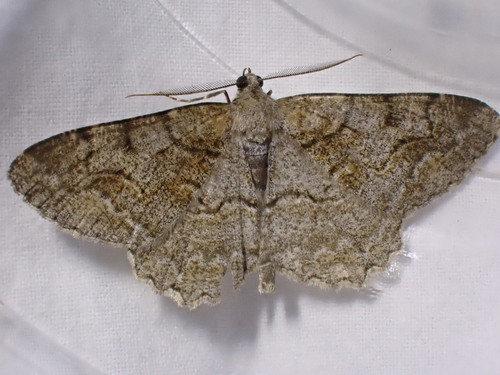
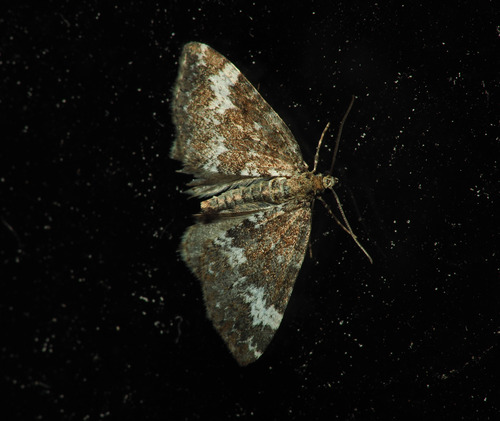
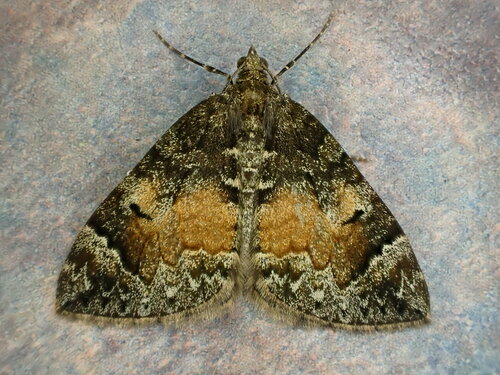
This is one of the most variable of the geometrids both in size (wingspan 32–39 mm) and colour. The basal and terminal areas of the forewings are marked with fascia separated by a large plain area in the middle, but the colouration of all these areas is confusingly variable from white to black with various grey, brown and reddish tones in between. The hindwings, though, are always pale grey marked with faint fascia. Some forms closely resemble Dysstroma citrata.

One or two broods are produced each year and the adults can be seen in any month from May to November.[1] The species flies at night and is attracted to light. It is also attracted to nectar-rich flowers and sugary foods which is fairly unusual for the family.

The larva is slender and green, usually with reddish stripes. It has been recorded feeding on a wide range of plants (see list below). The species overwinters as a larva. ^ The flight season refers to the British Isles. This may vary in other parts of the range. Wikipedia →
Global Distribution

Parks Where Found

# Park Country Daily sighting probability
1 Snowdonia National Park 🇬🇧 United Kingdom
~20%
2 Cairngorms National Park 🇬🇧 United Kingdom
~10%
3 Vanoise National Park 🇫🇷 France
~10%
4 Bavarian Forest National Park 🇩🇪 Germany
~10%
5 Wadden Sea National Park 🇩🇪 Germany
~10%
6 Pyrénées National Park 🇫🇷 France
<5%

Cities Where Found

# City Country Daily sighting probability
1 Liverpool 🇬🇧 United Kingdom
~30%
2 Birmingham 🇬🇧 United Kingdom
~10%
3 London 🇬🇧 United Kingdom
~10%
4 Manchester 🇬🇧 United Kingdom
~10%
5 Hamburg 🇩🇪 Germany
<5%
6 Copenhagen 🇩🇰 Denmark
<5%
7 Helsinki 🇫🇮 Finland
<5%
8 Paris 🇫🇷 France
<5%
9 Moscow 🇷🇺 Russia
<5%

Before you go

What are the chances of seeing a Marbled Carpet Moth in Bavarian Forest National Park?

With luck

About 10% of wildlife watchers report a Marbled Carpet Moth sighting in Bavarian Forest National Park on a given day, based on 16 verified sightings from GBIF citizen-science data from 2019 to 2026. It is the 317th most-seen of the 1115 insects we can rate there. Over three days the chance rises to about 20%, and over a week to about 40%, if each day is a fresh chance.

When is the best time to see a Marbled Carpet Moth in Bavarian Forest National Park?

May–June and August–September

In those months about 10% of wildlife watchers report a Marbled Carpet Moth in Bavarian Forest National Park on a given day, against under 5% in July and October–April, the lowest months.

What time of day is best to see a Marbled Carpet Moth?

Between 6 and 9 am

Across all the parks we cover, that three-hour window holds the most Marbled Carpet Moth sightings with a recorded time, and about 6 in 10 of them come between 6 am and 6 pm: it is seen both by day and at night.

Is Bavarian Forest National Park the best place to see a Marbled Carpet Moth?

4th of 6

Of the 6 parks where we can rate Marbled Carpet Moth sightings, Bavarian Forest National Park ranks 4th at about 10%. The best odds are in Snowdonia National Park (United Kingdom, about 20%), Cairngorms National Park (United Kingdom, about 10%) and Vanoise National Park (France, about 10%).

Where does the Marbled Carpet Moth sighting chance come from?

GBIF citizen-science records

It is estimated from how often the Marbled Carpet Moth is recorded against all the insects logged in Bavarian Forest National Park (16 verified sightings from 2019 to 2026), calibrated against known sighting rates. Figures are rounded to the nearest 10% because citizen-science data supports honest approximations, not decimals, and months with records from fewer than five people show "—". How it works.

← Back to Bavarian Forest National Park