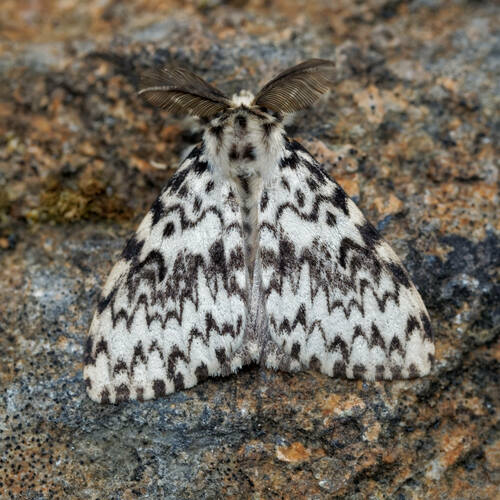
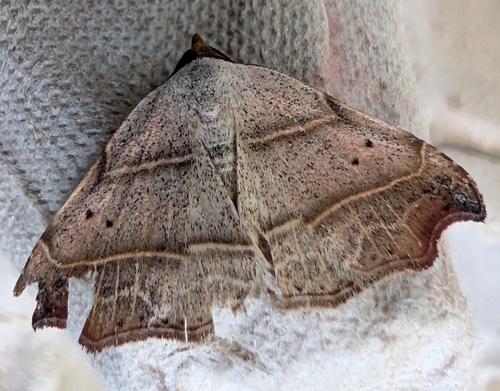
Rosy Footman

Rosy Footman

Miltochrista miniata

Daily sighting probability ~10% · With luck
at Bavarian Forest National Park

In 3 days ~30% in a week ~50%

25 Verified sightings at Bavarian Forest National Park From 2019 to 2026
76 In all 3 parks
June Best month
☀️🌙 Day & Night When it's spotted

About the Rosy Footman

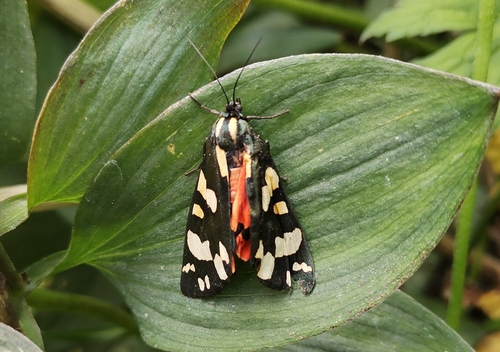
Miltochrista miniata, the rosy footman, is a moth of the family Erebidae. The species was first described by Johann Reinhold Forster in 1771. It is found in the temperate parts of the Palearctic realm – Europe, Asia Minor, Caucasus, northern Kazakhstan, southern Siberia, Amur, Primorye, Sakhalin, southern Kuriles, Heilongjiang, Liaoning, Hebei, Inner Mongolia, Shanxi, Sichuan, Korea and Japan, but may be replaced by Miltochrista rosaria in the eastern Palearctic.

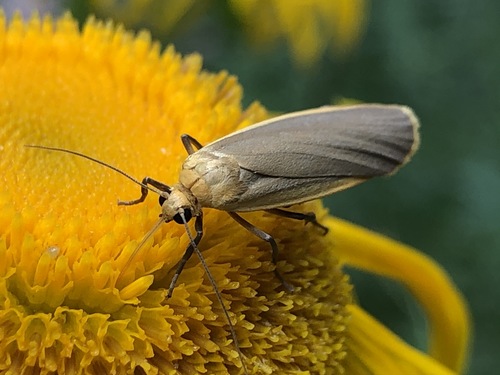
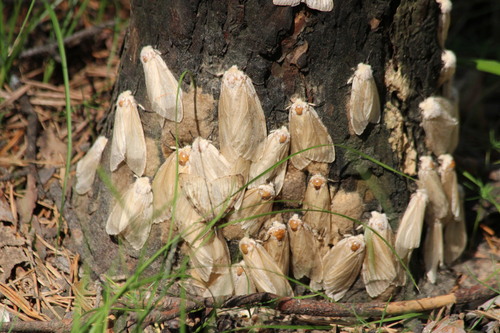
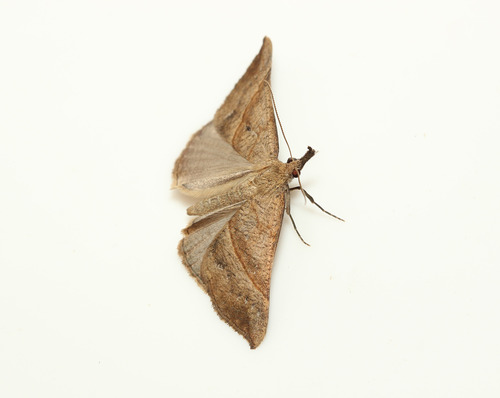
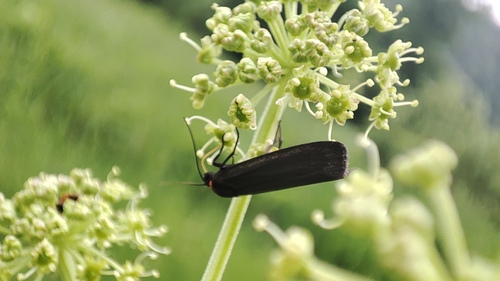
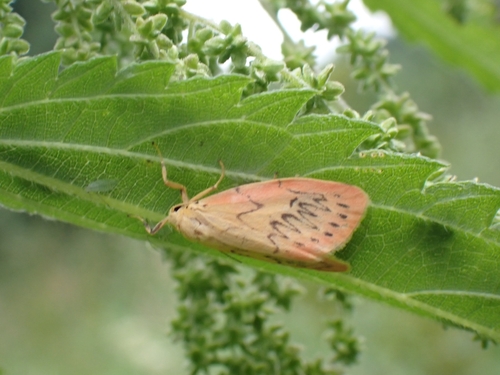
The wingspan is 23–27 mm. Tannish-peach ground colour, rose-red margin to the forewing, and on this wing a black dentate line beyond the middle, and black, elongate spots before the margin. In the male the costa is curved upwards beyond the apex of the cell. In ab. rosaria Butler (now full species Miltochrista rosaria), which is commoner in the east of the area of distribution than in the west, and is perhaps a distinct species, the ground colour is more yellow; and in ab. crogea Bignault the wings are quite pale yellow, the forewing being edged with bright yellow.

The moth flies from June to September depending on the location. Often occurs singly, in broadleaf and mixed... Wikipedia →
Global Distribution

Parks Where Found

# Park Country Daily sighting probability
1 Snowdonia National Park 🇬🇧 United Kingdom
~20%
2 Bavarian Forest National Park 🇩🇪 Germany
~10%
3 Pyrénées National Park 🇫🇷 France
~10%

Cities Where Found

# City Country Daily sighting probability
1 Porto 🇵🇹 Portugal
~10%
2 Kharkiv 🇺🇦 Ukraine
~10%
3 London 🇬🇧 United Kingdom
~10%
4 Paris 🇫🇷 France
<5%
5 Tokyo 🇯🇵 Japan
<5%
6 Moscow 🇷🇺 Russia
<5%

Before you go

What are the chances of seeing a Rosy Footman in Bavarian Forest National Park?

With luck

About 10% of wildlife watchers report a Rosy Footman sighting in Bavarian Forest National Park on a given day, based on 25 verified sightings from GBIF citizen-science data from 2019 to 2026. It is the 173rd most-seen of the 1115 insects we can rate there. Over three days the chance rises to about 30%, and over a week to about 50%, if each day is a fresh chance.

When is the best time to see a Rosy Footman in Bavarian Forest National Park?

June

In that month about 20% of wildlife watchers report a Rosy Footman in Bavarian Forest National Park on a given day, against under 5% in October to May, the lowest months.

What time of day is best to see a Rosy Footman?

Between 10 pm and 1 am

Across all the parks we cover, that three-hour window holds the most Rosy Footman sightings with a recorded time, and about half of them come between 6 am and 6 pm: it is seen both by day and at night.

Is Bavarian Forest National Park the best place to see a Rosy Footman?

2nd of 3

Of the 3 parks where we can rate Rosy Footman sightings, Bavarian Forest National Park ranks 2nd at about 10%. The best odds are in Snowdonia National Park (United Kingdom, about 20%).

Which relatives of the Rosy Footman live in Bavarian Forest National Park?

Same family: Erebidae

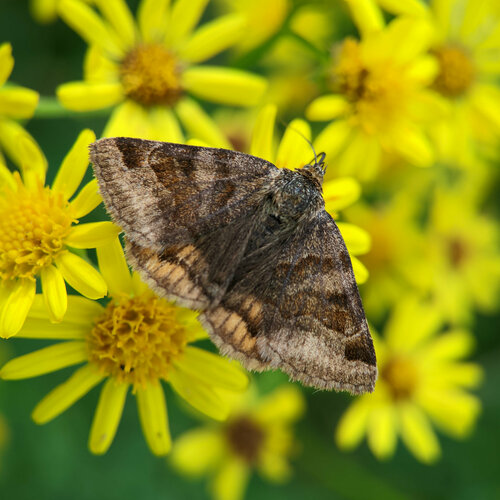
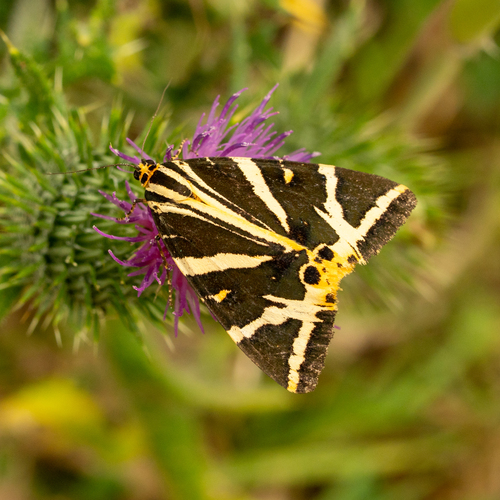
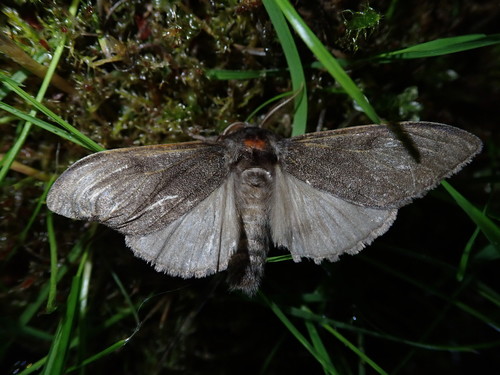
The closest relatives of the Rosy Footman that you can see in Bavarian Forest National Park (family Erebidae, Underwing, Tiger, Tussock, and Allied Moths) are Burnet Companion (about 20%), Jersey Tiger (about 20%) and Pale Tussock Moth (about 10%), with each one's daily chance of a sighting.

Where does the Rosy Footman sighting chance come from?

GBIF citizen-science records

It is estimated from how often the Rosy Footman is recorded against all the insects logged in Bavarian Forest National Park (25 verified sightings from 2019 to 2026), calibrated against known sighting rates. Figures are rounded to the nearest 10% because citizen-science data supports honest approximations, not decimals, and months with records from fewer than five people show "—". How it works.

← Back to Bavarian Forest National Park