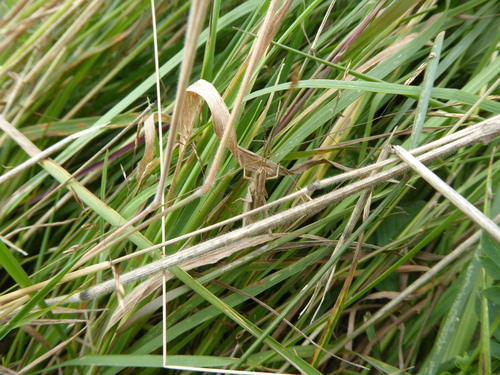
Dark Bush-Cricket

Dark Bush-Cricket

Pholidoptera griseoaptera

Daily sighting probability ~20% · Possible
at Białowieża National Park

In 3 days ~40% in a week ~70%

14 Verified sightings at Białowieża National Park From 2019 to 2026
282 In all 10 parks
September Best month
☀️ Diurnal When it's spotted

About the Dark Bush-Cricket

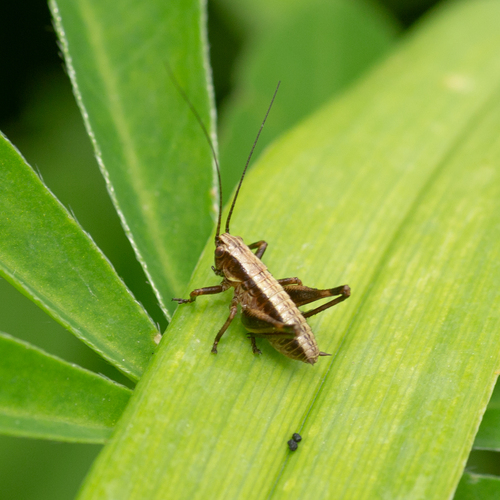
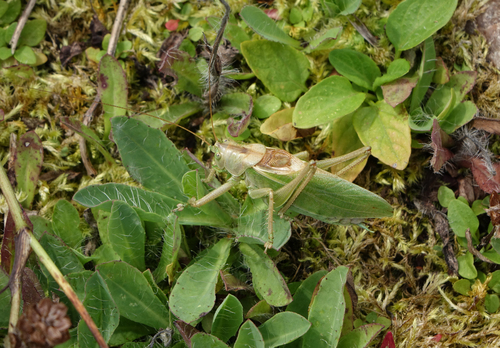
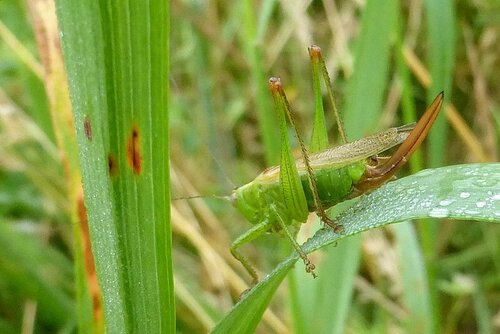
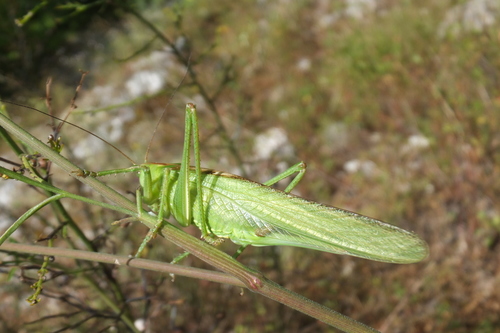
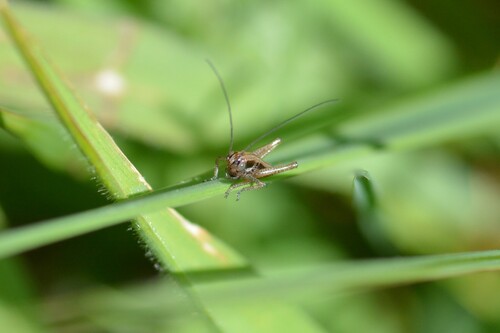
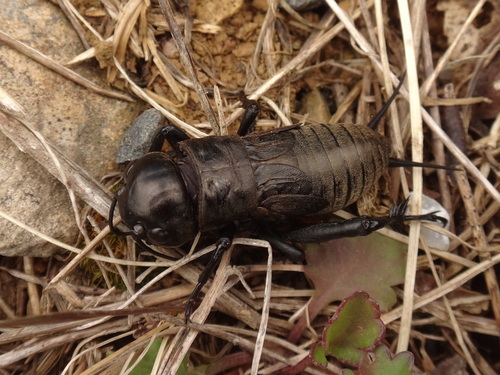
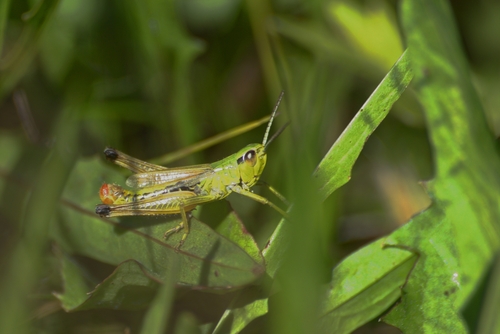
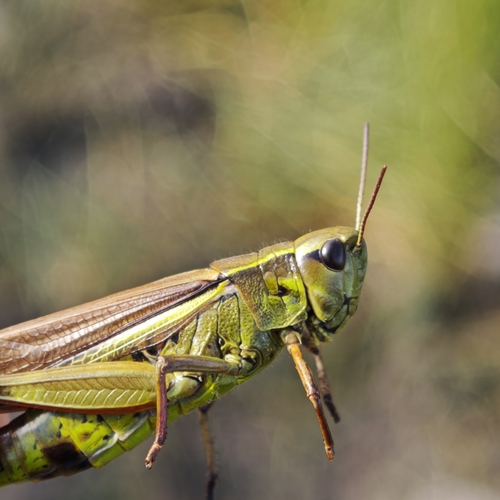
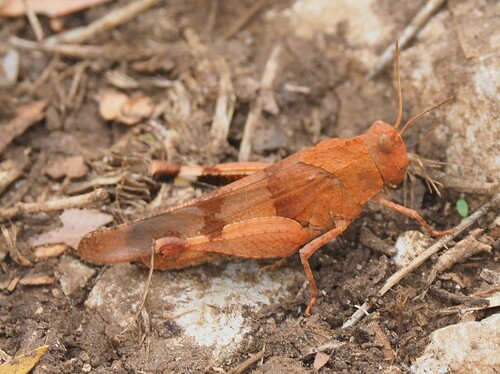
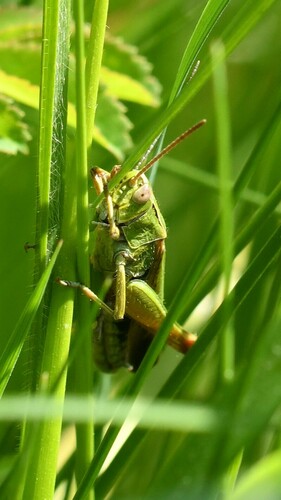
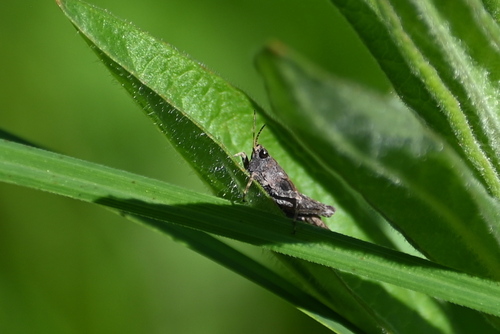
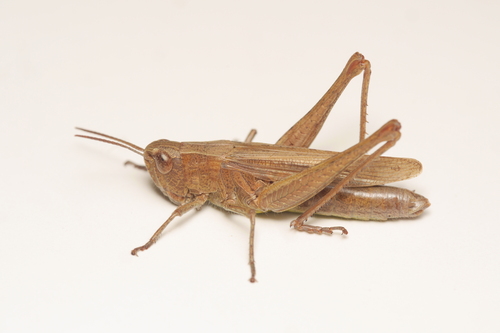
Pholidoptera griseoaptera, the dark bush-cricket, is a flightless species of European bush-cricket; it is the type species of its genus with no subspecies. Pholidoptera griseoaptera can reach a body length of 11 to 21 mm (males) and 15 to 20 mm (females), much smaller than the similar Pholidoptera aptera. The sickle-shaped and upward curved ovipositor of the females is 8 to 10 mm long, while the males have two short cerci. The antennae and the hind legs are quite long.

The rounded brachypterous wings of the males are brown with light brown to ochre-coloured edges and are about 5 mm in length (about as long as the pronotum). The females are almost wingless or have half-round, grey-brown fore-wings that are 1–2 mm long. Long-winged (macropterous) forms are not recorded.

This species can be found in Europe from northern Spain up to Crimea, Caucasus and the Near East. It is fairly common in Great Britain, but not recorded from Ireland. On the Isle of Man the species is legally protected under Schedule 5 of the Wildlife Act 1990, being found at only two coastal sites (Lonan and Glen Maye) at the extreme north of the species’ British Isles... Wikipedia →

Global Distribution

Parks Where Found

# Park Country Daily sighting probability
1 Triglav National Park 🇸🇮 Slovenia
~30%
2 Bavarian Forest National Park 🇩🇪 Germany
~20%
3 Białowieża National Park 🇵🇱 Poland
~20%
4 Picos de Europa National Park 🇪🇸 Spain
~10%
5 Hohe Tauern National Park 🇦🇹 Austria
~10%
6 Aigüestortes National Park 🇪🇸 Spain
~10%
7 Mercantour National Park 🇫🇷 France
~10%
8 Pyrénées National Park 🇫🇷 France
~10%
9 Cévennes National Park 🇫🇷 France
~10%
10 Fertő-Hanság National Park 🇭🇺 Hungary
~10%

Cities Where Found

# City Country Daily sighting probability
1 Vienna 🇦🇹 Austria
~20%
2 Prague 🇨🇿 Czechia
~20%
3 Kyiv 🇺🇦 Ukraine
~10%
4 Warsaw 🇵🇱 Poland
~10%
5 Helsinki 🇫🇮 Finland
~10%
6 Brussels 🇧🇪 Belgium
~10%
7 Budapest 🇭🇺 Hungary
~10%
8 Hamburg 🇩🇪 Germany
~10%
9 Munich 🇩🇪 Germany
~10%
10 Paris 🇫🇷 France
~10%

Before you go

What are the chances of seeing a Dark Bush-Cricket in Białowieża National Park?

Possible

About 20% of wildlife watchers report a Dark Bush-Cricket sighting in Białowieża National Park on a given day, based on 14 verified sightings from GBIF citizen-science data from 2019 to 2026. It is the 50th most-seen of the 158 insects we can rate there. Over three days the chance rises to about 40%, and over a week to about 70%, if each day is a fresh chance.

When is the best time to see a Dark Bush-Cricket in Białowieża National Park?

September

In that month about 40% of wildlife watchers report a Dark Bush-Cricket in Białowieża National Park on a given day, against under 5% in June–July and October–April, the lowest months.

What time of day is best to see a Dark Bush-Cricket?

Between 2 and 5 pm

Across all the parks we cover, that three-hour window holds the most Dark Bush-Cricket sightings with a recorded time, and about 8 in 10 of them come between 6 am and 6 pm: it is a daytime animal.

Is Białowieża National Park the best place to see a Dark Bush-Cricket?

3rd of 10

Of the 10 parks where we can rate Dark Bush-Cricket sightings, Białowieża National Park ranks 3rd at about 20%. The best odds are in Triglav National Park (Slovenia, about 30%) and Bavarian Forest National Park (Germany, about 20%).

Where does the Dark Bush-Cricket sighting chance come from?

GBIF citizen-science records

It is estimated from how often the Dark Bush-Cricket is recorded against all the insects logged in Białowieża National Park (14 verified sightings from 2019 to 2026), calibrated against known sighting rates. Figures are rounded to the nearest 10% because citizen-science data supports honest approximations, not decimals, and months with records from fewer than five people show "—". How it works.

← Back to Białowieża National Park