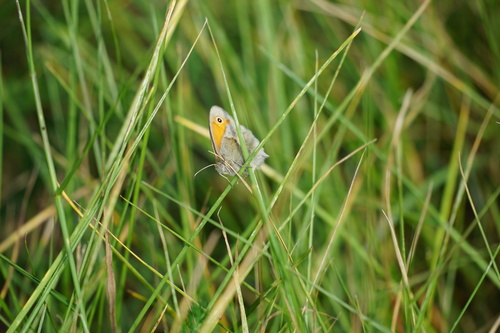
About the Green Forester Moth
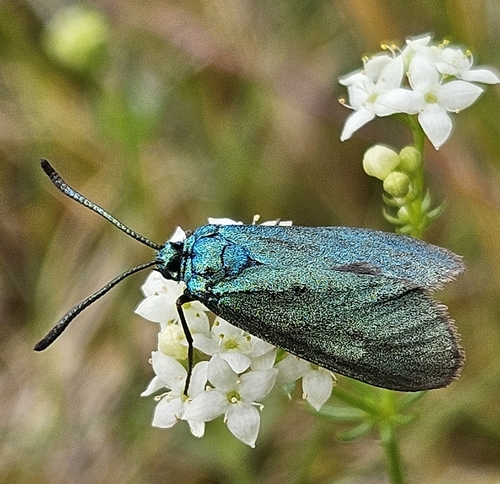
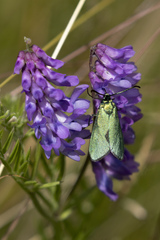
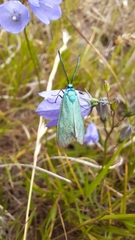
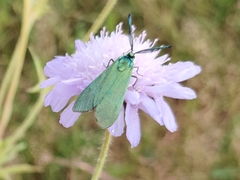
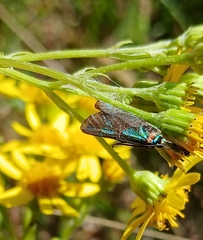
Adscita statices, (also known as the forester and the green forester), is a day-flying moth of the family Zygaenidae. First described by the Swedish biologist Carl Linnaeus in 1758, it is found in Asia and Europe. The wingspan is 25–28 millimetres (0.98–1.10 in). The antennae, head, thorax, legs and abdomen are shiny green (the thorax is occasionally blue green and shimmering). However, the wings may appear rusty-red in the early morning and evening. The wide forewings are less glossy than the body, mostly blue green, sometimes also green to yellow green. The fringes are blackish grey. The hindwings are moderately wide with a slightly truncated rim, They are slightly transparent, blackish grey and lightened basally. The underside of both pairs of wings is grey. The caterpillars are pale yellowish-green with a central dark stripe and fine white hairs dorsally.
The wings of the green forester contain two types of colored scales, of which one contains pores of different sizes. These pores are able to fill with water, which causes the color of the scales to change from green to rusty-red.
The moth flies in sunshine from mid-May to early August. Ovum Eggs... Wikipedia →