Daily sighting probability ~20% · Possible
at Big Cypress National Preserve

In 3 days ~40% in a week ~70%

26 Verified sightings at Big Cypress National Preserve From 2019 to 2026
345 In all 7 parks
October Best month
☀️🌙 Day & Night When it's spotted

About the Io Moth

Automeris io, the Io moth (EYE-oh) or peacock moth, is a colorful North American moth in the family Saturniidae. The Io moth is also a member of the subfamily Hemileucinae. The name Io comes from Greek mythology in which Io was a mortal lover of Zeus. The Io moth ranges from the southeast corner of Manitoba and in the southern extremes of Ontario, Quebec, New Brunswick and Nova Scotia in Canada, and in the US it is found from Montana, North Dakota, South Dakota, Nebraska, Colorado, New Mexico, Texas, Utah, east of those states and down to the southern end of Florida. The species was first described by Johan Christian Fabricius in 1775.

Imagines (sexually mature, reproductive stage) have a wingspan of 2.5–3.5 inches (63–88 mm). This species is sexually dimorphic: males have bright yellow forewings, body, and legs, while females have reddish-brown to purple forewings, body, and legs. The males also have much bigger plumose (feathery) antennae than the females. Both males and females have one big black to bluish eyespot with some white in the center, on each hindwing. Some hybridizations have resulted in variations in these hindwing eyespots. Adults live 1–2 weeks... Wikipedia →

Global Distribution

Parks Where Found

# Park Country Daily sighting probability
1 Great Smoky Mountains National Park 🇺🇸 United States
~20%
2 Big Cypress National Preserve 🇺🇸 United States
~20%
3 Shenandoah National Park 🇺🇸 United States
~10%
4 Everglades National Park 🇺🇸 United States
~10%
5 Cumbres de Monterrey National Park 🇲🇽 Mexico
~10%
6 Congaree National Park 🇺🇸 United States
~10%
7 Merritt Island National Wildlife Refuge 🇺🇸 United States
~10%

Cities Where Found

# City Country Daily sighting probability
1 Miami 🇺🇸 United States
~20%
2 San Luis Potosí 🇲🇽 México
~10%
3 Austin 🇺🇸 United States
~10%
4 Houston 🇺🇸 United States
~10%
5 Monterrey 🇲🇽 México
~10%
6 Orlando 🇺🇸 United States
<5%
7 Philadelphia 🇺🇸 United States
<5%
8 San Antonio 🇺🇸 United States
<5%
9 Mexico City 🇲🇽 México
<5%
10 Dallas 🇺🇸 United States
<5%

Before you go

What are the chances of seeing an Io Moth in Big Cypress National Preserve?

Possible

About 20% of wildlife watchers report an Io Moth sighting in Big Cypress National Preserve on a given day, based on 26 verified sightings from GBIF citizen-science data from 2019 to 2026. It is the 34th most-seen of the 262 insects we can rate there. Over three days the chance rises to about 40%, and over a week to about 70%, if each day is a fresh chance.

When is the best time to see an Io Moth in Big Cypress National Preserve?

July and October

In those months about 30% of wildlife watchers report an Io Moth in Big Cypress National Preserve on a given day, against under 5% in August and September, the lowest months.

What time of day is best to see an Io Moth?

Between 9 am and noon

Across all the parks we cover, that three-hour window holds the most Io Moth sightings with a recorded time, and about 7 in 10 of them come between 6 am and 6 pm: it is seen both by day and at night.

Is Big Cypress National Preserve the best place to see an Io Moth?

Among the best

Of the 7 parks where we can rate Io Moth sightings, Big Cypress National Preserve ranks 2nd at about 20%, level with the leaders once rounded. The best odds are in Great Smoky Mountains National Park (United States, about 20%).

Which relatives of the Io Moth live in Big Cypress National Preserve?

Same family: Saturniidae

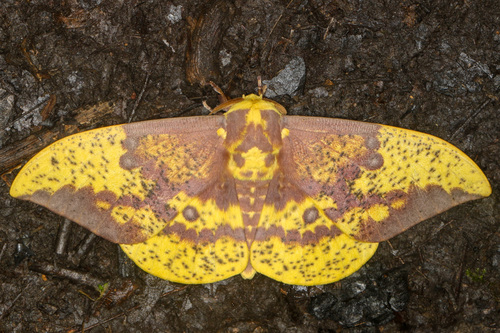
The closest relatives of the Io Moth that you can see in Big Cypress National Preserve (family Saturniidae, Emperor and Giant Silk Moths) are Pink-Striped Oakworm Moth (about 20%), Imperial Moth (about 20%) and Polyphemus Moth (about 10%), with each one's daily chance of a sighting.

Where does the Io Moth sighting chance come from?

GBIF citizen-science records

It is estimated from how often the Io Moth is recorded against all the insects logged in Big Cypress National Preserve (26 verified sightings from 2019 to 2026), calibrated against known sighting rates. Figures are rounded to the nearest 10% because citizen-science data supports honest approximations, not decimals, and months with records from fewer than five people show "—". How it works.

← Back to Big Cypress National Preserve