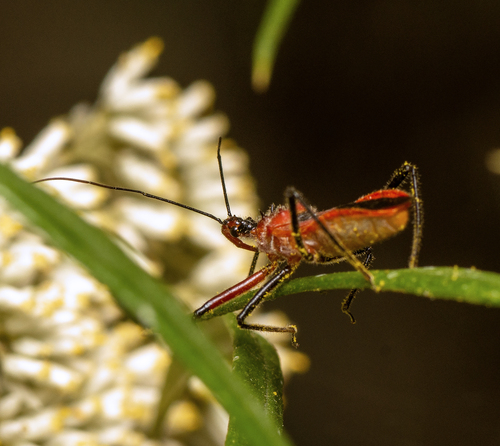
Australian Water Scorpion

Australian Water Scorpion

Laccotrephes tristis

Silhouette: PhyloPic

Endemic
Daily sighting probability ~10% · With luck
at Blue Mountains National Park

In 3 days ~20% in a week ~30%

11 Verified sightings at Blue Mountains National Park From 2019 to 2026
25 In all 3 parks
June Best month
🌅 Crepuscular When it's spotted

About the Australian Water Scorpion

Laccotrephes tristis is a species of water scorpion also commonly known as a toe-biter, that occurs Australia-wide and is part of the family Nepidae. They are an aquatic predatory insect that breathe air. Australian water scorpions inhabit shallow stagnant water, part of freshwater creeks, waterholes and gorges.

Laccotrephes tristis is brownish in colour with a broad oval shaped, flat body, at a length of 11–45 mm (0.43–1.77 in). Adult males have smaller body lengths (26–32 mm (1.0–1.3 in)) than females (31–35.5 mm (1.22–1.40 in)).

Australian water scorpions have six legs; the front two forelegs are pincer-like used for grasping aquatic prey and the hind legs are used for moving about. They have a relatively short, pointed head and small eyes. They have antennae with 3 segments and a finder-like projection, hidden in a groove beneath the eyes.

Water scorpions get their name from the tail-like respiratory siphon located on the end of their abdomen. The respiratory siphon is at least three quarters the length of the body. They use this siphon to transport air (a bit like a snorkel). A water scorpion breaths air from an air bubble trapped beneath its wings, which includes... Wikipedia →

Global Distribution

Parks Where Found

# Park Country Daily sighting probability
1 Uluru-Kata Tjuta National Park 🇦🇺 Australia
~20%
2 Grampians National Park 🇦🇺 Australia
~10%
3 Blue Mountains National Park 🇦🇺 Australia
~10%

Cities Where Found

# City Country Daily sighting probability
1 Brisbane 🇦🇺 Australia
<5%
2 Melbourne 🇦🇺 Australia
<5%
3 Sydney 🇦🇺 Australia
<5%

Before you go

What are the chances of seeing an Australian Water Scorpion in Blue Mountains National Park?

With luck

About 10% of wildlife watchers report an Australian Water Scorpion sighting in Blue Mountains National Park on a given day, based on 11 verified sightings from GBIF citizen-science data from 2019 to 2026. It is the 409th most-seen of the 789 insects we can rate there. Over three days the chance rises to about 20%, and over a week to about 30%, if each day is a fresh chance.

When is the best time to see an Australian Water Scorpion in Blue Mountains National Park?

January, March, June and October–November

In those months about 10% of wildlife watchers report an Australian Water Scorpion in Blue Mountains National Park on a given day, against under 5% in February, April–May, July–September and December, the lowest months.

What time of day is best to see an Australian Water Scorpion?

Between 10 am and 1 pm

Across all the parks we cover, that three-hour window holds the most Australian Water Scorpion sightings with a recorded time, and about 6 in 10 of them come between 6 am and 6 pm: it is most active around dawn and dusk.

Is Blue Mountains National Park the best place to see an Australian Water Scorpion?

3rd of 3

Of the 3 parks where we can rate Australian Water Scorpion sightings, Blue Mountains National Park ranks 3rd at about 10%. The best odds are in Uluru-Kata Tjuta National Park (Australia, about 20%) and Grampians National Park (Australia, about 10%).

Which relatives of the Australian Water Scorpion live in Blue Mountains National Park?

Same order: Hemiptera

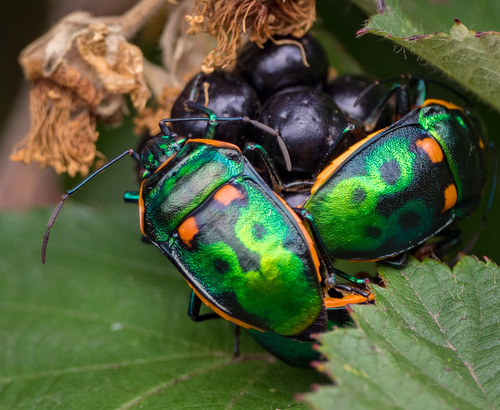
The closest relatives of the Australian Water Scorpion that you can see in Blue Mountains National Park (order Hemiptera, True Bugs, Hoppers, Aphids, and allies) are Green Grocer (about 40%), Metallic Shield Bug (about 20%) and Razor Grinder (about 20%), with each one's daily chance of a sighting.

Where does the Australian Water Scorpion sighting chance come from?

GBIF citizen-science records

It is estimated from how often the Australian Water Scorpion is recorded against all the insects logged in Blue Mountains National Park (11 verified sightings from 2019 to 2026), calibrated against known sighting rates. Figures are rounded to the nearest 10% because citizen-science data supports honest approximations, not decimals, and months with records from fewer than five people show "—". How it works.

← Back to Blue Mountains National Park