Banana Cockroach

Banana Cockroach

Panchlora nivea

Daily sighting probability ~10% · With luck
at Braulio Carrillo National Park

In 3 days ~30% in a week ~60%

18 Verified sightings at Braulio Carrillo National Park From 2019 to 2026
35 In all 4 parks
February Best month
🌙 Nocturnal When it's spotted

About the Banana Cockroach

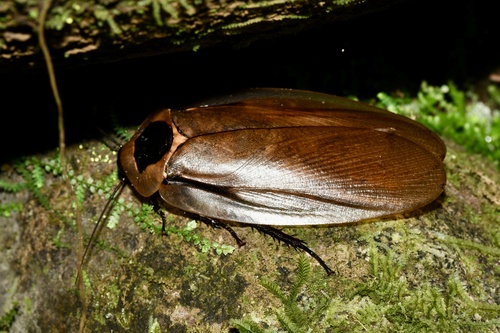
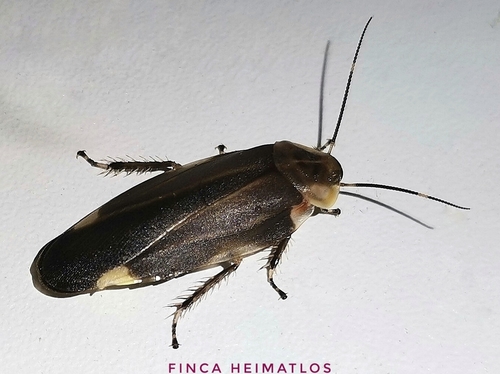
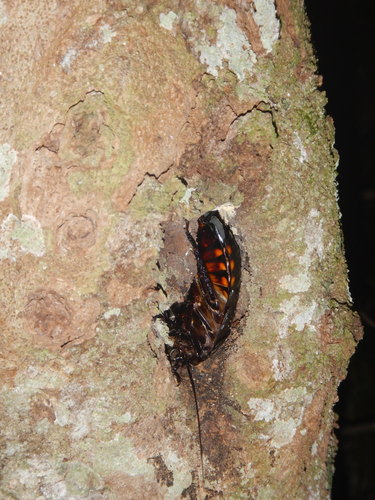
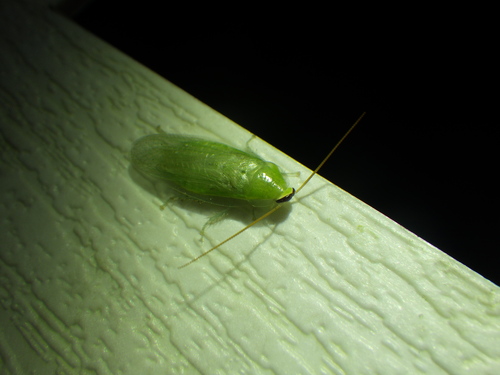
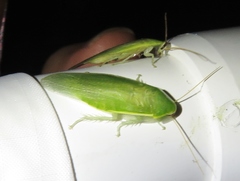
Panchlora nivea, the Cuban cockroach or green banana cockroach, is a small species of cockroach in the subfamily Panchlorinae. It is found in the subtropical or tropical climates of Cuba, the Caribbean and southern US: along the Gulf Coast from Florida to Texas and has been observed as far north as Moncks Corner, South Carolina. Panchlora nivea got into the US through Caribbean fruit shipments.

The females can grow up to 24 mm and the smaller males are 12 to 15 mm long. They are winged and strong fliers, pale green to yellowish green in colour, with a yellow line running up the sides. The nymphs are brown or black and are burrowers.

The ootheca (egg case) is 3–4 mm (0.12–0.16 in) long, is curved, and has indentations that show where the eggs are located. A study found that they contained 28 to 60 eggs (average 46). The ootheca is carried internally by the female until the eggs hatch. At 24 °C (75 °F) the eggs hatch in about 48 days, after which male nymphs mature in about 144 days, and female nymphs mature in about 181 days.

Panchlora nivea is usually an outdoor species and is rarely found indoors, so is not considered a pest. The adults can often... Wikipedia →
Global Distribution

Parks Where Found

# Park Country Daily sighting probability
1 Braulio Carrillo National Park 🇨🇷 Costa Rica
~10%
2 Soberanía National Park 🇵🇦 Panama
~10%
3 Everglades National Park 🇺🇸 United States
<5%
4 Monteverde Cloud Forest Reserve 🇨🇷 Costa Rica
<5%

Cities Where Found

# City Country Daily sighting probability
1 Austin 🇺🇸 United States
<5%
2 Houston 🇺🇸 United States
<5%
3 Miami 🇺🇸 United States
<5%
4 Dallas 🇺🇸 United States
<5%

Before you go

What are the chances of seeing a Banana Cockroach in Braulio Carrillo National Park?

With luck

About 10% of wildlife watchers report a Banana Cockroach sighting in Braulio Carrillo National Park on a given day, based on 18 verified sightings from GBIF citizen-science data from 2019 to 2026. It is the 117th most-seen of the 378 insects we can rate there. Over three days the chance rises to about 30%, and over a week to about 60%, if each day is a fresh chance.

When is the best time to see a Banana Cockroach in Braulio Carrillo National Park?

February and December

In those months about 20% of wildlife watchers report a Banana Cockroach in Braulio Carrillo National Park on a given day, against under 5% in May and August–November, the lowest months.

What time of day is best to see a Banana Cockroach?

Between 7 and 10 pm

Across all the parks we cover, that three-hour window holds the most Banana Cockroach sightings with a recorded time, and about 9 in 10 of them come between 6 pm and 6 am: it is mostly seen at night.

Is Braulio Carrillo National Park the best place to see a Banana Cockroach?

Yes

Of the 4 parks where we can rate Banana Cockroach sightings, Braulio Carrillo National Park has the highest daily chance: about 10%. Next come Soberanía National Park (Panama, about 10%) and Everglades National Park (United States, under 5%).

Which relatives of the Banana Cockroach live in Braulio Carrillo National Park?

Same family: Blaberidae

The closest relatives of the Banana Cockroach that you can see in Braulio Carrillo National Park (family Blaberidae, Giant Cockroaches) are Giant Cave Cockroach (about 30%) and Achroblatta luteola (about 10%), with each one's daily chance of a sighting.

Where does the Banana Cockroach sighting chance come from?

GBIF citizen-science records

It is estimated from how often the Banana Cockroach is recorded against all the insects logged in Braulio Carrillo National Park (18 verified sightings from 2019 to 2026), calibrated against known sighting rates. Figures are rounded to the nearest 10% because citizen-science data supports honest approximations, not decimals, and months with records from fewer than five people show "—". How it works.

← Back to Braulio Carrillo National Park