Giant Cave Cockroach

Giant Cave Cockroach

Blaberus giganteus

Daily sighting probability ~30% · Possible
at Braulio Carrillo National Park

In 3 days ~70% in a week ~90%

91 Verified sightings at Braulio Carrillo National Park From 2019 to 2026
223 In all 12 parks
March Best month
🌙 Nocturnal When it's spotted

About the Giant Cave Cockroach

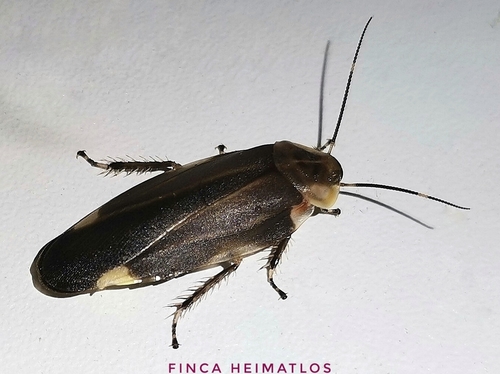
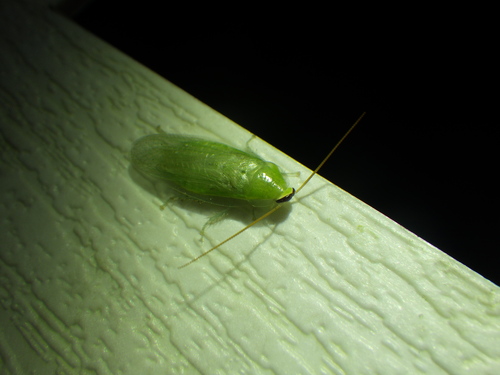
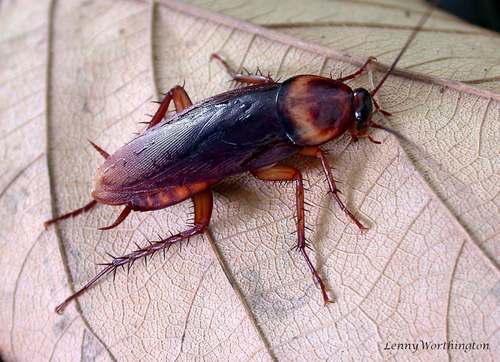
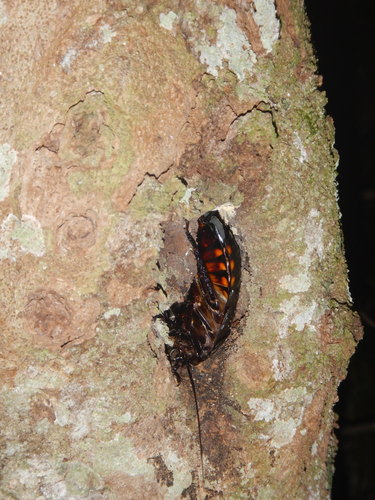
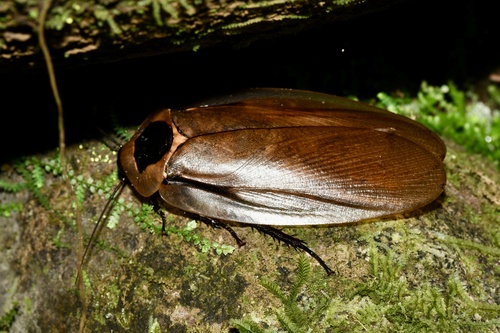
Blaberus giganteus, the Central American giant cave cockroach or Brazilian cockroach, is a cockroach belonging to the family Blaberidae. One of the world's largest cockroaches, it is native to the warm parts of the Neotropical realm.

Blaberus giganteus is considered one of the largest cockroaches in the world, with males reaching lengths of up to 7.5 cm (3.0 in) and females 10 cm (3.9 in), although others list 9 cm (3.5 in) as the maximum length. These cockroaches are lightly built with flattened bodies, allowing them to hide in cracks from predators. Their bodies are brown with black markings. The wingspan of these insects is usually around 15 cm (6 in). Both males and females bear paired appendages (cerci) on the last abdominal segment, but only the males have a pair of tiny hair-like appendages called styli. Adults bear two pairs of wings folding back over the abdomen. The heavier females are less likely to fly.

This species is endemic to the Neotropics and can be found in caves and rainforests in Mexico, Guatemala, Panama, Colombia, Ecuador, Venezuela, Costa Rica, Brazil, Trinidad and Tobago, Cuba, Hispaniola (Dominican Republic... Wikipedia →
Global Distribution

Parks Where Found

# Park Country Daily sighting probability
1 Braulio Carrillo National Park 🇨🇷 Costa Rica
~30%
2 Yasuní National Park 🇪🇨 Ecuador
~20%
3 Main Ridge Forest Reserve 🇹🇹 Trinidad and Tobago
~20%
4 Tenorio Volcano National Park 🇨🇷 Costa Rica
~10%
5 Tambopata National Reserve 🇵🇪 Peru
~10%
6 Manu National Park 🇵🇪 Peru
~10%
7 Piedras Blancas National Park 🇨🇷 Costa Rica
~10%
8 Gandoca-Manzanillo Wildlife Refuge 🇨🇷 Costa Rica
~10%
9 Soberanía National Park 🇵🇦 Panama
~10%
10 Arenal Volcano National Park 🇨🇷 Costa Rica
~10%
11 La Amistad International Park (Panama) 🇵🇦 Panama
<5%
12 Parque Natural Metropolitano 🇵🇦 Panama
<5%

Before you go

What are the chances of seeing a Giant Cave Cockroach in Braulio Carrillo National Park?

Possible

About 30% of wildlife watchers report a Giant Cave Cockroach sighting in Braulio Carrillo National Park on a given day, based on 91 verified sightings from GBIF citizen-science data from 2019 to 2026. It is the 10th most-seen of the 378 insects we can rate there. Over three days the chance rises to about 70%, and over a week to about 90%, if each day is a fresh chance.

When is the best time to see a Giant Cave Cockroach in Braulio Carrillo National Park?

March and October

In those months about 40% of wildlife watchers report a Giant Cave Cockroach in Braulio Carrillo National Park on a given day, against about 10% in November, the lowest month.

What time of day is best to see a Giant Cave Cockroach?

Between 7 and 10 pm

Across all the parks we cover, that three-hour window holds the most Giant Cave Cockroach sightings with a recorded time, and about 7 in 10 of them come between 6 pm and 6 am: it is mostly seen at night.

Is Braulio Carrillo National Park the best place to see a Giant Cave Cockroach?

Yes

Of the 12 parks where we can rate Giant Cave Cockroach sightings, Braulio Carrillo National Park has the highest daily chance: about 30%. Next come Yasuní National Park (Ecuador, about 20%) and Main Ridge Forest Reserve (Trinidad and Tobago, about 20%).

Which relatives of the Giant Cave Cockroach live in Braulio Carrillo National Park?

Same family: Blaberidae

The closest relatives of the Giant Cave Cockroach that you can see in Braulio Carrillo National Park (family Blaberidae, Giant Cockroaches) are Achroblatta luteola (about 10%) and Banana Cockroach (about 10%), with each one's daily chance of a sighting.

Where does the Giant Cave Cockroach sighting chance come from?

GBIF citizen-science records

It is estimated from how often the Giant Cave Cockroach is recorded against all the insects logged in Braulio Carrillo National Park (91 verified sightings from 2019 to 2026), calibrated against known sighting rates. Figures are rounded to the nearest 10% because citizen-science data supports honest approximations, not decimals, and months with records from fewer than five people show "—". How it works.

← Back to Braulio Carrillo National Park