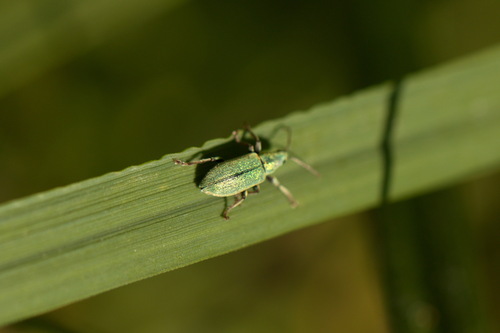
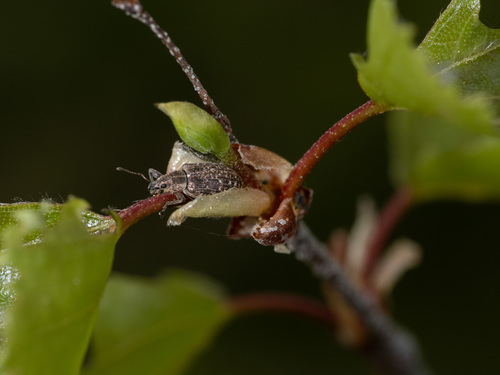
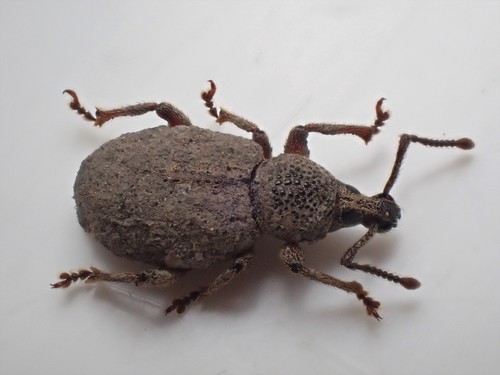
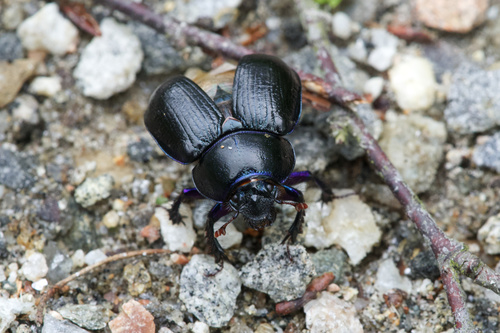
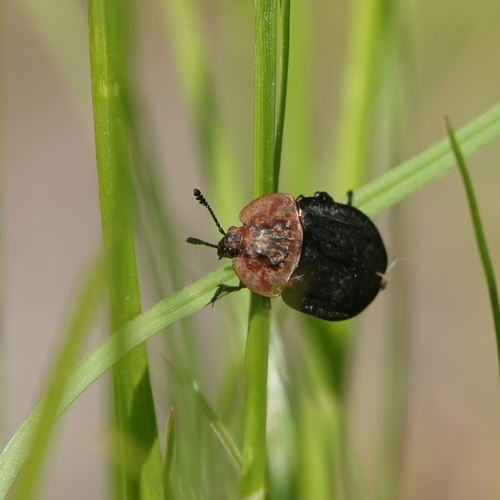
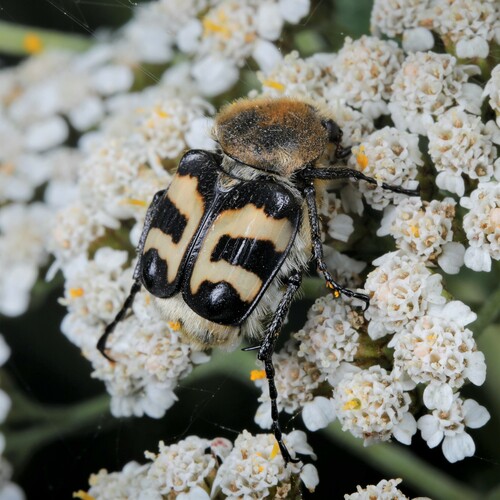
Large Pine Weevil

Large Pine Weevil

Hylobius abietis

Daily sighting probability ~20% · Possible
at Cairngorms National Park

In 3 days ~40% in a week ~70%

39 Verified sightings at Cairngorms National Park From 2019 to 2026
124 In all 7 parks
May Best month
☀️ Diurnal When it's spotted

About the Large Pine Weevil

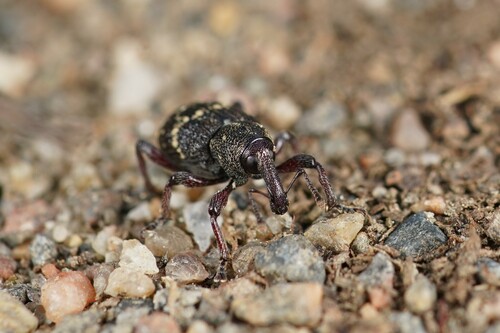
Hylobius abietis or the large pine weevil is a beetle belonging to family Curculionidae. This species is widely regarded as the most important pest of most commercially important coniferous trees in European plantations. Seedlings planted or arising from natural regeneration (germinated seed-fall) after clear felling operations are especially at risk. The adult weevils cause damage by eating the bark of seedlings around the 'collar' of the stem, thus 'ring-barking' the tree seedling which usually results in its demise.

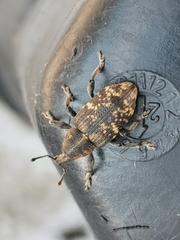
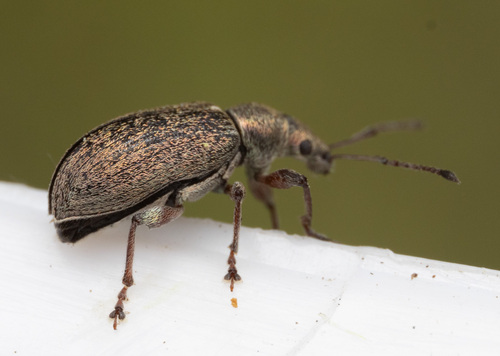
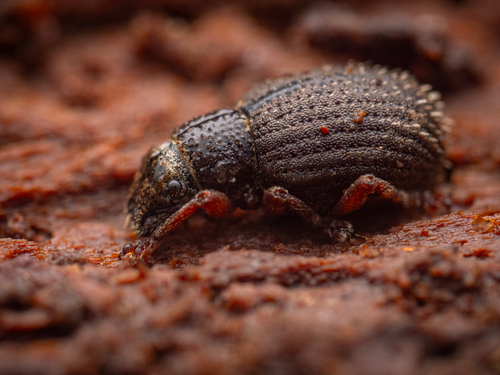
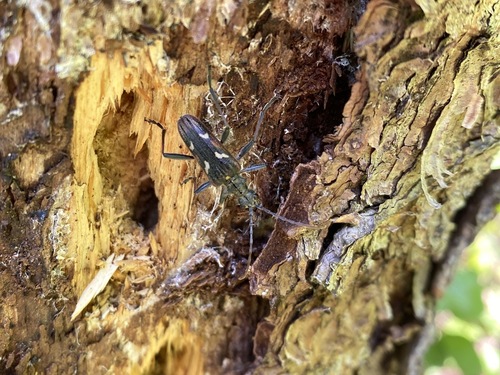
The adult weevils are approximately 10–13 mm (0.39–0.51 in) in length (without beak/snout) and are dark brown with patches of yellow or light brown hairs arranged in irregular rows on their elytra. The legs are black or deep red with a distinctive tooth on the femora and at the end of tibiae.

The full grown larvae are 14–16 mm (0.55–0.63 in), typical for weevils, apodial, curved and are whitish, with brown head. Adults can be found all year long although they usually hibernate during the cold winter months. New adults ready to reproduce are attracted to freshly cut stumps of conifers. Eggs are deposited singly (one or two per day... Wikipedia →

Global Distribution

Parks Where Found

# Park Country Daily sighting probability
1 Cairngorms National Park 🇬🇧 United Kingdom
~20%
2 Tatra National Park 🇸🇰 Slovakia
~10%
3 Hohe Tauern National Park 🇦🇹 Austria
~10%
4 Snowdonia National Park 🇬🇧 United Kingdom
~10%
5 Bavarian Forest National Park 🇩🇪 Germany
~10%
6 Wadden Sea National Park 🇩🇪 Germany
~10%
7 Pyrénées National Park 🇫🇷 France
<5%

Cities Where Found

# City Country Daily sighting probability
1 Helsinki 🇫🇮 Finland
~10%
2 Berlin 🇩🇪 Germany
<5%

Before you go

What are the chances of seeing a Large Pine Weevil in Cairngorms National Park?

Possible

About 20% of wildlife watchers report a Large Pine Weevil sighting in Cairngorms National Park on a given day, based on 39 verified sightings from GBIF citizen-science data from 2019 to 2026. It is the 40th most-seen of the 300 insects we can rate there. Over three days the chance rises to about 40%, and over a week to about 70%, if each day is a fresh chance.

When is the best time to see a Large Pine Weevil in Cairngorms National Park?

May

In that month about 30% of wildlife watchers report a Large Pine Weevil in Cairngorms National Park on a given day, against under 5% in September to March, the lowest months.

What time of day is best to see a Large Pine Weevil?

Between 5 and 8 pm

Across all the parks we cover, that three-hour window holds the most Large Pine Weevil sightings with a recorded time, and about 7 in 10 of them come between 6 am and 6 pm: it is a daytime animal.

Is Cairngorms National Park the best place to see a Large Pine Weevil?

Yes

Of the 7 parks where we can rate Large Pine Weevil sightings, Cairngorms National Park has the highest daily chance: about 20%. Next come Tatra National Park (Slovakia, about 10%) and Hohe Tauern National Park (Austria, about 10%).

Which relatives of the Large Pine Weevil live in Cairngorms National Park?

Same family: Curculionidae

The closest relatives of the Large Pine Weevil that you can see in Cairngorms National Park (family Curculionidae, True Weevils) are Common Leaf Weevil (about 10%), Nut Leaf Weevil (about 10%) and Silver-Green Leaf Weevil (about 10%), with each one's daily chance of a sighting.

Where does the Large Pine Weevil sighting chance come from?

GBIF citizen-science records

It is estimated from how often the Large Pine Weevil is recorded against all the insects logged in Cairngorms National Park (39 verified sightings from 2019 to 2026), calibrated against known sighting rates. Figures are rounded to the nearest 10% because citizen-science data supports honest approximations, not decimals, and months with records from fewer than five people show "—". How it works.

← Back to Cairngorms National Park