Plain Ctenotus

Plain Ctenotus

Ctenotus inornatus

Silhouette: David Orr · PhyloPic

LCLeast ConcernNTVUENCR Endemic
Daily sighting probability ~20% · Possible
at Cape Range

In 3 days ~50% in a week ~80%

7 Verified sightings at Cape Range From 2019 to 2026
12 In all 2 parks
June Best month
☀️ Diurnal When it's spotted

About the Plain Ctenotus

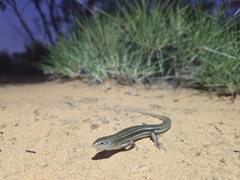
Ctenotus inornatus, or commmonly known as bar-shouldered ctenotus, is an Australian species of skink found in the Northern Territory, Queensland, and Western Australia. The Ctenotus inornatus species group (including C. inornatus) typically range from 85 to 110 millimeters in snout-vent length and share a common set of color pattern elements and scalation features. The species group also contains color patterns with a complex mix of spots and stripes.

The Ctenotus inornatus species group feautures intricate color patterns, which are typically a complex blend of stripes and spots. Their toes are not significantly compressed or only slightly so, their subdigital lamellae possess a relatively broad, flat callus and their nasal are widely separated or in contact.

Several synonyms exist for this species: Ctenotus saxatilis (Storr, 1970) Hinulia inornata (Gray 1845) Wikipedia →

Global Distribution

Parks Where Found

# Park Country Daily sighting probability
1 Cape Range 🇦🇺 Australia
~20%
2 Hattah-Kulkyne National Park 🇦🇺 Australia
~20%

Before you go

What are the chances of seeing a Plain Ctenotus in Cape Range?

Possible

About 20% of wildlife watchers report a Plain Ctenotus sighting in Cape Range on a given day, based on 7 verified sightings from GBIF citizen-science data from 2019 to 2026. It is the 16th most-seen of the 22 reptiles we can rate there. Over three days the chance rises to about 50%, and over a week to about 80%, if each day is a fresh chance.

When is the best time to see a Plain Ctenotus in Cape Range?

March and June

In those months about 40% of wildlife watchers report a Plain Ctenotus in Cape Range on a given day, against under 5% in January–February, May and August–November, the lowest months. Those are among Cape Range's wettest months, with about 50 mm of rain a month against almost none in October.

What time of day is best to see a Plain Ctenotus?

Between 9 am and noon

Across all the parks we cover, that three-hour window holds the most Plain Ctenotus sightings with a recorded time, and about 9 in 10 of them come between 6 am and 6 pm: it is a daytime animal.

Is Cape Range the best place to see a Plain Ctenotus?

Yes

Of the 2 parks where we can rate Plain Ctenotus sightings, Cape Range has the highest daily chance: about 20%. Next come Hattah-Kulkyne National Park (Australia, about 20%).

Where does the Plain Ctenotus sighting chance come from?

GBIF citizen-science records

It is estimated from how often the Plain Ctenotus is recorded against all the reptiles logged in Cape Range (7 verified sightings from 2019 to 2026), calibrated against known sighting rates. Figures are rounded to the nearest 10% because citizen-science data supports honest approximations, not decimals, and months with records from fewer than five people show "—". How it works.

← Back to Cape Range