Asp Viper

Asp Viper

Vipera aspis

Silhouette: Alex Slavenko · PhyloPic

LCNTVUVulnerableENCR
Daily sighting probability ~20% · Possible
at Cévennes National Park

In 3 days ~40% in a week ~70%

27 Verified sightings at Cévennes National Park From 2019 to 2026
395 In all 7 parks
November Best month
☀️ Diurnal When it's spotted

About the Asp Viper

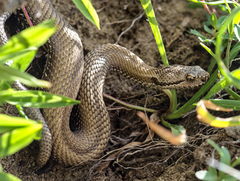
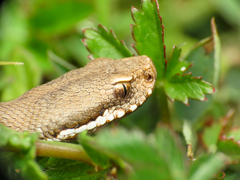
Vipera aspis is a viper species found in southwestern Europe. Its common names include asp, asp viper, European asp, and aspic viper, among others. Like all other vipers, it is venomous. Bites from this species can be more severe than from the European adder, V. berus; not only can they be very painful, but approximately 4% of all untreated bites are fatal. The specific epithet, aspis, is a Greek word that means "viper." Five subspecies are currently recognized, including the nominate subspecies described here.

The species grows to an average total length of 60–65 centimetres (24–26 in). Males reach a maximum total length of 85 cm (33 in), females rarely more than 75 cm (30 in). Males, however, are a little slimmer than females. The tail is very short: one-seventh to one-ninth of total body length in females, and one-sixth to one-eighth in males.

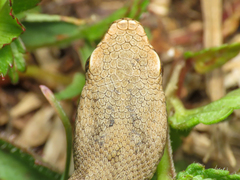
The head is broad, triangular and quite distinct from the neck. The tip of the snout is slightly but distinctly upturned. The rostral scale is generally higher than it is wide, touching 2 to 3 scales on the upper side of the snout. Dorsally, the snout is flat with distinct and slightly raised sharp margins. The nasal scale... Wikipedia →

Sounds

Recording0:02

Italy · 2001

© mauro_fioretto · iNaturalist · CC BY-NC 4.0

Global Distribution

Parks Where Found

# Park Country Daily sighting probability
1 Aigüestortes National Park 🇪🇸 Spain
~40%
2 Mercantour National Park 🇫🇷 France
~30%
3 Pyrénées National Park 🇫🇷 France
~30%
4 Vanoise National Park 🇫🇷 France
~30%
5 Ecrins National Park 🇫🇷 France
~20%
6 Cévennes National Park 🇫🇷 France
~20%
7 Ordesa y Monte Perdido National Park 🇪🇸 Spain
~20%

Zoos & Centres Where Found

# Zoo / Centre Country
1 Barcelona Zoo 🇪🇸 Spain In captivity
2 Paris Zoological Park 🇫🇷 France In captivity
3 Indianapolis Zoo 🇺🇸 United States In captivity
4 Aquarama Barcelona 🇪🇸 Spain In captivity
5 bioparco 🇮🇹 Italy In captivity
6 zoo delle Maitine 🇮🇹 Italy In captivity
7 Città della Domenica 🇮🇹 Italy In captivity

Before you go

What are the chances of seeing an Asp Viper in Cévennes National Park?

Possible

About 20% of wildlife watchers report an Asp Viper sighting in Cévennes National Park on a given day, based on 27 verified sightings from GBIF citizen-science data from 2019 to 2026. It is the 13th most-seen of the 18 reptiles we can rate there. Over three days the chance rises to about 40%, and over a week to about 70%, if each day is a fresh chance.

When is the best time to see an Asp Viper in Cévennes National Park?

November

In that month about 30% of wildlife watchers report an Asp Viper in Cévennes National Park on a given day, against under 5% in March, September and December–January, the lowest months. That is one of Cévennes National Park's wettest months, with about 170 mm of rain against 35 mm in July.

What time of day is best to see an Asp Viper?

Between 10 am and 1 pm

Across all the parks we cover, that three-hour window holds the most Asp Viper sightings with a recorded time, and about 8 in 10 of them come between 6 am and 6 pm: it is a daytime animal.

Where does the Asp Viper sighting chance come from?

GBIF citizen-science records

It is estimated from how often the Asp Viper is recorded against all the reptiles logged in Cévennes National Park (27 verified sightings from 2019 to 2026), calibrated against known sighting rates. Figures are rounded to the nearest 10% because citizen-science data supports honest approximations, not decimals, and months with records from fewer than five people show "—". How it works.

← Back to Cévennes National Park