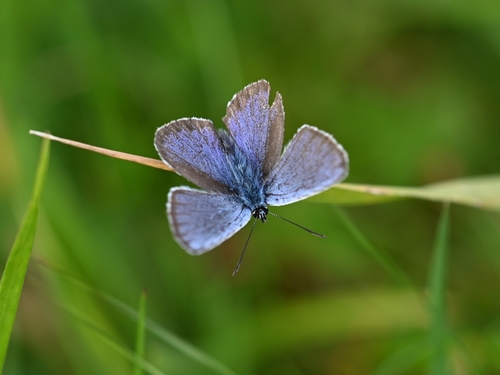
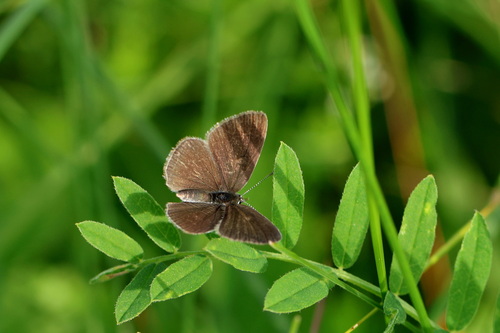
Baton Blue

Baton Blue

Pseudophilotes baton

Daily sighting probability ~10% · With luck
at Cévennes National Park

In 3 days ~40% in a week ~70%

61 Verified sightings at Cévennes National Park From 2019 to 2026
141 In all 4 parks
April Best month
☀️ Diurnal When it's spotted

About the Baton Blue

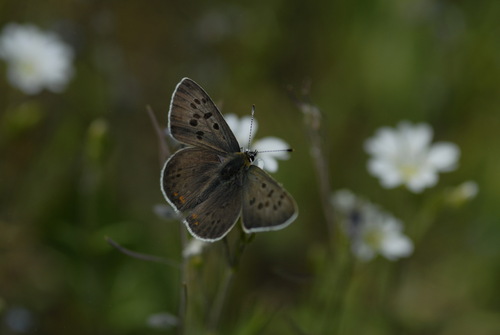
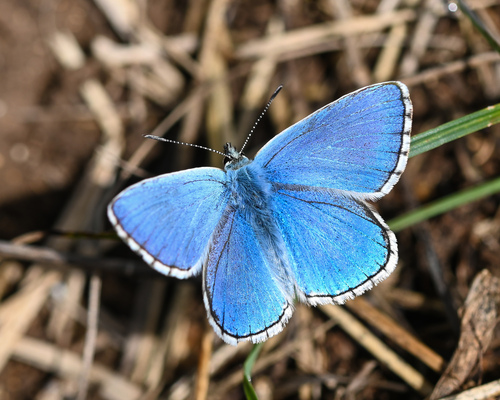
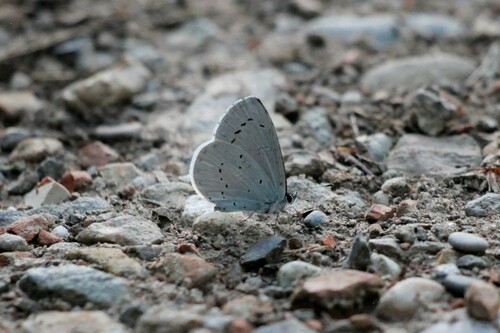
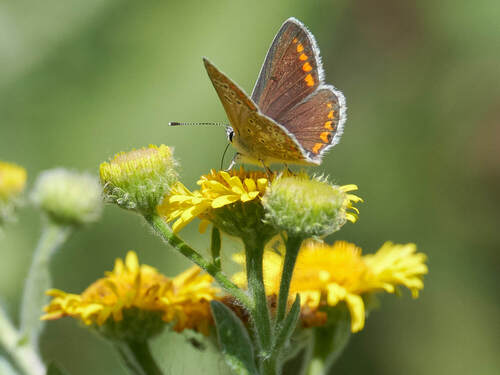
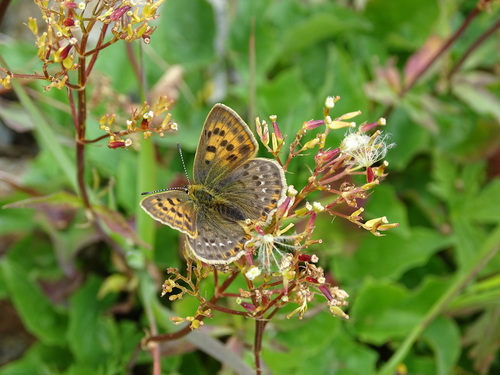
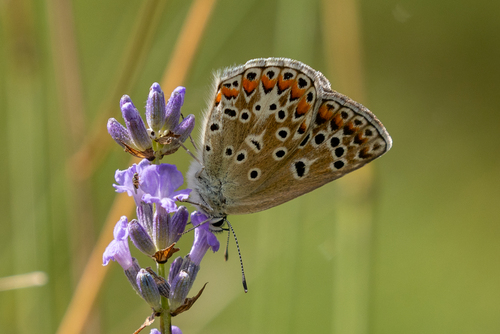
Pseudophilotes baton, the baton blue, is a butterfly belonging to the Lycaenidae family. It is found in central and southern Europe and then east across the Palearctic to the Russian Far East. The wingspan is 10–11 mm. The butterfly flies from April to September.

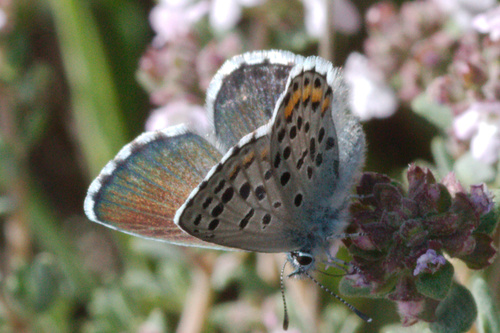
L. baton Bgstr. (= amphion Esp., hylas Schiff.) (79 d). Upperside blackish, the male more or less dusted with blue, the forewing with a distinct discocellular spot, the fringes spotted. Beneath numerous ocelli on a leaden grey ground, larger on the forewing, the latter usually even with ocelli near the base, The hindwing with red-yellow spots before the margin in typical specimens. Throughout Central and South Europe, with the exception of England, occurring from Pommerania and the Baltic Provinces to the Mediterranean, and from Belgium to Central Asia (Altai). — A form very similar to true baton beneath

without the reddish yellow anal spots occurs singly everywhere among ordinary baton, being especially plentiful in the south of Europe; this is ab. panoptes Hbn. (= argus minutus Esp.) (79 e). [ now Pseudophilotes panoptes (Hübner, [1813]) — a similar form is found in Spain and North Africa, the... Wikipedia →
Global Distribution

Parks Where Found

# Park Country Daily sighting probability
1 Sierra Nevada National Park 🇪🇸 Spain
~30%
2 Cévennes National Park 🇫🇷 France
~10%
3 Pyrénées National Park 🇫🇷 France
<5%
4 Sierra de Guadarrama National Park 🇪🇸 Spain
<5%

Cities Where Found

# City Country Daily sighting probability
1 Jerusalem 🇮🇱 Israel
~20%
2 Budapest 🇭🇺 Hungary
~10%
3 Prague 🇨🇿 Czechia
<5%

Before you go

What are the chances of seeing a Baton Blue in Cévennes National Park?

With luck

About 10% of wildlife watchers report a Baton Blue sighting in Cévennes National Park on a given day, based on 61 verified sightings from GBIF citizen-science data from 2019 to 2026. It is the 120th most-seen of the 996 insects we can rate there. Over three days the chance rises to about 40%, and over a week to about 70%, if each day is a fresh chance.

When is the best time to see a Baton Blue in Cévennes National Park?

April

In that month about 40% of wildlife watchers report a Baton Blue in Cévennes National Park on a given day, against under 5% in September to February, the lowest months.

What time of day is best to see a Baton Blue?

Between 10 am and 1 pm

Across all the parks we cover, that three-hour window holds the most Baton Blue sightings with a recorded time, and about 9 in 10 of them come between 6 am and 6 pm: it is a daytime animal.

Is Cévennes National Park the best place to see a Baton Blue?

2nd of 4

Of the 4 parks where we can rate Baton Blue sightings, Cévennes National Park ranks 2nd at about 10%. The best odds are in Sierra Nevada National Park (Spain, about 30%).

Which relatives of the Baton Blue live in Cévennes National Park?

Same family: Lycaenidae

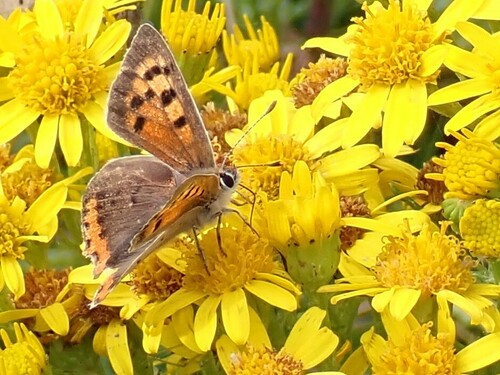
The closest relatives of the Baton Blue that you can see in Cévennes National Park (family Lycaenidae, Gossamer-winged Butterflies) are Sooty Copper (about 40%), Common Blue (about 30%) and Small Copper (about 30%), with each one's daily chance of a sighting.

Where does the Baton Blue sighting chance come from?

GBIF citizen-science records

It is estimated from how often the Baton Blue is recorded against all the insects logged in Cévennes National Park (61 verified sightings from 2019 to 2026), calibrated against known sighting rates. Figures are rounded to the nearest 10% because citizen-science data supports honest approximations, not decimals, and months with records from fewer than five people show "—". How it works.

← Back to Cévennes National Park