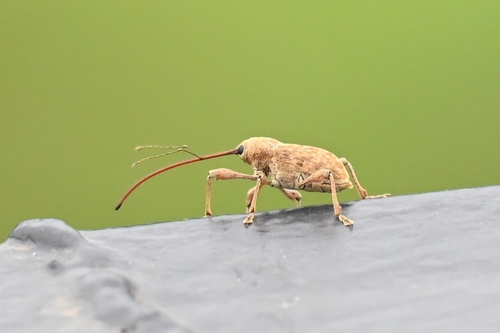
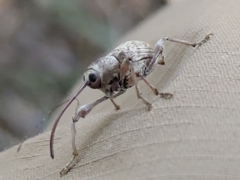
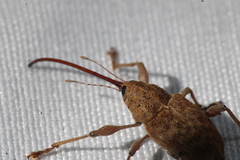
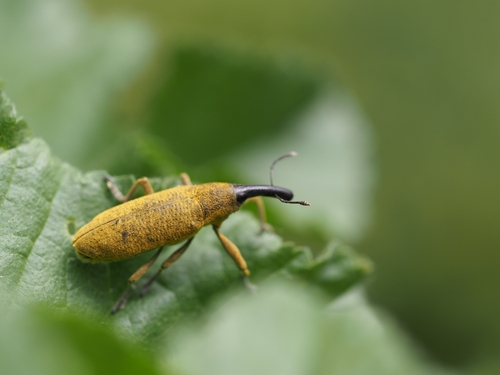

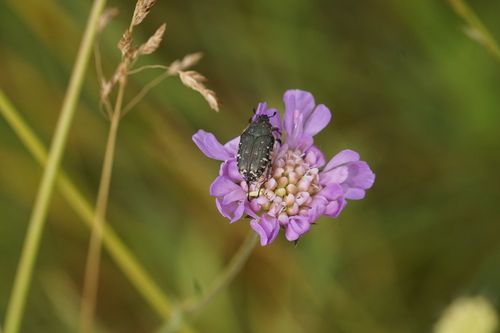

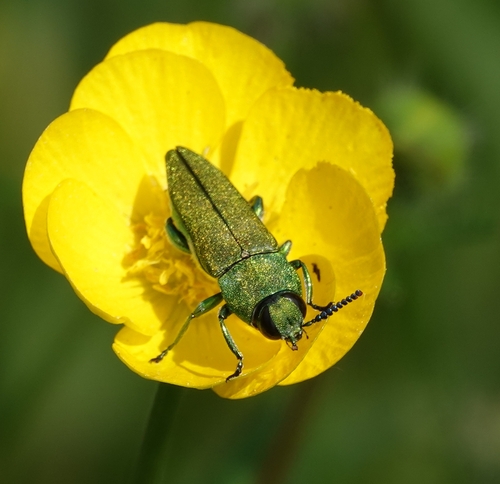
Chestnut Weevil

Chestnut Weevil

Curculio elephas

Daily sighting probability ~10% · With luck
at Cévennes National Park

In 3 days ~20% in a week ~30%

18 Verified sightings at Cévennes National Park From 2019 to 2026
26 In all 2 parks
September Best month
🌙 Nocturnal When it's spotted

About the Chestnut Weevil

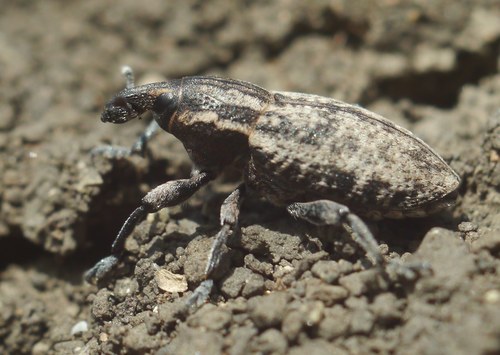
Curculio elephas is a species of beetle in the family Curculionidae, the true weevils. It is known commonly as the chestnut weevil. It is a serious pest of chestnut (Castanea sativa) in Europe. Curculio elephas are similar to Curculio sayi and Curculio caryatrypes in the United States.

Adults feed on chestnut foliage until nut kernels enter the dough stage in mid to late August. Although they can lay eggs any time after kernel filling, most eggs are laid after the bur begins to open. The adult female weevil drills a hole in a chestnut fruit and deposits one egg inside. The eggs are laid into the cupules or around the peduncle joints. Eggs hatch in five to seven days producing large, legless grubs. When the larva emerges from the egg it feeds on the developing chestnut. The larvae leave behind frass and excrement. Infested nuts may contain several weevil larvae or weevil burrows filled with excreta. Upon chestnuts fall, the larvae chew their way out of the nuts and retreat into the ground. They immediately bury themselves several centimeters deep in the soil. The following July, the larvae turn into pupae. Pupae may be in the soil for one season or for several years... Wikipedia →

Global Distribution

Parks Where Found

# Park Country Daily sighting probability
1 Cévennes National Park 🇫🇷 France
~10%
2 Pyrénées National Park 🇫🇷 France
<5%

Cities Where Found

# City Country Daily sighting probability
1 Berlin 🇩🇪 Germany
~10%
2 Hamburg 🇩🇪 Germany
~10%
3 Paris 🇫🇷 France
<5%
4 Kyiv 🇺🇦 Ukraine
<5%
5 Porto 🇵🇹 Portugal
<5%
6 Vienna 🇦🇹 Austria
<5%

Before you go

What are the chances of seeing a Chestnut Weevil in Cévennes National Park?

With luck

About 10% of wildlife watchers report a Chestnut Weevil sighting in Cévennes National Park on a given day, based on 18 verified sightings from GBIF citizen-science data from 2019 to 2026. It is the 590th most-seen of the 996 insects we can rate there. Over three days the chance rises to about 20%, and over a week to about 30%, if each day is a fresh chance.

When is the best time to see a Chestnut Weevil in Cévennes National Park?

September

In that month about 20% of wildlife watchers report a Chestnut Weevil in Cévennes National Park on a given day, against under 5% in November to July, the lowest months.

What time of day is best to see a Chestnut Weevil?

Between 10 pm and 1 am

Across all the parks we cover, that three-hour window holds the most Chestnut Weevil sightings with a recorded time, and about 7 in 10 of them come between 6 pm and 6 am: it is mostly seen at night.

Is Cévennes National Park the best place to see a Chestnut Weevil?

Yes

Of the 2 parks where we can rate Chestnut Weevil sightings, Cévennes National Park has the highest daily chance: about 10%. Next come Pyrénées National Park (France, under 5%).

Which relatives of the Chestnut Weevil live in Cévennes National Park?

Same family: Curculionidae

The closest relatives of the Chestnut Weevil that you can see in Cévennes National Park (family Curculionidae, True Weevils) are Liparus coronatus (about 10%) and Elongated Bean Weevil (about 10%), with each one's daily chance of a sighting.

Where does the Chestnut Weevil sighting chance come from?

GBIF citizen-science records

It is estimated from how often the Chestnut Weevil is recorded against all the insects logged in Cévennes National Park (18 verified sightings from 2019 to 2026), calibrated against known sighting rates. Figures are rounded to the nearest 10% because citizen-science data supports honest approximations, not decimals, and months with records from fewer than five people show "—". How it works.

← Back to Cévennes National Park