


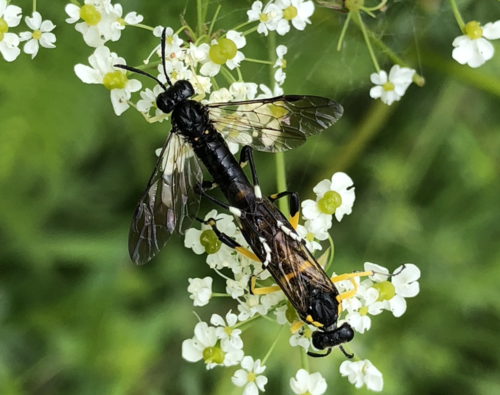
Hairy-Footed Flower Bee

Hairy-Footed Flower Bee

Anthophora plumipes

Daily sighting probability <5% · Rare
at Cévennes National Park

In 3 days ~10% in a week ~30%

7 Verified sightings at Cévennes National Park From 2019 to 2026
21 In all 3 parks
February Best month
☀️ Diurnal When it's spotted

About the Hairy-Footed Flower Bee

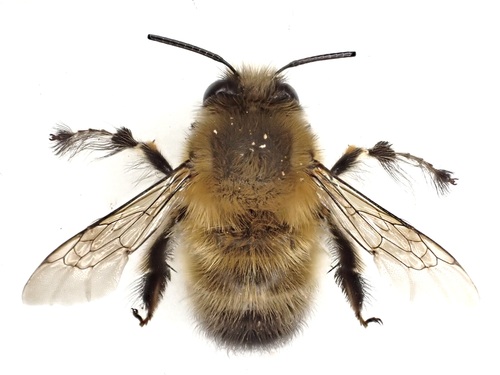
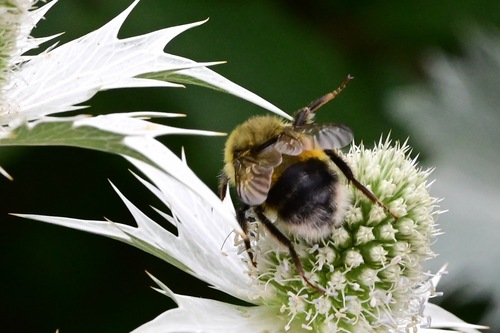
The hairy-footed flower bee (Anthophora plumipes) is a species of bee belonging to the family Apidae. These bees are widespread in most of Europe and Asia from Britain to China and Japan, the Near East and in North Africa. In the 20th century, the species was introduced to the United States. The species was spotted for the first time in Ireland in April 2022.

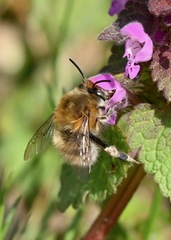
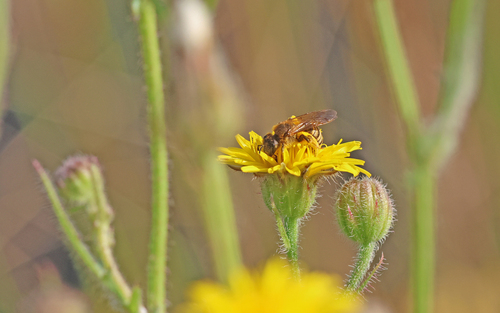
These bees commonly inhabit gardens, open woodland, and coastal sites. The adults of Anthophora plumipes grow up to 13–15 millimetres (0.5–0.6 in) long. There are numerous color forms over the species' geographic range, which have resulted in this species being described under many different names. This species shows an evident sexual dimorphism. The body is always densely hairy. Males have most often bright reddish brown or gray hair, while females are usually all black or dark brown. Furthermore, the females show reddish orange scopal hairs on the hind tibia. The middle legs of males are very elongated. Males are also distinguished from females by having long hairs on its mid tarsi and the integument of the lower face yellow or cream coloured, rather than black. The long tufts... Wikipedia →

Global Distribution

Parks Where Found

# Park Country Daily sighting probability
1 Cévennes National Park 🇫🇷 France
<5%
2 Bavarian Forest National Park 🇩🇪 Germany
<5%
3 Pyrénées National Park 🇫🇷 France
<5%

Cities Where Found

# City Country Daily sighting probability
1 London 🇬🇧 United Kingdom
~30%
2 Warsaw 🇵🇱 Poland
~30%
3 Birmingham 🇬🇧 United Kingdom
~20%
4 Liverpool 🇬🇧 United Kingdom
~20%
5 Lyon 🇫🇷 France
~10%
6 Berlin 🇩🇪 Germany
~10%
7 Paris 🇫🇷 France
~10%
8 Brussels 🇧🇪 Belgium
~10%
9 Vienna 🇦🇹 Austria
~10%
10 Kyiv 🇺🇦 Ukraine
~10%

Before you go

What are the chances of seeing a Hairy-Footed Flower Bee in Cévennes National Park?

Rare

Under 5% of wildlife watchers report a Hairy-Footed Flower Bee sighting in Cévennes National Park on a given day, based on 7 verified sightings from GBIF citizen-science data from 2019 to 2026. It is the 730th most-seen of the 996 insects we can rate there. Over three days the chance rises to about 10%, and over a week to about 30%, if each day is a fresh chance.

When is the best time to see a Hairy-Footed Flower Bee in Cévennes National Park?

February

In that month about 20% of wildlife watchers report a Hairy-Footed Flower Bee in Cévennes National Park on a given day, against under 5% in June to January, the lowest months.

What time of day is best to see a Hairy-Footed Flower Bee?

Between noon and 3 pm

Across all the parks we cover, that three-hour window holds the most Hairy-Footed Flower Bee sightings with a recorded time, and nearly all of them come between 6 am and 6 pm: it is a daytime animal.

Is Cévennes National Park the best place to see a Hairy-Footed Flower Bee?

Yes

Of the 3 parks where we can rate Hairy-Footed Flower Bee sightings, Cévennes National Park has the highest daily chance: under 5%. Next come Bavarian Forest National Park (Germany, under 5%) and Pyrénées National Park (France, under 5%).

Which relatives of the Hairy-Footed Flower Bee live in Cévennes National Park?

Same family: Apidae

The closest relatives of the Hairy-Footed Flower Bee that you can see in Cévennes National Park (family Apidae, Honey Bees, Bumble Bees, and Allies) are Violet Carpenter Bee (about 20%), Common Carder Bumble Bee (about 20%) and Buff-Tailed Bumble Bee (about 10%), with each one's daily chance of a sighting.

Where does the Hairy-Footed Flower Bee sighting chance come from?

GBIF citizen-science records

It is estimated from how often the Hairy-Footed Flower Bee is recorded against all the insects logged in Cévennes National Park (7 verified sightings from 2019 to 2026), calibrated against known sighting rates. Figures are rounded to the nearest 10% because citizen-science data supports honest approximations, not decimals, and months with records from fewer than five people show "—". How it works.

← Back to Cévennes National Park