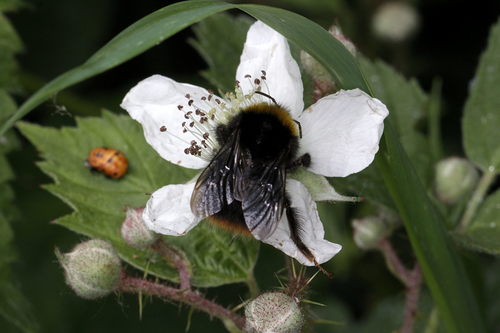
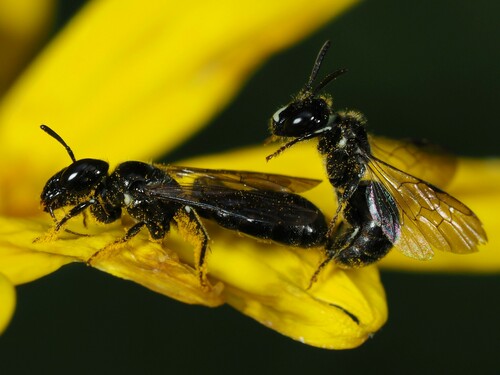
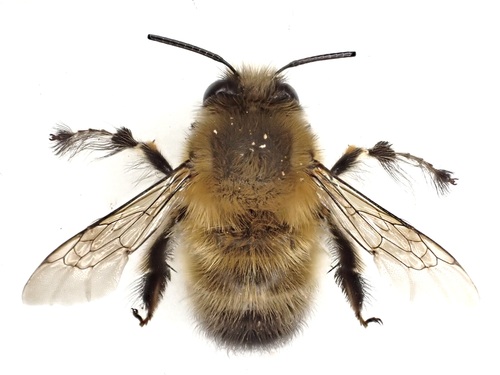
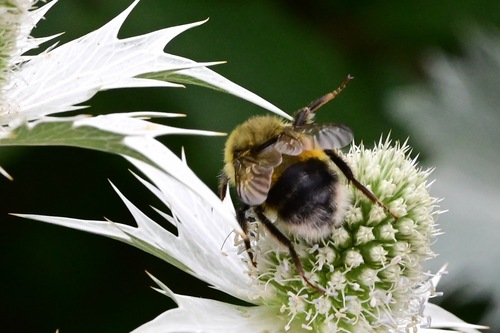
Violet Carpenter Bee

Violet Carpenter Bee

Xylocopa violacea

Daily sighting probability ~20% · Possible
at Cévennes National Park

In 3 days ~50% in a week ~80%

92 Verified sightings at Cévennes National Park From 2019 to 2026
201 In all 6 parks
March Best month
☀️ Diurnal When it's spotted

About the Violet Carpenter Bee

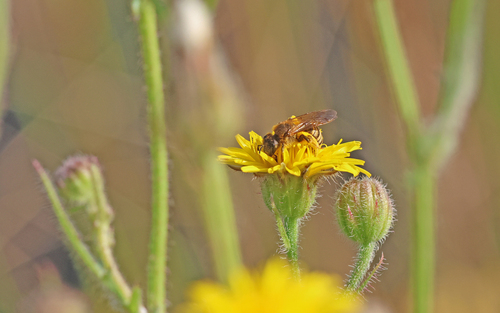
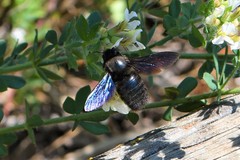
Xylocopa violacea, the violet carpenter bee, is the common European species of carpenter bee, and one of the largest bees in Europe. It is also native to Asia. Like most members of the genus Xylocopa, it makes its nests in dead wood. It is not particularly aggressive, and will attack only if forced to.

The range of Xylocopa violacea extends from Europe eastward across Asia as far as central China, restricted to latitudes above 30 degrees. In 2006, Xylocopa violacea was reported from Cardigan, Wales. In 2007, it was found breeding for the first time in England, in Leicestershire. This follows a northwards expansion of its range in France, Germany, and the Channel Islands. In 2010 it was recorded in Northamptonshire and Worcestershire.

In India, any all-black species of Xylocopa are referred to by the common name "bhanvra" (or "bhomora" – ভোমোৰা – in Assamese), and reports and sightings of bhanvra are commonly misattributed to this species. However, this species is found only in the northern regions of Jammu and Kashmir and Punjab. Most reported sightings refer to any of several other common black Xylocopa, such as X. nasalis, X. tenuiscapa, or X. tranquebarorum.... Wikipedia →

Global Distribution

Parks Where Found

# Park Country Daily sighting probability
1 Cévennes National Park 🇫🇷 France
~20%
2 Sierra Nevada National Park 🇪🇸 Spain
~20%
3 Mercantour National Park 🇫🇷 France
~10%
4 Sierra de Guadarrama National Park 🇪🇸 Spain
~10%
5 Bavarian Forest National Park 🇩🇪 Germany
~10%
6 Pyrénées National Park 🇫🇷 France
~10%

Cities Where Found

# City Country Daily sighting probability
1 Jerusalem 🇮🇱 Israel
~20%
2 Barcelona 🇪🇸 Spain
~20%
3 Valencia 🇪🇸 Spain
~10%
4 Lisbon 🇵🇹 Portugal
~10%
5 Berlin 🇩🇪 Germany
~10%
6 Madrid 🇪🇸 Spain
~10%
7 Budapest 🇭🇺 Hungary
~10%
8 Rome 🇮🇹 Italy
~10%
9 Paris 🇫🇷 France
~10%
10 Lyon 🇫🇷 France
~10%

Before you go

What are the chances of seeing a Violet Carpenter Bee in Cévennes National Park?

Possible

About 20% of wildlife watchers report a Violet Carpenter Bee sighting in Cévennes National Park on a given day, based on 92 verified sightings from GBIF citizen-science data from 2019 to 2026. It is the 55th most-seen of the 996 insects we can rate there. Over three days the chance rises to about 50%, and over a week to about 80%, if each day is a fresh chance.

When is the best time to see a Violet Carpenter Bee in Cévennes National Park?

February and March

In those months about 30% of wildlife watchers report a Violet Carpenter Bee in Cévennes National Park on a given day, against under 5% in November and December, the lowest months.

What time of day is best to see a Violet Carpenter Bee?

Between 10 am and 1 pm

Across all the parks we cover, that three-hour window holds the most Violet Carpenter Bee sightings with a recorded time, and about 9 in 10 of them come between 6 am and 6 pm: it is a daytime animal.

Is Cévennes National Park the best place to see a Violet Carpenter Bee?

Yes

Of the 6 parks where we can rate Violet Carpenter Bee sightings, Cévennes National Park has the highest daily chance: about 20%. Next come Sierra Nevada National Park (Spain, about 20%) and Mercantour National Park (France, about 10%).

Which relatives of the Violet Carpenter Bee live in Cévennes National Park?

Same family: Apidae

The closest relatives of the Violet Carpenter Bee that you can see in Cévennes National Park (family Apidae, Honey Bees, Bumble Bees, and Allies) are Common Carder Bumble Bee (about 20%), Buff-Tailed Bumble Bee (about 10%) and Early Bumble Bee (about 10%), with each one's daily chance of a sighting.

Where does the Violet Carpenter Bee sighting chance come from?

GBIF citizen-science records

It is estimated from how often the Violet Carpenter Bee is recorded against all the insects logged in Cévennes National Park (92 verified sightings from 2019 to 2026), calibrated against known sighting rates. Figures are rounded to the nearest 10% because citizen-science data supports honest approximations, not decimals, and months with records from fewer than five people show "—". How it works.

← Back to Cévennes National Park