Slender Scotch Burnet

Slender Scotch Burnet

Zygaena loti

Daily sighting probability ~10% · With luck
at Cévennes National Park

In 3 days ~30% in a week ~50%

30 Verified sightings at Cévennes National Park From 2019 to 2026
104 In all 6 parks
May Best month
☀️ Diurnal When it's spotted

About the Slender Scotch Burnet

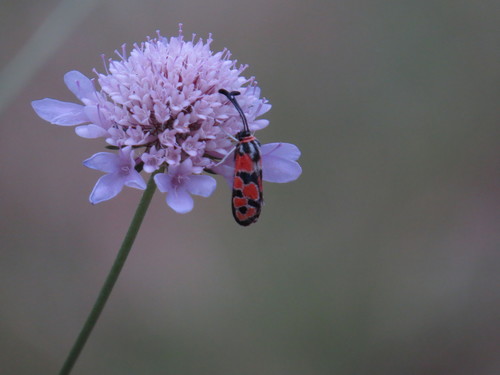
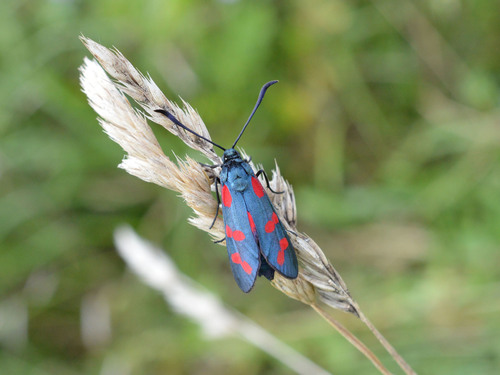
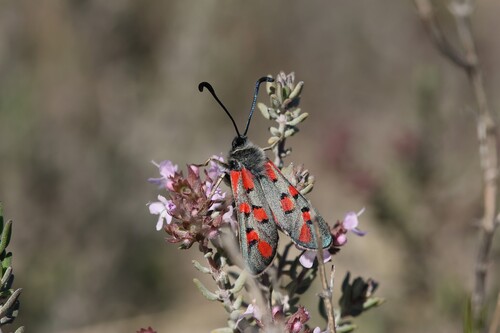
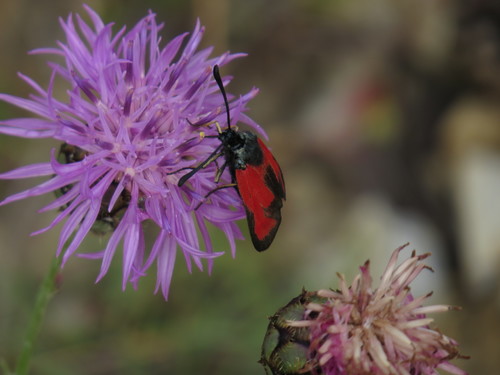
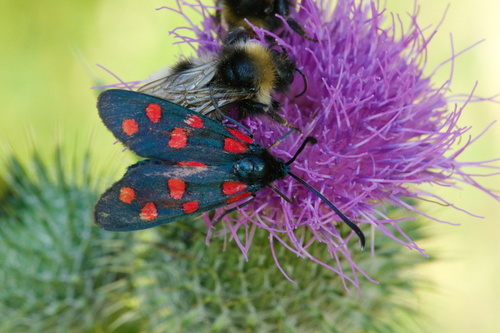
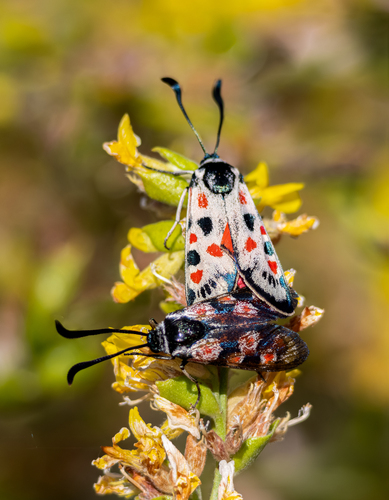
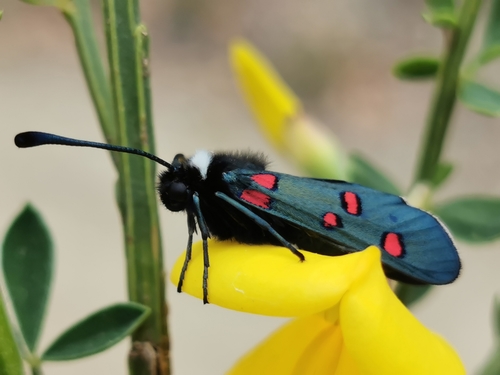
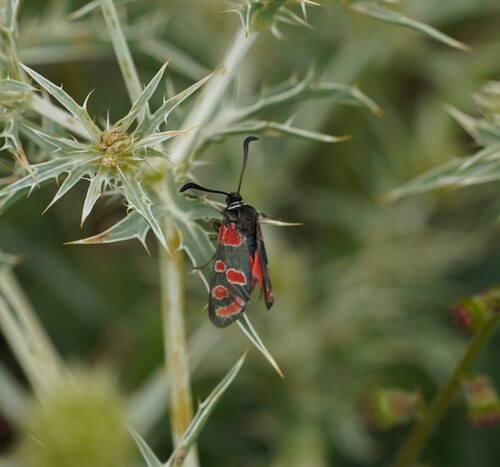
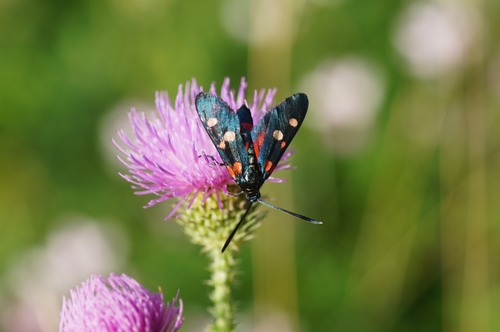
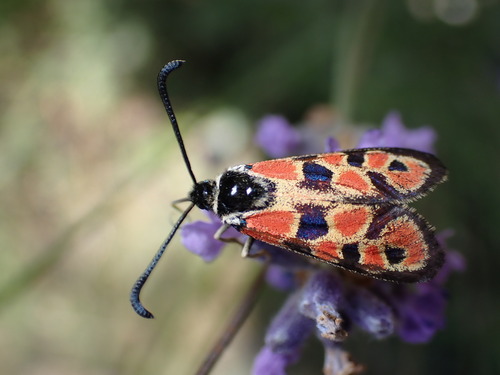
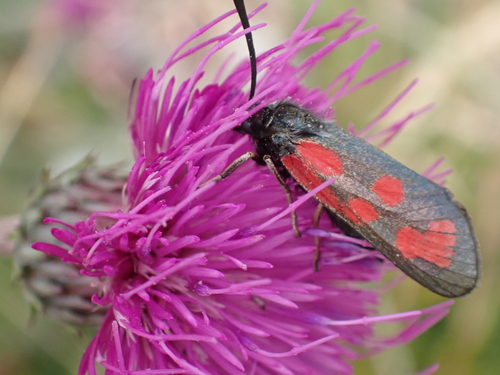
Zygaena loti, the slender Scotch burnet, is a moth of the family Zygaenidae. It is a diurnal moth characterized by a black body, light colored legs, and red spots on its wings. The caterpillars are a yellow-green color and usually molt out of dormancy in late February to early March. The larvae feed on plants from the family Fabaceae until they enter their pupal stage and mature into adults in May to early June. For mating, Zygaenidae exhibit a dual-partner finding strategy, where females use pheromones while assuming a calling position, and males exhibit a patrolling behavior where they utilize both vision and the olfactory receptors in their antennae to locate a potential mate.

Although regionally endangered as their population is declining, Z. loti is found all across Europe, inhabiting areas rich in their desired food plants: lime-rich, and characterized by a hot and dry climate. The decreases in their population are likely due to factors such as habitat loss and fragmentation brought on by commercial agriculture and urbanization, as well as global climate change. There are few conservation programs currently focusing on Zygaena loti.

The following subspecies are... Wikipedia →
Global Distribution

Parks Where Found

# Park Country Daily sighting probability
1 Vanoise National Park 🇫🇷 France
~20%
2 Mercantour National Park 🇫🇷 France
~20%
3 Cévennes National Park 🇫🇷 France
~10%
4 Ecrins National Park 🇫🇷 France
~10%
5 Pyrénées National Park 🇫🇷 France
~10%
6 Bavarian Forest National Park 🇩🇪 Germany
<5%

Cities Where Found

# City Country Daily sighting probability
1 Prague 🇨🇿 Czechia
~10%
2 Vienna 🇦🇹 Austria
~10%

Before you go

What are the chances of seeing a Slender Scotch Burnet in Cévennes National Park?

With luck

About 10% of wildlife watchers report a Slender Scotch Burnet sighting in Cévennes National Park on a given day, based on 30 verified sightings from GBIF citizen-science data from 2019 to 2026. It is the 267th most-seen of the 996 insects we can rate there. Over three days the chance rises to about 30%, and over a week to about 50%, if each day is a fresh chance.

When is the best time to see a Slender Scotch Burnet in Cévennes National Park?

May and June

In those months about 20% of wildlife watchers report a Slender Scotch Burnet in Cévennes National Park on a given day, against under 5% in July to April, the lowest months.

What time of day is best to see a Slender Scotch Burnet?

Between 3 and 6 pm

Across all the parks we cover, that three-hour window holds the most Slender Scotch Burnet sightings with a recorded time, and about 9 in 10 of them come between 6 am and 6 pm: it is a daytime animal.

Is Cévennes National Park the best place to see a Slender Scotch Burnet?

3rd of 6

Of the 6 parks where we can rate Slender Scotch Burnet sightings, Cévennes National Park ranks 3rd at about 10%. The best odds are in Vanoise National Park (France, about 20%) and Mercantour National Park (France, about 20%).

Which relatives of the Slender Scotch Burnet live in Cévennes National Park?

Same genus: Zygaena

The closest relatives of the Slender Scotch Burnet that you can see in Cévennes National Park (genus Zygaena) are Chalk Burnet (about 20%), Six-Spot Burnet (about 10%) and Zygaena rhadamanthus (about 10%), with each one's daily chance of a sighting.

Where does the Slender Scotch Burnet sighting chance come from?

GBIF citizen-science records

It is estimated from how often the Slender Scotch Burnet is recorded against all the insects logged in Cévennes National Park (30 verified sightings from 2019 to 2026), calibrated against known sighting rates. Figures are rounded to the nearest 10% because citizen-science data supports honest approximations, not decimals, and months with records from fewer than five people show "—". How it works.

← Back to Cévennes National Park