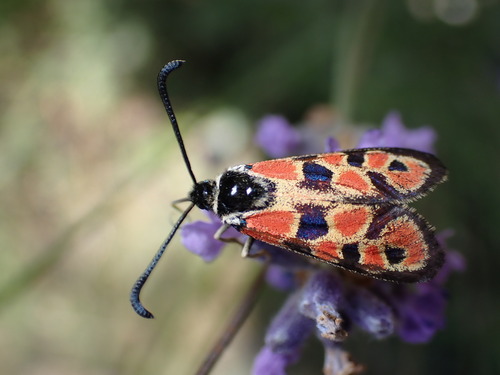
Six-Spot Burnet

Six-Spot Burnet

Zygaena filipendulae

Daily sighting probability ~10% · With luck
at Cévennes National Park

In 3 days ~40% in a week ~60%

56 Verified sightings at Cévennes National Park From 2019 to 2026
364 In all 10 parks
May Best month
☀️ Diurnal When it's spotted

About the Six-Spot Burnet

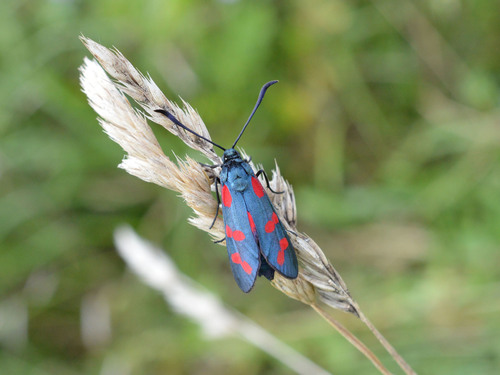
The six-spot burnet (Zygaena filipendulae) is a day-flying moth of the family Zygaenidae. Zygaena filipendulae is a common species throughout Europe, except the Atlantic coast of the Iberian Peninsula, northern Scandinavia and the Great Russian North. It is also present in Asia, from Anatolia through the Caucasus to Syria and Lebanon.

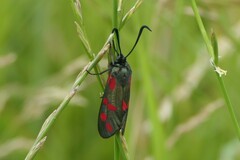
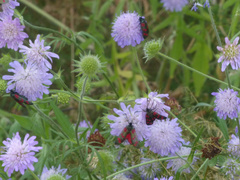
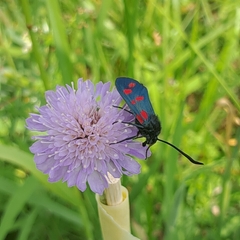
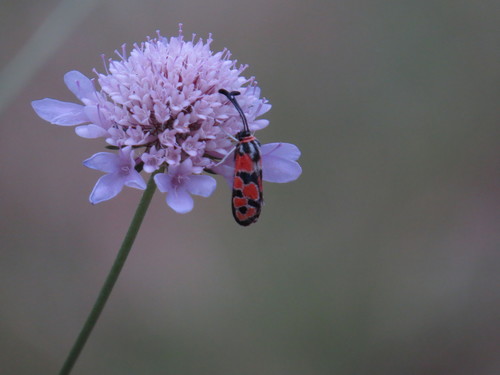
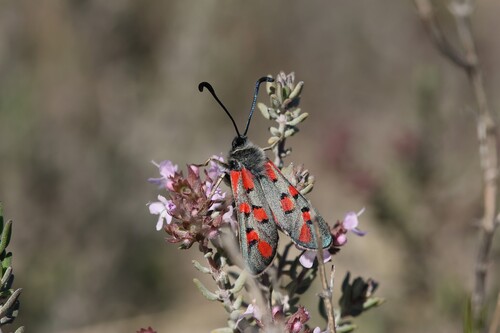
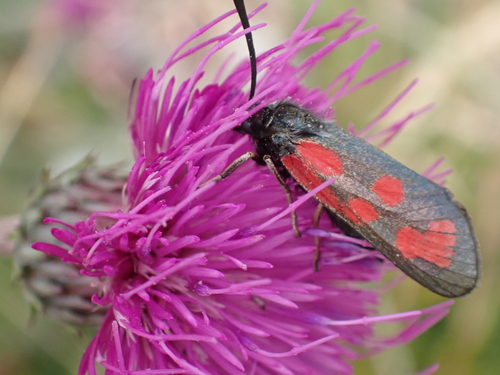
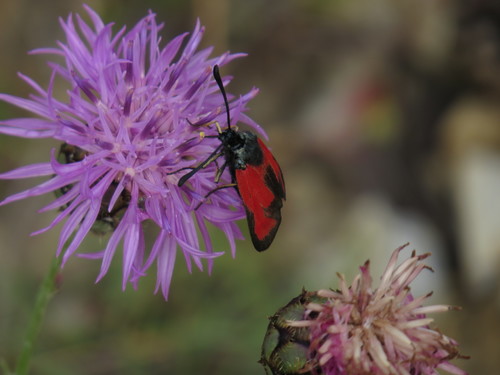
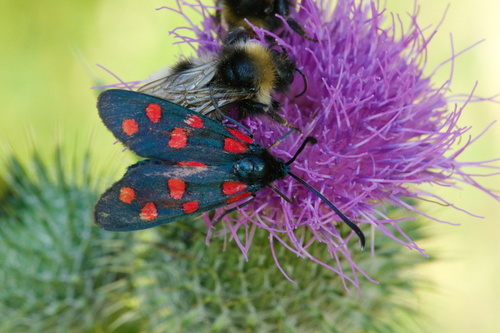
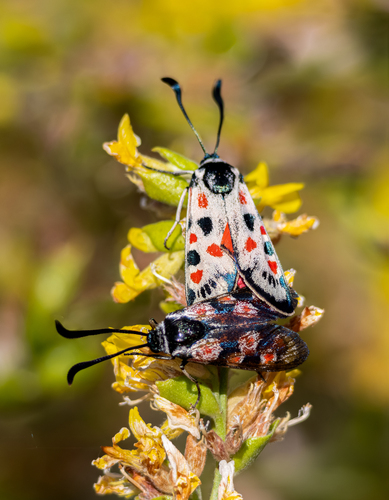
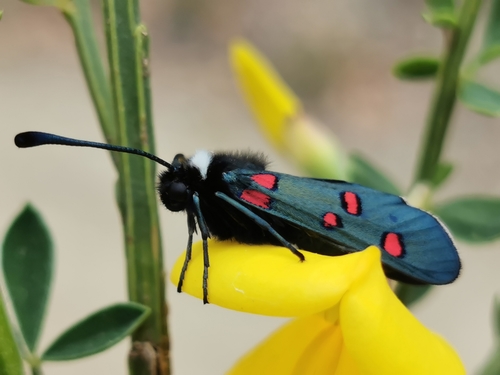
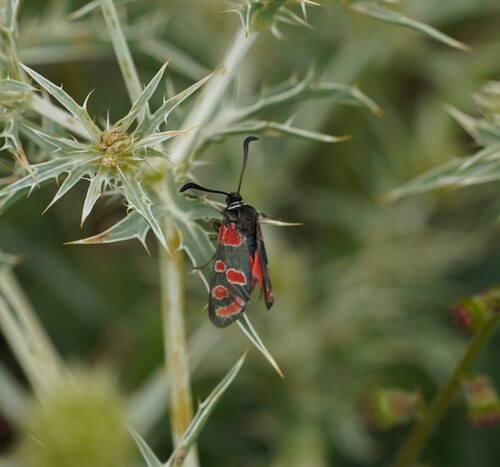
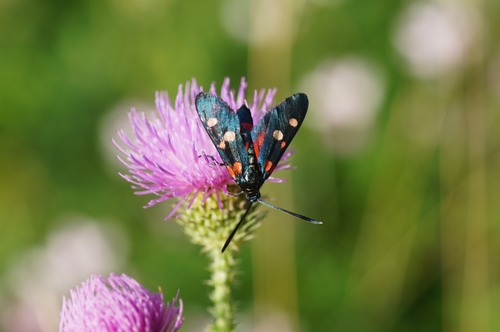
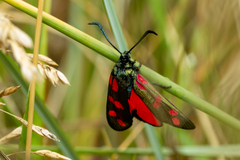
This species can be found in meadows, woodland clearings, sea-cliffs and areas rich in grasses and flowers, up to 2,000 metres (6,600 ft) in altitude. Zygaena filipendulae has a wingspan of 30–40 mm (1.2–1.6 in). The sexes are similar. The fore wings are dark metallic green with six vivid red spots (sometimes the spots are merged causing possible confusion with other species such as the five-spot burnet. Occasionally, the spots are yellow or even black. The hind wings are red with a blackish fringe. The larva is plump and hairy with variable markings, usually pale green with rows of black spots.

It is an aposematic moth, being distinguished by its colors as toxic to predators like birds and lizards. If attacked it emits a liquid containing cyanide, which is present in all stages of the... Wikipedia →
Global Distribution

Parks Where Found

# Park Country Daily sighting probability
1 Hohe Tauern National Park 🇦🇹 Austria
~30%
2 Snowdonia National Park 🇬🇧 United Kingdom
~20%
3 Aigüestortes National Park 🇪🇸 Spain
~20%
4 Bavarian Forest National Park 🇩🇪 Germany
~10%
5 Cairngorms National Park 🇬🇧 United Kingdom
~10%
6 Cévennes National Park 🇫🇷 France
~10%
7 Vanoise National Park 🇫🇷 France
~10%
8 Wadden Sea National Park 🇩🇪 Germany
~10%
9 Pyrénées National Park 🇫🇷 France
~10%
10 Ecrins National Park 🇫🇷 France
~10%

Cities Where Found

# City Country Daily sighting probability
1 Liverpool 🇬🇧 United Kingdom
~10%
2 Prague 🇨🇿 Czechia
~10%
3 London 🇬🇧 United Kingdom
~10%
4 Birmingham 🇬🇧 United Kingdom
~10%
5 Munich 🇩🇪 Germany
~10%
6 Manchester 🇬🇧 United Kingdom
~10%
7 Helsinki 🇫🇮 Finland
~10%
8 Vienna 🇦🇹 Austria
~10%
9 Copenhagen 🇩🇰 Denmark
~10%
10 Warsaw 🇵🇱 Poland
~10%

Before you go

What are the chances of seeing a Six-Spot Burnet in Cévennes National Park?

With luck

About 10% of wildlife watchers report a Six-Spot Burnet sighting in Cévennes National Park on a given day, based on 56 verified sightings from GBIF citizen-science data from 2019 to 2026. It is the 134th most-seen of the 996 insects we can rate there. Over three days the chance rises to about 40%, and over a week to about 60%, if each day is a fresh chance.

When is the best time to see a Six-Spot Burnet in Cévennes National Park?

May and June

In those months about 20% of wildlife watchers report a Six-Spot Burnet in Cévennes National Park on a given day, against under 5% in November to February, the lowest months.

What time of day is best to see a Six-Spot Burnet?

Between 10 am and 1 pm

Across all the parks we cover, that three-hour window holds the most Six-Spot Burnet sightings with a recorded time, and about 9 in 10 of them come between 6 am and 6 pm: it is a daytime animal.

Which relatives of the Six-Spot Burnet live in Cévennes National Park?

Same genus: Zygaena

The closest relatives of the Six-Spot Burnet that you can see in Cévennes National Park (genus Zygaena) are Chalk Burnet (about 20%), Zygaena rhadamanthus (about 10%) and Slender Scotch Burnet (about 10%), with each one's daily chance of a sighting.

Where does the Six-Spot Burnet sighting chance come from?

GBIF citizen-science records

It is estimated from how often the Six-Spot Burnet is recorded against all the insects logged in Cévennes National Park (56 verified sightings from 2019 to 2026), calibrated against known sighting rates. Figures are rounded to the nearest 10% because citizen-science data supports honest approximations, not decimals, and months with records from fewer than five people show "—". How it works.

← Back to Cévennes National Park