Golden Tortoise Beetle

Golden Tortoise Beetle

Charidotella sexpunctata

Daily sighting probability ~10% · With luck
at Channel Islands National Park

In 3 days ~30% in a week ~50%

21 Verified sightings at Channel Islands National Park From 2019 to 2026
37 In all 3 parks
May Best month
☀️ Diurnal When it's spotted

About the Golden Tortoise Beetle

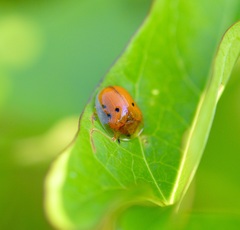
Charidotella sexpunctata, the golden tortoise beetle, is a species of beetle in the leaf beetle family, Chrysomelidae. It is native to the Americas, and very broadly distributed. Charidotella sexpunctata in North America was formerly known as Metriona bicolor. The species has also been seen in regions reaching up to Argentina.

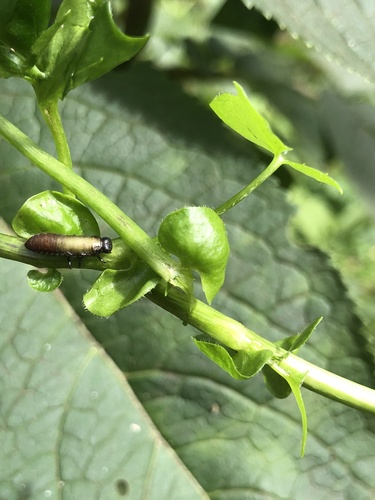
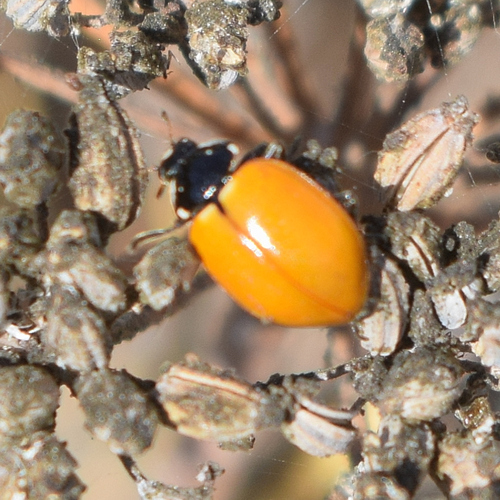
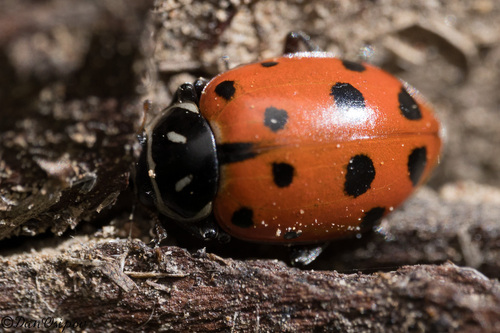
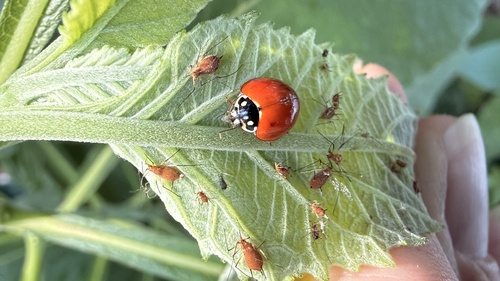
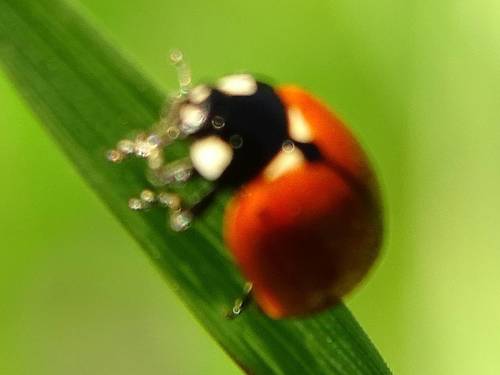
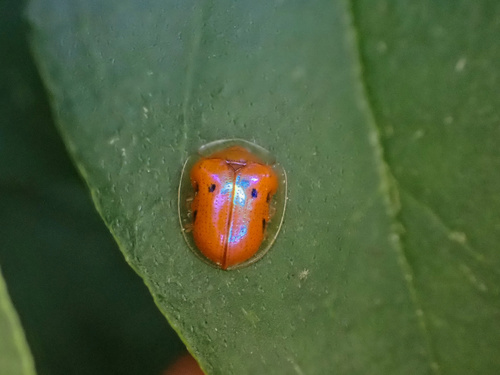
There are two subspecies, ssp. bicolor and ssp. sexpunctata. Adult C. sexpunctata measure 5–7 millimetres (0.2–0.3 in) in length. They are variable in color from reddish-brown with black spots to brilliant, mirror-like gold, earning it the nickname "goldbug". Elytral margins are expanded and nearly transparent.

The color changes through its development, during mating, and during times of disturbance, such as when it is touched by a human researcher. Scientists have not examined the color-change mechanism in this species. However, color change in the related Panamanian Charidotella egregia (also called 'golden tortoise beetle') occurs when this beetle's elytra hydrate and dehydrate. Adults of both species can turn from shiny gold through reddish-brown when disturbed.

Female Charidotella sexpunctata lay clusters... Wikipedia →
Global Distribution

Parks Where Found

# Park Country Daily sighting probability
1 Channel Islands National Park 🇺🇸 United States
~10%
2 Great Smoky Mountains National Park 🇺🇸 United States
<5%
3 Shenandoah National Park 🇺🇸 United States
<5%

Cities Where Found

# City Country Daily sighting probability
1 Boston 🇺🇸 United States
~10%
2 Buenos Aires 🇦🇷 Argentina
~10%
3 San José 🇨🇷 Costa Rica
~10%
4 Montreal 🇨🇦 Canada
~10%
5 Detroit 🇺🇸 United States
<5%
6 Belo Horizonte 🇧🇷 Brazil
<5%
7 Washington 🇺🇸 United States
<5%
8 Toronto 🇨🇦 Canada
<5%
9 Baltimore 🇺🇸 United States
<5%
10 Philadelphia 🇺🇸 United States
<5%

Before you go

What are the chances of seeing a Golden Tortoise Beetle in Channel Islands National Park?

With luck

About 10% of wildlife watchers report a Golden Tortoise Beetle sighting in Channel Islands National Park on a given day, based on 21 verified sightings from GBIF citizen-science data from 2019 to 2026. It is the 43rd most-seen of the 131 insects we can rate there. Over three days the chance rises to about 30%, and over a week to about 50%, if each day is a fresh chance.

When is the best time to see a Golden Tortoise Beetle in Channel Islands National Park?

May and August

In those months about 20% of wildlife watchers report a Golden Tortoise Beetle in Channel Islands National Park on a given day, against under 5% in January and October, the lowest months. Those are among Channel Islands National Park's driest months, with almost no rain against 60 mm in January.

What time of day is best to see a Golden Tortoise Beetle?

Between 10 am and 1 pm

Across all the parks we cover, that three-hour window holds the most Golden Tortoise Beetle sightings with a recorded time, and about 9 in 10 of them come between 6 am and 6 pm: it is a daytime animal.

Is Channel Islands National Park the best place to see a Golden Tortoise Beetle?

Yes

Of the 3 parks where we can rate Golden Tortoise Beetle sightings, Channel Islands National Park has the highest daily chance: about 10%. Next come Great Smoky Mountains National Park (United States, under 5%) and Shenandoah National Park (United States, under 5%).

Where does the Golden Tortoise Beetle sighting chance come from?

GBIF citizen-science records

It is estimated from how often the Golden Tortoise Beetle is recorded against all the insects logged in Channel Islands National Park (21 verified sightings from 2019 to 2026), calibrated against known sighting rates. Figures are rounded to the nearest 10% because citizen-science data supports honest approximations, not decimals, and months with records from fewer than five people show "—". How it works.

← Back to Channel Islands National Park