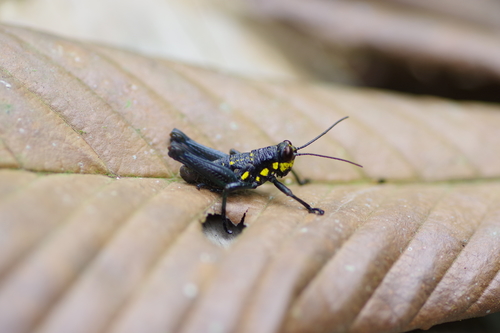
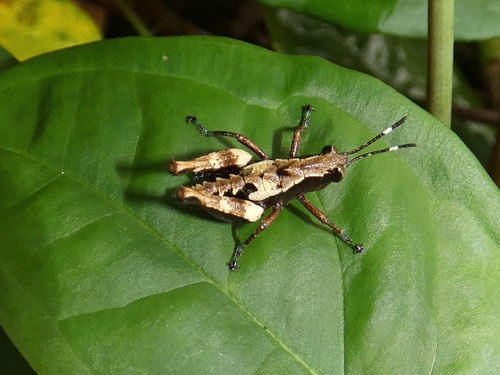
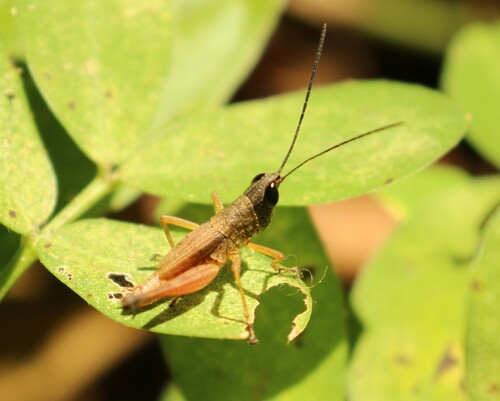
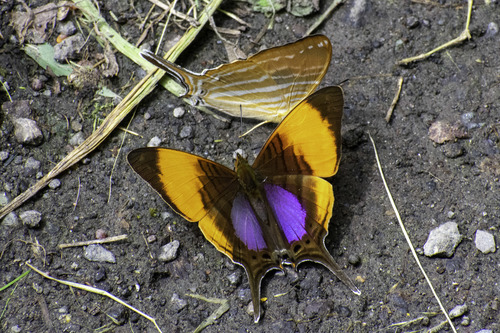
Rhinoceros Katydid

Rhinoceros Katydid

Copiphora rhinoceros

Daily sighting probability ~20% · Possible
at Chirripó National Park

In 3 days ~40% in a week ~70%

17 Verified sightings at Chirripó National Park From 2019 to 2026
493 In all 9 parks
March Best month
🌙 Nocturnal When it's spotted

About the Rhinoceros Katydid

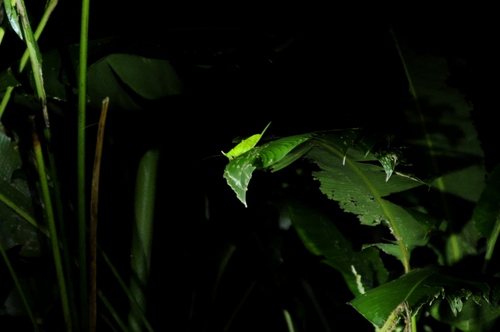
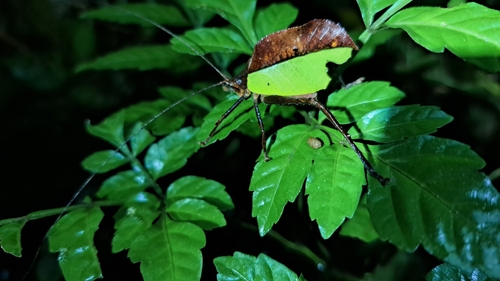
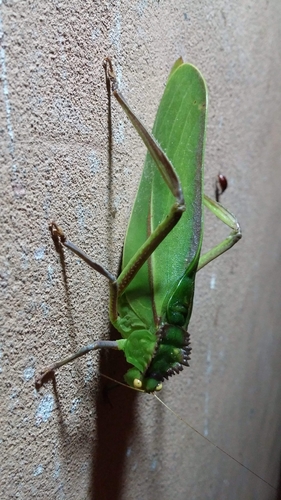
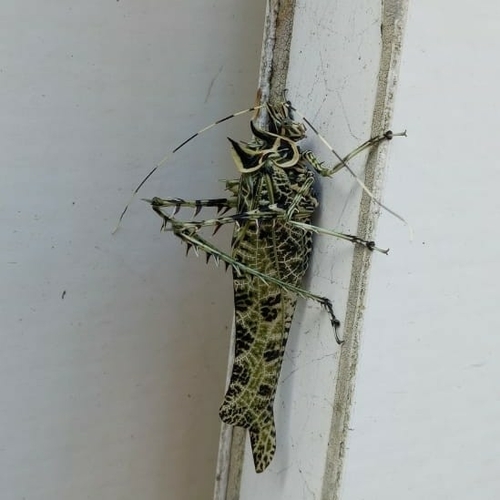
Copiphora rhinoceros, the rhinoceros katydid, is a relatively large, up to about 7.5 cm (3 in) long, species of katydid found in Central America. It belongs to a group known as the conehead katydids, several of which have a horn-like projection on the top of the head. The horn of the rhinoceros katydid is used to ward off attacks from hungry bats. Unlike most katydids, which are herbivores, the rhinoceros katydid is an omnivore, feeding on fruit, seeds, flowers, invertebrates, frog eggs and small lizards. The species can be quite noisy during the night and produces one of the dominant sounds in Central American lowland forests. Its lifespan is one to two years.

It was first described in 1888 by Alphonse Pictet in his Locustides Nouveaux ou peu connus de Musée de Genève (New or Little-known Locusts of the Geneva Museum). Wikipedia →

Global Distribution

Parks Where Found

# Park Country Daily sighting probability
1 Tortuguero National Park 🇨🇷 Costa Rica
~30%
2 Monteverde Cloud Forest Reserve 🇨🇷 Costa Rica
~30%
3 Tenorio Volcano National Park 🇨🇷 Costa Rica
~30%
4 Braulio Carrillo National Park 🇨🇷 Costa Rica
~30%
5 Arenal Volcano National Park 🇨🇷 Costa Rica
~20%
6 Chirripó National Park 🇨🇷 Costa Rica
~20%
7 Gandoca-Manzanillo Wildlife Refuge 🇨🇷 Costa Rica
~10%
8 Cahuita National Park 🇨🇷 Costa Rica
~10%
9 Tapantí-Macizo de la Muerte National Park 🇨🇷 Costa Rica
~10%

Before you go

What are the chances of seeing a Rhinoceros Katydid in Chirripó National Park?

Possible

About 20% of wildlife watchers report a Rhinoceros Katydid sighting in Chirripó National Park on a given day, based on 17 verified sightings from GBIF citizen-science data from 2019 to 2026. It is the 20th most-seen of the 127 insects we can rate there. Over three days the chance rises to about 40%, and over a week to about 70%, if each day is a fresh chance.

When is the best time to see a Rhinoceros Katydid in Chirripó National Park?

March and September

In those months about 30% of wildlife watchers report a Rhinoceros Katydid in Chirripó National Park on a given day, against under 5% in February, May, August and October, the lowest months.

What time of day is best to see a Rhinoceros Katydid?

Between 6 and 9 pm

Across all the parks we cover, that three-hour window holds the most Rhinoceros Katydid sightings with a recorded time, and about 8 in 10 of them come between 6 pm and 6 am: it is mostly seen at night.

Which relatives of the Rhinoceros Katydid live in Chirripó National Park?

Same family: Tettigoniidae

The closest relatives of the Rhinoceros Katydid that you can see in Chirripó National Park (family Tettigoniidae, Katydids) are Mimetica incisa (about 10%), Haemodiasma tessellata (about 10%) and Steirodon championi (about 10%), with each one's daily chance of a sighting.

Where does the Rhinoceros Katydid sighting chance come from?

GBIF citizen-science records

It is estimated from how often the Rhinoceros Katydid is recorded against all the insects logged in Chirripó National Park (17 verified sightings from 2019 to 2026), calibrated against known sighting rates. Figures are rounded to the nearest 10% because citizen-science data supports honest approximations, not decimals, and months with records from fewer than five people show "—". How it works.

← Back to Chirripó National Park