Twister

Twister

Tholymis tillarga

Daily sighting probability ~10% · With luck
at Chobe National Park

In 3 days ~20% in a week ~40%

5 Verified sightings at Chobe National Park From 2019 to 2026
58 In all 6 parks
January Best month
☀️🌙 Day & Night When it's spotted

About the Twister

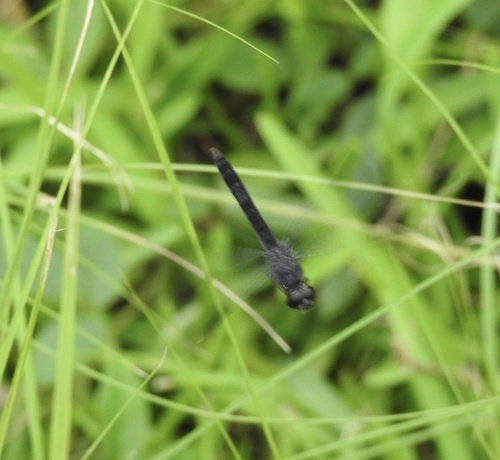
Tholymis tillarga, the coral-tailed cloudwing, is a species of dragonfly in the family Libellulidae. It is found from tropical West Africa to Asia, Australia and the Pacific Islands. Common names include old world twister, evening skimmer, crepuscular darter, foggy-winged twister, and twister.

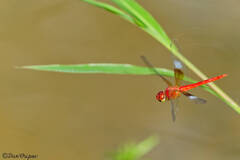
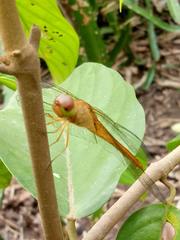
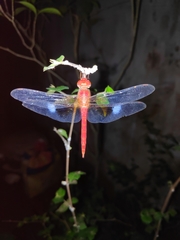
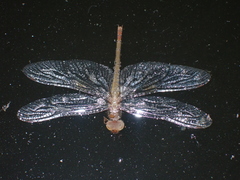
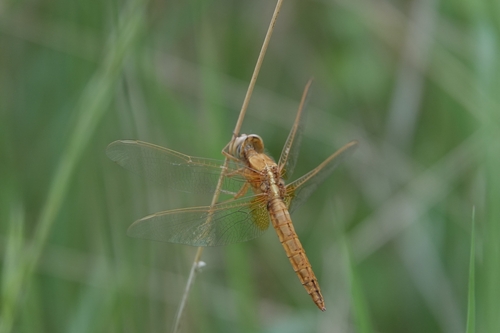
It is a medium sized dragonfly with reddish eyes, yellowish red thorax and coral red abdomen. Its wings are transparent; but hind wings have a golden-brown patch in the base, bordered by a cloudy-white patch. Female is brown and lacks the cloudy-white patch in the hind-wings.

It is a migrant with a permanent presence in humid parts of the tropics. It breeds in standing water-bodies; and prefers weedy ponds, swamps and lakes. They are active at dusk and dawn, as well as during cloudy days. The genus name Tholymis is possibly derived from the Greek θώραξ (thōrax, "thorax" or "chest") and λυγαῖος (lygaios, "shadowy" or "murky"), together with the common dragonfly suffix -themis. The name may refer to the dark-coloured thorax of males of Tholymis citrina.

The derivation of the species name tillarga is unknown. List of odonates... Wikipedia →

Global Distribution

Parks Where Found

# Park Country Daily sighting probability
1 Ankarafantsika National Park 🇲🇬 Madagascar
~50%
2 Khao Sok National Park 🇹🇭 Thailand
~10%
3 Khao Yai National Park 🇹🇭 Thailand
~10%
4 Daintree National Park 🇦🇺 Australia
~10%
5 Chobe National Park 🇧🇼 Botswana
~10%
6 iSimangaliso Wetland Park 🇿🇦 South Africa
~10%

Cities Where Found

# City Country Daily sighting probability
1 Yogyakarta 🇮🇩 Indonesia
~30%
2 Kochi 🇮🇳 India
~30%
3 Ouagadougou 🇧🇫 Burkina Faso
~20%
4 Vadodara 🇮🇳 India
~20%
5 Thiruvananthapuram 🇮🇳 India
~20%
6 Salem 🇮🇳 India
~20%
7 Kollam 🇮🇳 India
~20%
8 Thrissur 🇮🇳 India
~20%
9 Davao City 🇵🇭 Philippines
~20%
10 Lagos 🇳🇬 Nigeria
~20%

Before you go

What are the chances of seeing a Twister in Chobe National Park?

With luck

About 10% of wildlife watchers report a Twister sighting in Chobe National Park on a given day, based on 5 verified sightings from GBIF citizen-science data from 2019 to 2026. It is the 19th most-seen of the 25 insects we can rate there. Over three days the chance rises to about 20%, and over a week to about 40%, if each day is a fresh chance.

When is the best time to see a Twister in Chobe National Park?

January

In that month about 30% of wildlife watchers report a Twister in Chobe National Park on a given day, against under 5% in March and June–December, the lowest months. That is one of Chobe National Park's wettest months, with about 150 mm of rain against almost none in May.

What time of day is best to see a Twister?

Between 2 and 5 pm

Across all the parks we cover, that three-hour window holds the most Twister sightings with a recorded time, and about 6 in 10 of them come between 6 am and 6 pm: it is seen both by day and at night.

Which relatives of the Twister live in Chobe National Park?

Same family: Libellulidae

The closest relatives of the Twister that you can see in Chobe National Park (family Libellulidae, Skimmers) are Southern Banded Groundling (about 20%), Broad Scarlet (about 10%) and Violet Dropwing (about 10%), with each one's daily chance of a sighting.

Where does the Twister sighting chance come from?

GBIF citizen-science records

It is estimated from how often the Twister is recorded against all the insects logged in Chobe National Park (5 verified sightings from 2019 to 2026), calibrated against known sighting rates. Figures are rounded to the nearest 10% because citizen-science data supports honest approximations, not decimals, and months with records from fewer than five people show "—". How it works.

← Back to Chobe National Park