Cuban Green Woodpecker

Cuban Green Woodpecker

Xiphidiopicus percussus

Silhouette: Pepe Reigada · PhyloPic

LCLeast ConcernNTVUENCR Endemic
Daily sighting probability ~30% · Possible
at Ciénaga de Zapata

In 3 days ~70% in a week ~90%

505 Verified sightings at Ciénaga de Zapata From 2019 to 2026
505 In 1 park
March Best month
☀️ Diurnal When it's spotted

About the Cuban Green Woodpecker

The Cuban green woodpecker (Xiphidiopicus percussus) is a species of woodpecker in the family Picidae and tribe Melanerpini, known locally in Cuban Spanish as carpintero verde (literally "green woodpecker"). It is the only species within the genus Xiphidiopicus and is one of two woodpeckers endemic to Cuba, along with the likely-extinct Cuban ivory-billed woodpecker. It is the most widespread and common woodpecker in Cuba, inhabiting primarily woodlands, as well as dry and wet forests, pine forests and mangroves. The population of the Cuban green woodpecker is stable and its status is listed as "Least Concern".

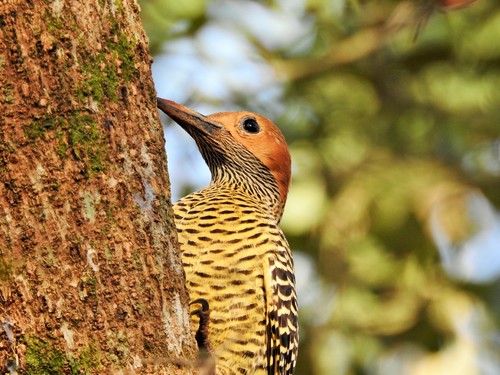
A medium-sized and colorful bird, the Cuban green woodpecker is similar to a sapsucker in general shape and size. Featuring olive green overparts and yellow, streaked underparts, the Cuban green woodpecker usually appears crested, and features a bright red upper breast, as well as a black chin contrasting a white face and supercilium. In males, a red crown is present, while females possess black crowns with white stripes. The area around the cloaca, or the crissum, is yellow with black barring.

Its beak is short and straight with a progressively darkening coloration... Wikipedia →

Sounds

Call0:11

Cuba · 2025

© FREDERIC Lionel · XC996710 · CC BY-NC-SA 4.0

Song0:54

Cuba · 2013

© Gerard Gorman · XC126847 · CC BY-NC-SA 3.0

Recording0:28

Cuba · 2018

© David Bradley · XC399140 · CC BY-NC-SA 4.0

Global Distribution

Parks Where Found

# Park Country Daily sighting probability
1 Ciénaga de Zapata 🇨🇺 Cuba
~30%

More parks will be added in future updates.

Cities Where Found

# City Country Daily sighting probability
1 Havana 🇨🇺 Cuba
~10%

Before you go

What are the chances of seeing a Cuban Green Woodpecker in Ciénaga de Zapata?

Possible

About 30% of wildlife watchers report a Cuban Green Woodpecker sighting in Ciénaga de Zapata on a given day, based on 505 verified sightings from GBIF citizen-science data from 2019 to 2026. It is the 39th most-seen of the 177 birds we can rate there. Over three days the chance rises to about 70%, and over a week to about 90%, if each day is a fresh chance.

When is the best time to see a Cuban Green Woodpecker in Ciénaga de Zapata?

March and May

In those months about 50% of wildlife watchers report a Cuban Green Woodpecker in Ciénaga de Zapata on a given day, against about 10% in October, the lowest month. September has too few records to rate.

What time of day is best to see a Cuban Green Woodpecker?

Between 8 and 11 am

Across all the parks we cover, that three-hour window holds the most Cuban Green Woodpecker sightings with a recorded time, and about 9 in 10 of them come between 6 am and 6 pm: it is a daytime animal.

Where else can you see a Cuban Green Woodpecker?

Only Ciénaga de Zapata, in our data

Ciénaga de Zapata is the only park on Wallace's Line with enough records to rate Cuban Green Woodpecker sightings: about 30% of wildlife watchers there report one on a given day.

Which relatives of the Cuban Green Woodpecker live in Ciénaga de Zapata?

Same family: Picidae

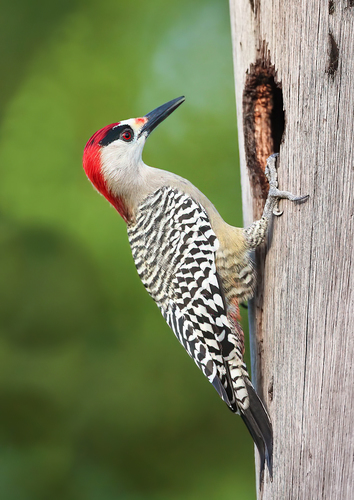
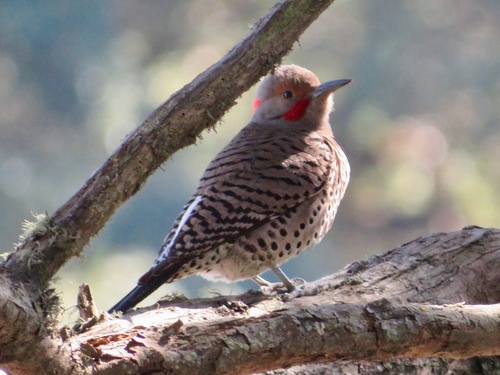
The closest relatives of the Cuban Green Woodpecker that you can see in Ciénaga de Zapata (family Picidae, Woodpeckers) are West Indian Woodpecker (about 40%), Yellow-bellied Sapsucker (about 10%) and Northern Flicker (about 10%), with each one's daily chance of a sighting.

Where does the Cuban Green Woodpecker sighting chance come from?

GBIF citizen-science records

It is estimated from how often the Cuban Green Woodpecker is recorded against all the birds logged in Ciénaga de Zapata (505 verified sightings from 2019 to 2026), calibrated against known sighting rates. Figures are rounded to the nearest 10% because citizen-science data supports honest approximations, not decimals, and months with records from fewer than five people show "—". How it works.

← Back to Ciénaga de Zapata