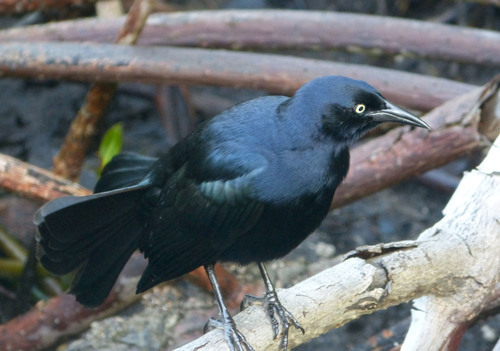
About the Fernandina's Flicker
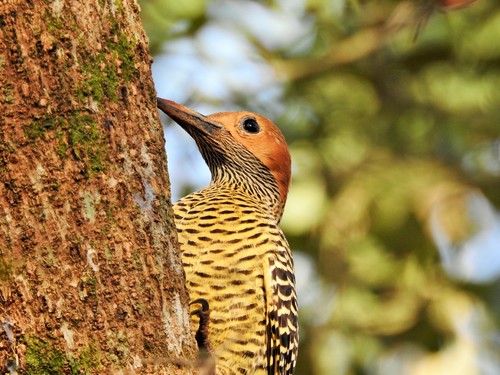
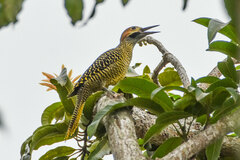
Fernandina's flicker (Colaptes fernandinae), also known as the Cuban flicker, is a species of bird in the woodpecker family, Picidae. Endemic to Cuba, it is severely threatened by habitat loss and is one of the most endangered species of woodpecker in the world.
The species was originally described by Irish zoologist Nicholas Aylward Vigors in 1827, based on a holotype specimen collected from near Havana. The specific epithet, fernandinae, references José María Herrera y Herrera, Second Conde de Fernandina, a wealthy Cuban noble who operated several sugar cane plantations. In 1873, based primarily on a lack of feather covering over the nostrils, a streaked crown, and a completely barred tail whch lacks any solidly black area, it was reassigned by English zoologist Philip Sclater and English naturalist Osbert Salvin to a newly erected monotypic genus, Nesoceleus. In 1965, it was placed back in genus Colaptes by American ornithologist Lester L. Short due to lacking sufficiently divergent traits to warrant status as a monotypic genus.
It is the most basal species within Colaptes. Fernandina's flicker likely originated from North American flicker ancestors, which date to... Wikipedia →