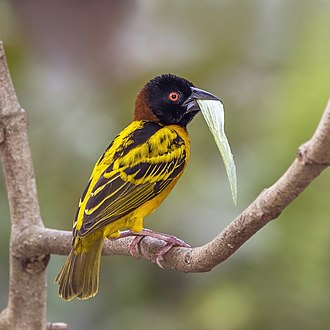
Olive-bellied Sunbird

Olive-bellied Sunbird

Cinnyris chloropygius

Silhouette: Sheatherius · PhyloPic

LCLeast ConcernNTVUENCR
Daily sighting probability <5% · Rare
at Abuja

In 3 days ~10% in a week ~30%

8 Verified sightings at Abuja
1,295 In all 10 parks From 2019 to 2026
November Best month
☀️ Diurnal When it's spotted

About the Olive-bellied Sunbird

The olive-bellied sunbird (Cinnyris chloropygius) is a species of bird in the family Nectariniidae. It is widely spread across the African tropical rainforest primarily throughout West and Central Africa, but is also found in Southern and East Africa.

The olive-bellied sunbird is a small species, and very similar to the tiny sunbird (Cinnyris minullus) in appearance. The adult male has a metallic green head, back and throat, dark brown wings, a metallic blue rump and a black tail with a purplish-blue sheen. It has a narrow blue breast band above a wider scarlet breast patch, lemon-yellow pectoral tufts and an olive belly. It differs from the slightly smaller tiny sunbird in having a larger beak and no blue bars among the red breast plumage. The adult female has an olive-brown head and upper parts, dark brown wings and dark brown tail. The underparts are olive washed with yellow, and are yellower and less streaked than the tiny sunbird.

The olive-bellied sunbird moves about singly or in pairs, or sometimes in groups of about six birds. It forages in the lower parts of the canopy, feeding on caterpillars, beetles, spiders, nectar, flowers and seeds. The... Wikipedia →

Sounds

Song1:06

Uganda · 2025

© Bernard BOUSQUET · XC1064922 · CC BY-NC-SA 4.0

Call0:16

Kenya · 2024

© Peter Boesman · XC948061 · CC BY-NC-ND 4.0

Flight call0:51

Cameroon · 2019

© Andres Angulo Rubiano · XC489841 · CC BY-NC-SA 4.0

Global Distribution

Parks Where Found

# Park Country Daily sighting probability
1 Kibale National Park 🇺🇬 Uganda
~50%
2 Semuliki National Park 🇺🇬 Uganda
~10%
3 Bwindi Impenetrable National Park 🇺🇬 Uganda
~10%
4 Virunga National Park 🇨🇩 Democratic Republic of the Congo
~10%
5 Queen Elizabeth National Park 🇺🇬 Uganda
~10%
6 Volcanoes National Park 🇷🇼 Rwanda
~10%
7 Murchison Falls National Park 🇺🇬 Uganda
<5%
8 Nyungwe National Park 🇷🇼 Rwanda
<5%
9 Lake Mburo National Park 🇺🇬 Uganda
<5%
10 Akagera National Park 🇷🇼 Rwanda
<5%

Cities Where Found

# City Country Daily sighting probability
1 Yaoundé 🇨🇲 Cameroon
~50%
2 Kampala 🇺🇬 Uganda
~30%
3 Brazzaville 🇨🇬 Republic of the Congo
~30%
4 Lagos 🇳🇬 Nigeria
~10%
5 Kigali 🇷🇼 Rwanda
~10%
6 Abuja 🇳🇬 Nigeria
<5%

Before you go

What are the chances of seeing an Olive-bellied Sunbird in Abuja?

Rare

Under 5% of wildlife watchers report an Olive-bellied Sunbird sighting in Abuja on a given day, based on 8 verified sightings from GBIF citizen-science data. It is the 108th most-seen of the 131 birds we can rate there. Over three days the chance rises to about 10%, and over a week to about 30%, if each day is a fresh chance.

When is the best time to see an Olive-bellied Sunbird in Abuja?

February–March, July and November

In those months about 10% of wildlife watchers report an Olive-bellied Sunbird in Abuja on a given day, against under 5% in April–June, August–October and December–January, the lowest months. Those are among Abuja's driest months, with about 60 mm of rain a month against 250 mm in August.

What time of day is best to see an Olive-bellied Sunbird?

Between 7 and 10 am

Across all the parks we cover, that three-hour window holds the most Olive-bellied Sunbird sightings with a recorded time, and about 8 in 10 of them come between 6 am and 6 pm: it is a daytime animal.

Is Abuja the best place to see an Olive-bellied Sunbird?

6th of 6

Of the 6 cities where we can rate Olive-bellied Sunbird sightings, Abuja ranks 6th at under 5%. The best odds are in Yaoundé (Cameroon, about 50%), Kampala (Uganda, about 30%) and Brazzaville (Republic of the Congo, about 30%).

Which relatives of the Olive-bellied Sunbird live in Abuja?

Same genus: Cinnyris

The closest relatives of the Olive-bellied Sunbird that you can see in Abuja (genus Cinnyris, Cinnyris Sunbirds) are Variable Sunbird (about 70%), Splendid Sunbird (about 20%) and Copper Sunbird (about 10%), with each one's daily chance of a sighting.

Where does the Olive-bellied Sunbird sighting chance come from?

GBIF citizen-science records

It is estimated from how often the Olive-bellied Sunbird is recorded against all the birds logged in Abuja (8 verified sightings), calibrated against known sighting rates. Figures are rounded to the nearest 10% because citizen-science data supports honest approximations, not decimals, and months with records from fewer than five people show "—". How it works.

← Back to Abuja