About the New Zealand Looper
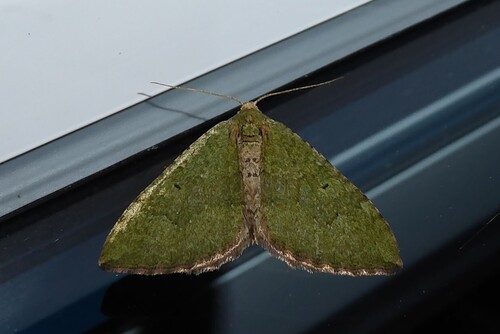
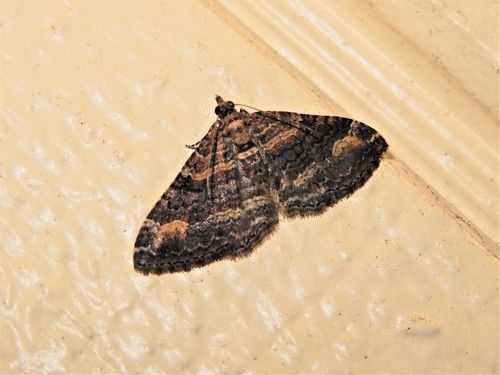
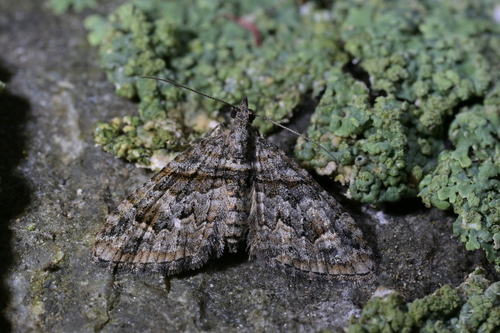
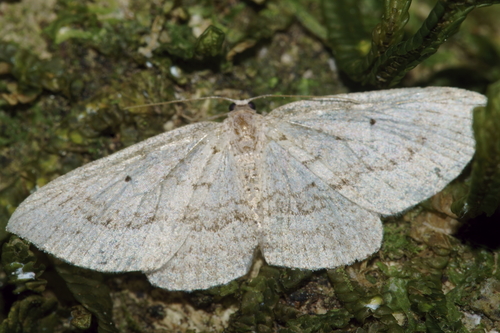
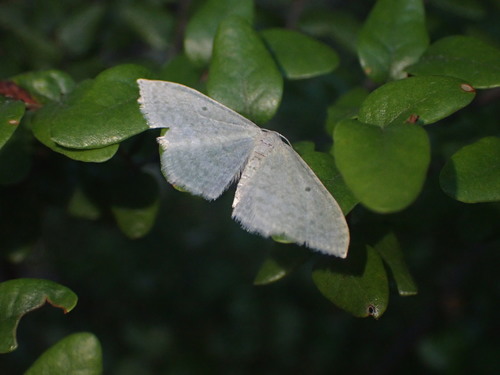
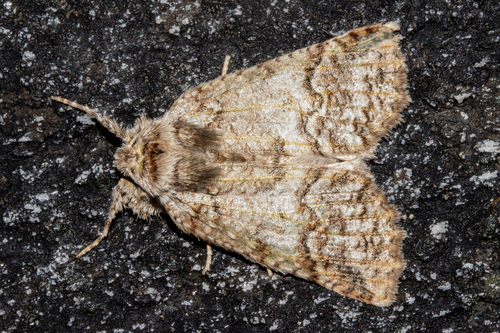
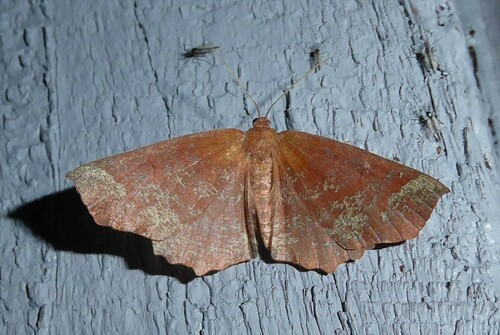
Epyaxa rosearia, the New Zealand looper or plantain moth, is a moth of the family Geometridae. It is endemic to New Zealand. E. rosearia was first described by Edward Doubleday in 1843 and named Cidaria rosearia. The eggs of this species are pale yellow and oval with a smooth shell.
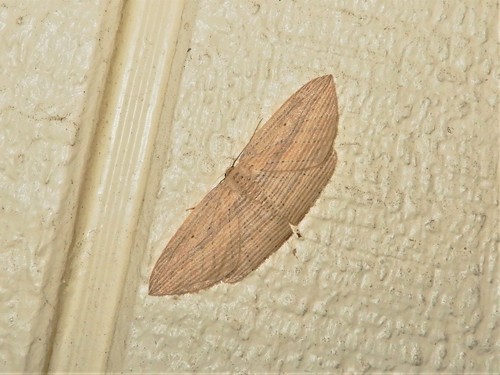
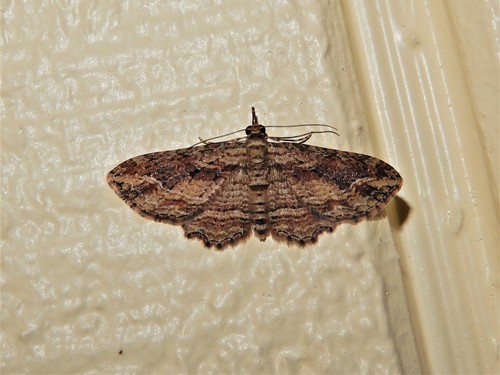
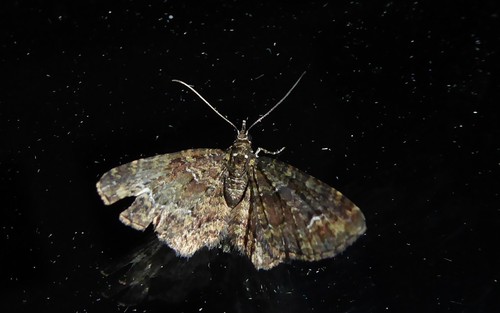
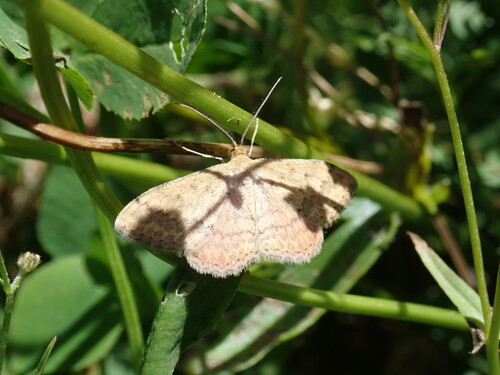
Alex Purdie describes the caterpillar of this species as: Length, at rest, about three- quarters of an inch. Colour light-green, with indistinct whitish longitudinal lines, and a narrow median dorsal stripe of the ground colour, edged on each side by one of these whitish lines; a subdorsal whitish line on each side of the median stripe; the ground colour shows again as a lateral line, edged below with whitish. Under-side with delicate whitish or yellowish longitudinal tracings, as on the upper side. The junctions of the segments show yellowish or whitish rings when the larva contracts. Head, greenish-yellow. Body tapering somewhat to the head. The caterpillars form a chrysalis that is glossy and very dark brownish black. They can be found amongst the leaves of the forest floor. E. rosearia adults are varied in appearance. They can have a pinkish tinge or can be brownish... Wikipedia →