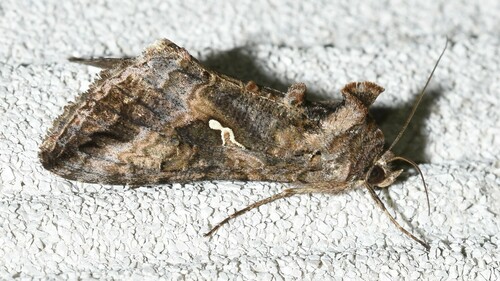
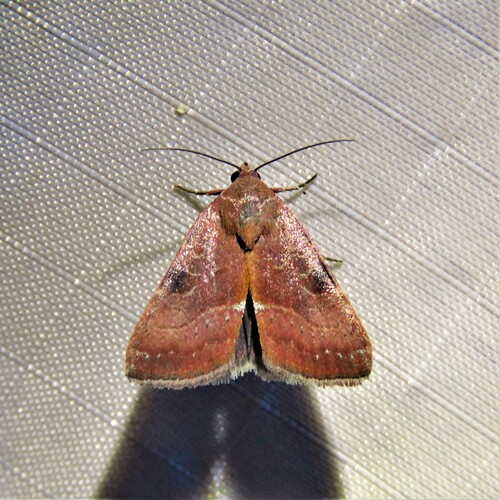
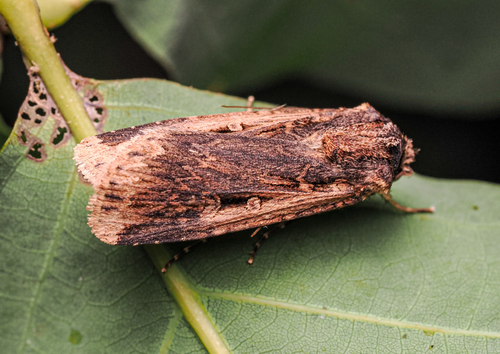
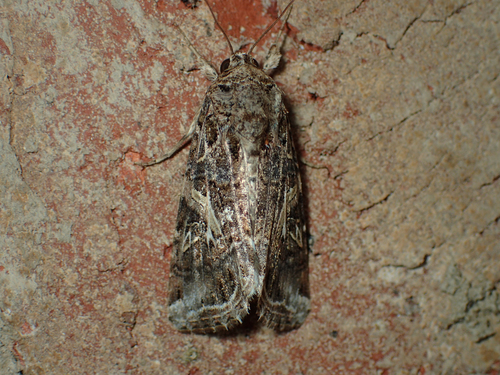
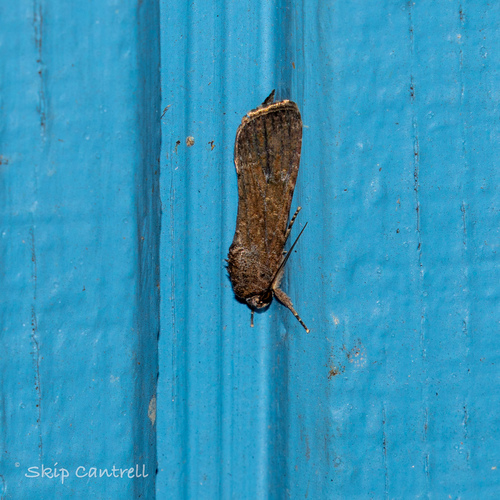
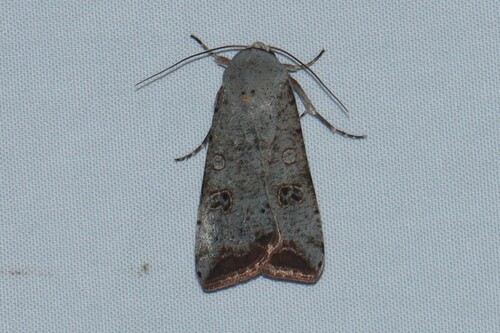
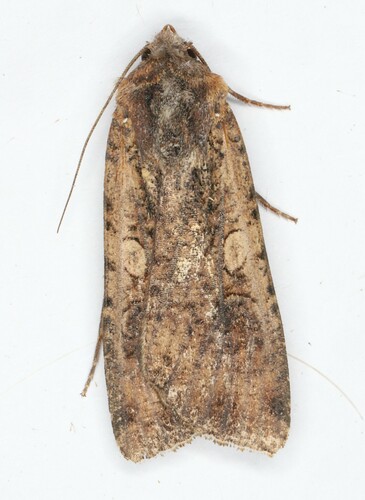
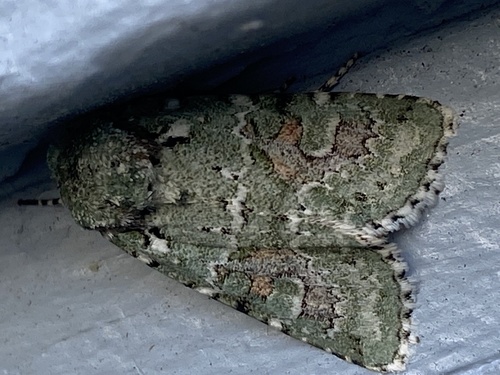
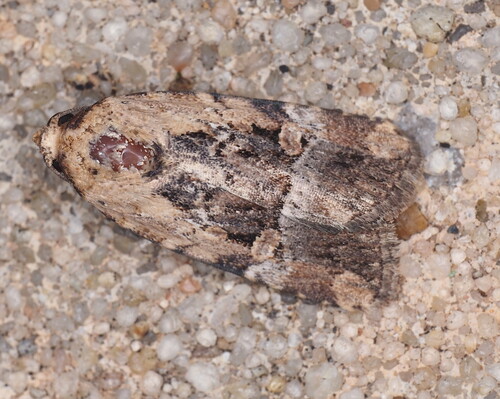
Gray Looper Moth

Gray Looper Moth

Rachiplusia ou

Daily sighting probability ~10% · With luck
at Austin

In 3 days ~20% in a week ~50%

198 Verified sightings at Austin
January Best month

About the Gray Looper Moth

Rachiplusia ou, commonly known as the gray looper moth, is a species of moth in the family Noctuidae. The species was first described by Achille Guenée in 1852. It is found in the southern and eastern parts of the United States, Montana, Nova Scotia, from Mexico to Venezuela to Ecuador and the Dominican Republic.

The wingspan is 31–41 mm. Adults are on wing from May to October or year round in the southern states. The larvae feed on various herbaceous plants, including Chenopodium ambrosioides, Nicotiana tabacum, Trifolium, Mentha, Triticum aestivum and Tropaeolum. Wikipedia →

Global Distribution

Parks Where Found

# Park Country Daily sighting probability

More parks will be added in future updates.

Cities Where Found

# City Country Daily sighting probability
1 Austin 🇺🇸 United States
~10%
2 Dallas 🇺🇸 United States
~10%
3 San Antonio 🇺🇸 United States
<5%
4 Chicago 🇺🇸 United States
<5%
5 Houston 🇺🇸 United States
<5%
6 Mexico City 🇲🇽 México
<5%

Before you go

What are the chances of seeing a Gray Looper Moth in Austin?

With luck

About 10% of wildlife watchers report a Gray Looper Moth sighting in Austin on a given day, based on 198 verified sightings from GBIF citizen-science data. It is the 165th most-seen of the 1624 insects we can rate there. Over three days the chance rises to about 20%, and over a week to about 50%, if each day is a fresh chance.

When is the best time to see a Gray Looper Moth in Austin?

November to February

In those months about 20% of wildlife watchers report a Gray Looper Moth in Austin on a given day, against under 5% in May to September, the lowest months.

Is Austin the best place to see a Gray Looper Moth?

Yes

Of the 6 cities where we can rate Gray Looper Moth sightings, Austin has the highest daily chance: about 10%. Next come Dallas (United States, about 10%) and San Antonio (United States, under 5%).

Which relatives of the Gray Looper Moth live in Austin?

Same family: Noctuidae

The closest relatives of the Gray Looper Moth that you can see in Austin (family Noctuidae, Cutworm Moths and Allies) are Wedgling Moth (about 20%), Harp-Winged Tripudia Moth (about 20%) and Armyworm Moth (about 20%), with each one's daily chance of a sighting.

Where does the Gray Looper Moth sighting chance come from?

GBIF citizen-science records

It is estimated from how often the Gray Looper Moth is recorded against all the insects logged in Austin (198 verified sightings), calibrated against known sighting rates. Figures are rounded to the nearest 10% because citizen-science data supports honest approximations, not decimals, and months with records from fewer than five people show "—". How it works.

← Back to Austin