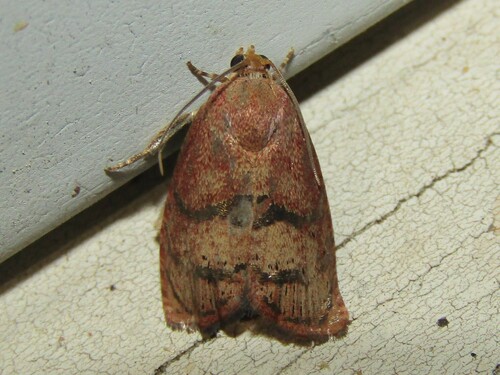
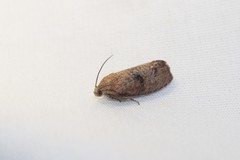
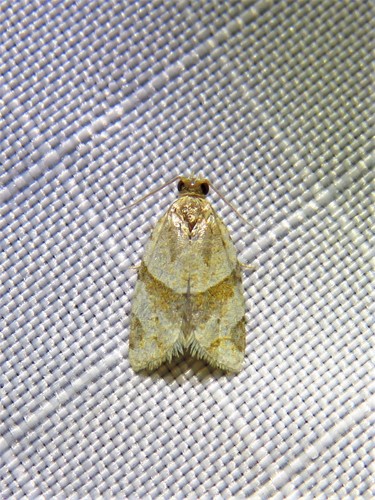
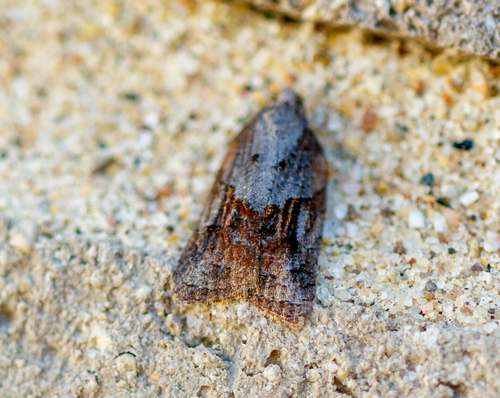
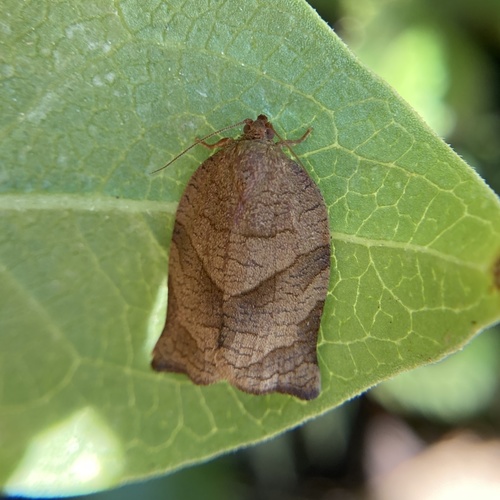
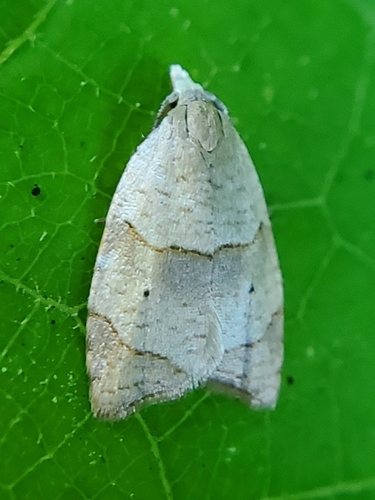
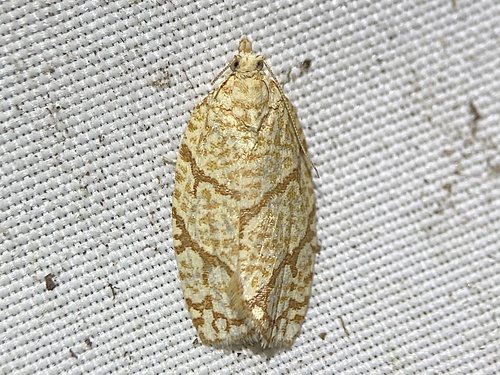
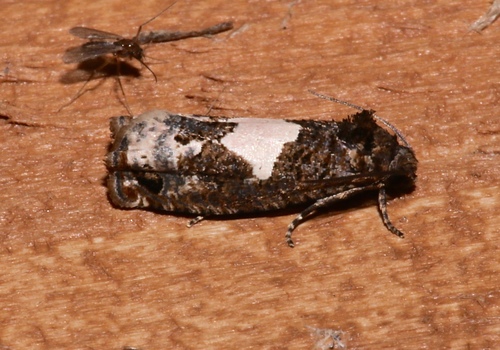
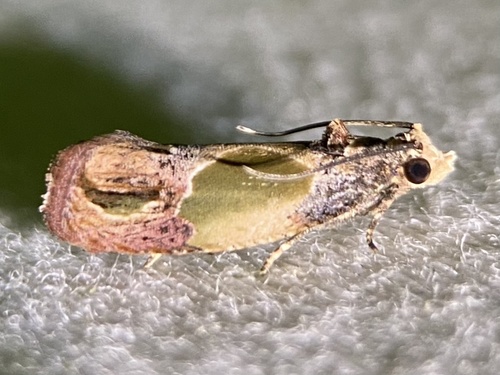
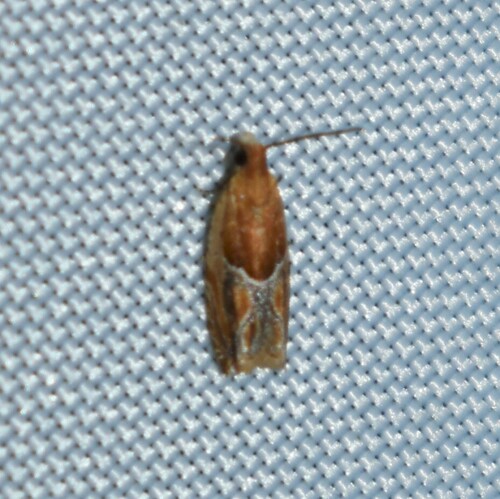
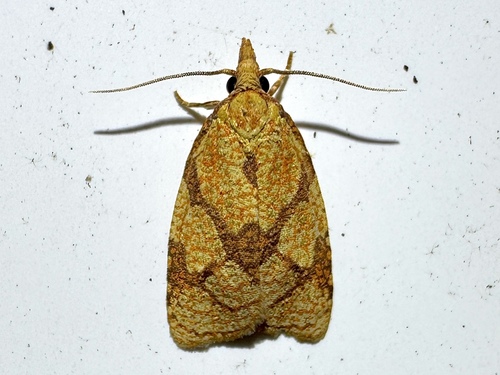
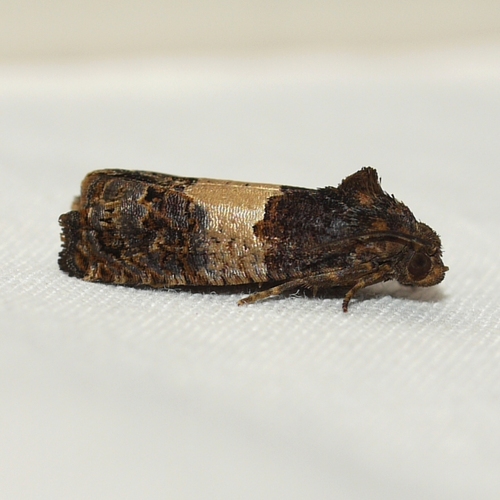
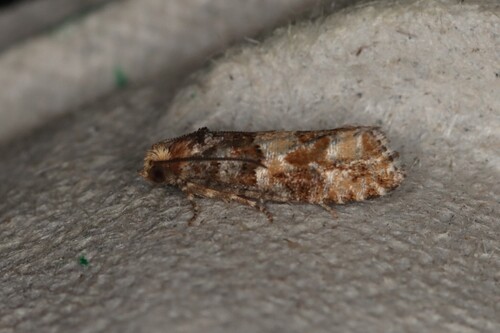
Filbertworm Moth

Filbertworm Moth

Cydia latiferreana

Daily sighting probability <5% · Rare
at Baltimore

In 3 days ~10% in a week ~30%

17 Verified sightings at Baltimore
32 In all 2 parks From 2019 to 2026
September Best month
🌙 Nocturnal When it's spotted

About the Filbertworm Moth

Cydia latiferreana, the filbertworm moth, is a moth of the family Tortricidae. It was formerly (and sometimes is still) separated in a monotypic genus Melissopus. It is found in most of North America. The wingspan is about 18 mm. Adults are on wing from July to October depending on the location.

The larvae (filbertworms) feed on the acorns of Quercus alba (white oak), Quercus macrocarpa, Quercus rubra and Quercus velutina but are most noted for feeding on hazelnuts—seeds of the genus Corylus—and are a major pest of hazelnut orchards in the Pacific northwest. Wikipedia →

Global Distribution

Parks Where Found

# Park Country Daily sighting probability
1 Shenandoah National Park 🇺🇸 United States
~10%
2 Acadia National Park 🇺🇸 United States
~10%

Cities Where Found

# City Country Daily sighting probability
1 Austin 🇺🇸 United States
~10%
2 Dallas 🇺🇸 United States
~10%
3 Houston 🇺🇸 United States
~10%
4 Boston 🇺🇸 United States
<5%
5 Baltimore 🇺🇸 United States
<5%
6 Chicago 🇺🇸 United States
<5%
7 Sacramento 🇺🇸 United States
<5%
8 Washington 🇺🇸 United States
<5%
9 San Francisco 🇺🇸 United States
<5%
10 San Antonio 🇺🇸 United States
<5%

Before you go

What are the chances of seeing a Filbertworm Moth in Baltimore?

Rare

Under 5% of wildlife watchers report a Filbertworm Moth sighting in Baltimore on a given day, based on 17 verified sightings from GBIF citizen-science data. It is the 322nd most-seen of the 705 insects we can rate there. Over three days the chance rises to about 10%, and over a week to about 30%, if each day is a fresh chance.

When is the best time to see a Filbertworm Moth in Baltimore?

August and September

In those months about 10% of wildlife watchers report a Filbertworm Moth in Baltimore on a given day, against under 5% in October to July, the lowest months.

What time of day is best to see a Filbertworm Moth?

Between 9 pm and midnight

Across all the parks we cover, that three-hour window holds the most Filbertworm Moth sightings with a recorded time, and about 7 in 10 of them come between 6 pm and 6 am: it is mostly seen at night.

Is Baltimore the best place to see a Filbertworm Moth?

5th of 16

Of the 16 cities where we can rate Filbertworm Moth sightings, Baltimore ranks 5th at under 5%. The best odds are in Austin (United States, about 10%), Dallas (United States, about 10%) and Houston (United States, about 10%).

Which relatives of the Filbertworm Moth live in Baltimore?

Same family: Tortricidae

The closest relatives of the Filbertworm Moth that you can see in Baltimore (family Tortricidae, Tortricid Leafroller Moths) are Garden Tortrix (about 10%), Red-Banded Leafroller Moth (about 10%) and Tufted Apple Bud Moth (about 10%), with each one's daily chance of a sighting.

Where does the Filbertworm Moth sighting chance come from?

GBIF citizen-science records

It is estimated from how often the Filbertworm Moth is recorded against all the insects logged in Baltimore (17 verified sightings), calibrated against known sighting rates. Figures are rounded to the nearest 10% because citizen-science data supports honest approximations, not decimals, and months with records from fewer than five people show "—". How it works.

← Back to Baltimore