Giant Leopard Moth

Giant Leopard Moth

Hypercompe scribonia

Daily sighting probability ~10% · With luck
at Baltimore

In 3 days ~30% in a week ~50%

71 Verified sightings at Baltimore
293 In all 7 parks From 2019 to 2026
September Best month
☀️ Diurnal When it's spotted

About the Giant Leopard Moth

The giant leopard moth (Hypercompe scribonia) is a moth of the family Erebidae. They are distributed through North America from southern Ontario, and southern and eastern United States through New England, Mexico, and south to Colombia. The obsolete name, Ecpantheria scribonia, is still occasionally encountered.

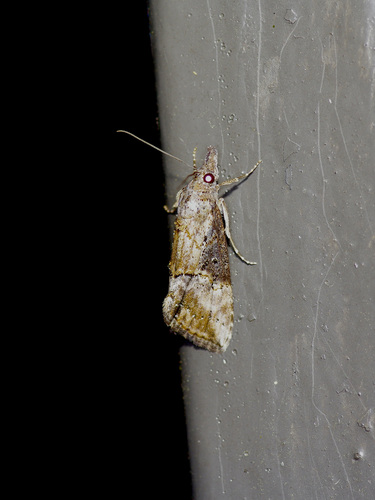
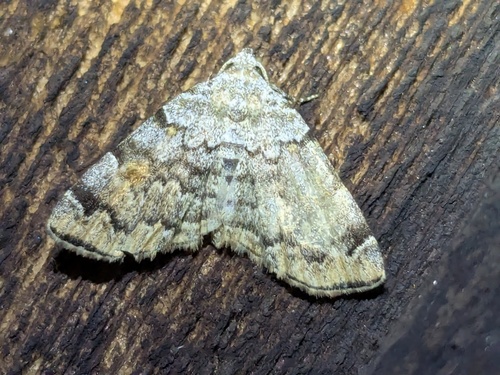
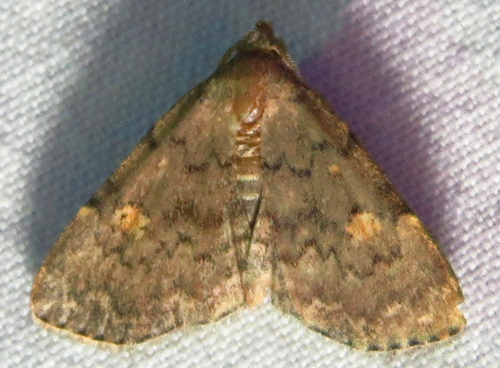
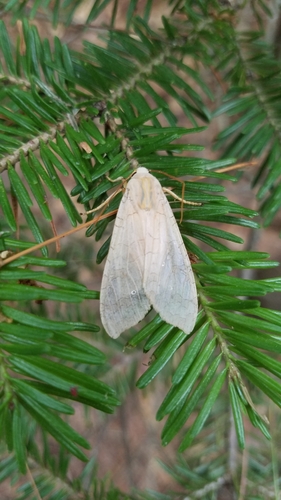
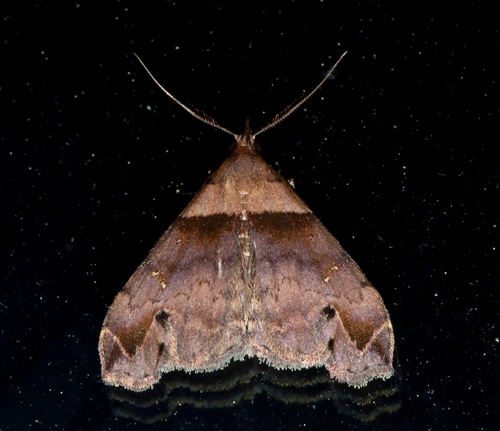
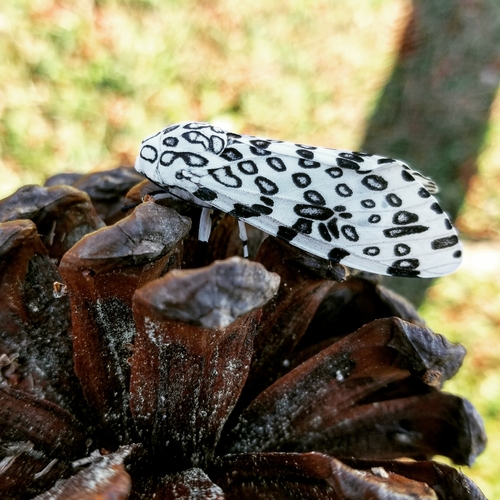
They are known to be attracted to bitter, unripe vegetables and broccoli flowers. This moth species has a wingspan of 76 mm (3 in). Its wings are bright white with a pattern of neat black blotches, some solid and some hollow. The overside of the abdomen is dark blue with orange markings, while the underside is white with solid black spots, and males have a narrow yellow line on the sides. Their legs have black and white bands. Adult moths are strictly nocturnal and do not generally fly before nightfall.

This species has a notable sexual dimorphism in size, with the adult male reaching about 51 mm (2 in) in length, while the adult female grows up to 30 mm (1.2 in). The leopard moth requires two years to complete its round of life. In Missouri, adults are on the wing from May to September and are multivoltine. During mating sessions, the wings of the male cover most of the female's abdomen, which can sometimes lead to the loss of wing scales in the female and have negative effects on her flight efficiency. Their mating sessions are notably long-lasting, taking more than 24 hours. They stay mostly immobile during the whole process, but move from spot to spot to thermoregulate, walking into shadowy areas if too hot or into sunlight if too cold. The male effectuates the locomotion, while the female folds her legs to make her easier to carry.

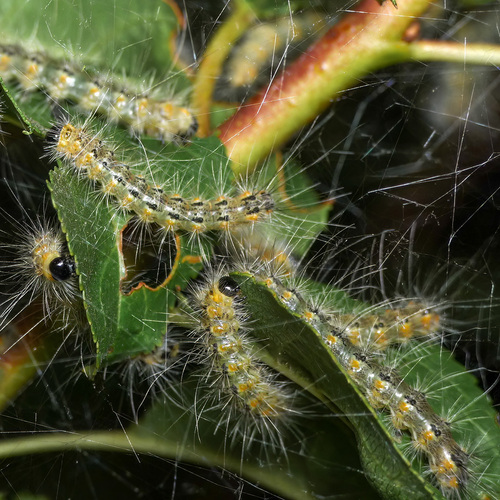
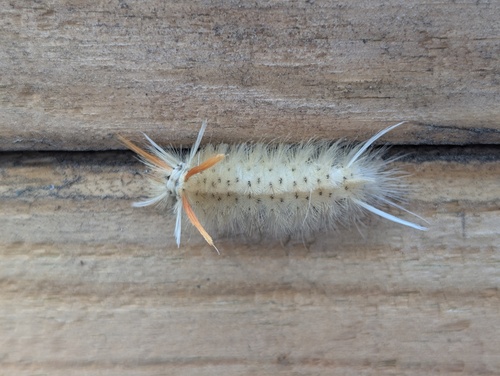
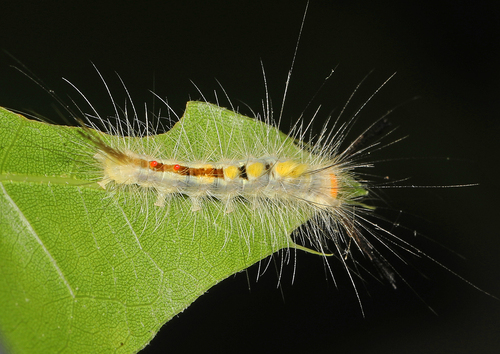
The caterpillar is of the "woolly bear" kind, with a thick coat of black bristles (setae) and red or orange bands between its segments, which become conspicuous when the caterpillar rolls into a ball for defense. Like the banded woolly bear, its hairs are not urticant nor venomous and do not typically cause irritation. The moth overwinters as a caterpillar, often under the bark of decaying wood. The caterpillar grows to be 7.6 cm (3 in) long. Wikipedia →
Global Distribution

Parks Where Found

# Park Country Daily sighting probability
1 Shenandoah National Park 🇺🇸 United States
~20%
2 Congaree National Park 🇺🇸 United States
~20%
3 Great Smoky Mountains National Park 🇺🇸 United States
~20%
4 Big Cypress National Preserve 🇺🇸 United States
~10%
5 Point Pelee National Park 🇨🇦 Canada
~10%
6 Everglades National Park 🇺🇸 United States
~10%
7 Merritt Island National Wildlife Refuge 🇺🇸 United States
~10%

Cities Where Found

# City Country Daily sighting probability
1 Baltimore 🇺🇸 United States
~10%
2 Washington 🇺🇸 United States
~10%
3 Philadelphia 🇺🇸 United States
~10%
4 Austin 🇺🇸 United States
~10%
5 San Antonio 🇺🇸 United States
~10%
6 Houston 🇺🇸 United States
~10%
7 Orlando 🇺🇸 United States
<5%
8 Dallas 🇺🇸 United States
<5%
9 Monterrey 🇲🇽 México
<5%
10 Boston 🇺🇸 United States
<5%

Before you go

What are the chances of seeing a Giant Leopard Moth in Baltimore?

With luck

About 10% of wildlife watchers report a Giant Leopard Moth sighting in Baltimore on a given day, based on 71 verified sightings from GBIF citizen-science data. It is the 62nd most-seen of the 705 insects we can rate there. Over three days the chance rises to about 30%, and over a week to about 50%, if each day is a fresh chance.

When is the best time to see a Giant Leopard Moth in Baltimore?

March to January

In those months about 10% of wildlife watchers report a Giant Leopard Moth in Baltimore on a given day, against under 5% in February, the lowest month.

What time of day is best to see a Giant Leopard Moth?

Between 1 and 4 pm

Across all the parks we cover, that three-hour window holds the most Giant Leopard Moth sightings with a recorded time, and about 7 in 10 of them come between 6 am and 6 pm: it is a daytime animal.

Is Baltimore the best place to see a Giant Leopard Moth?

Yes

Of the 15 cities where we can rate Giant Leopard Moth sightings, Baltimore has the highest daily chance: about 10%. Next come Washington (United States, about 10%) and Philadelphia (United States, about 10%).

Which relatives of the Giant Leopard Moth live in Baltimore?

Same family: Erebidae

The closest relatives of the Giant Leopard Moth that you can see in Baltimore (family Erebidae, Underwing, Tiger, Tussock, and Allied Moths) are Green Cloverworm Moth (about 10%), Isabella Tiger Moth (about 10%) and Fall Webworm Moth (about 10%), with each one's daily chance of a sighting.

Where does the Giant Leopard Moth sighting chance come from?

GBIF citizen-science records

It is estimated from how often the Giant Leopard Moth is recorded against all the insects logged in Baltimore (71 verified sightings), calibrated against known sighting rates. Figures are rounded to the nearest 10% because citizen-science data supports honest approximations, not decimals, and months with records from fewer than five people show "—". How it works.

← Back to Baltimore