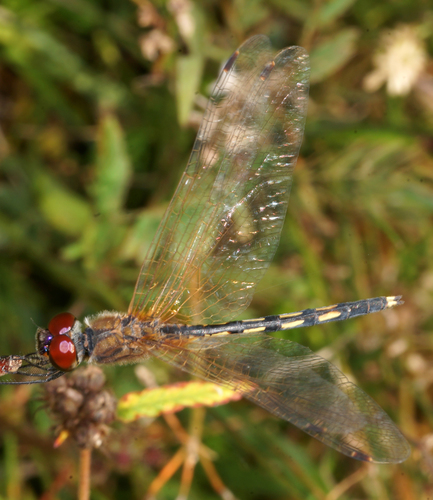
Asian Blood Tail

Asian Blood Tail

Lathrecista asiatica

Daily sighting probability <5% · Rare
at Bengaluru

In 3 days ~10% in a week ~30%

9 Verified sightings at Bengaluru
168 In all 8 parks From 2019 to 2026
May Best month
☀️ Diurnal When it's spotted

About the Asian Blood Tail

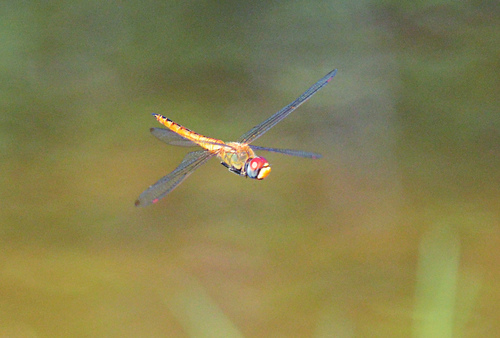
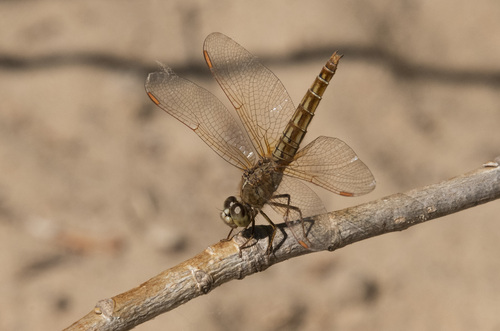
Lathrecista asiatica, the asiatic blood tail, is a species of dragonfly in the family Libellulidae. It is the only species in its genus. It is widespread, occurring from India to Australia. Lathrecista asiatica asiatica Lathrecista asiatica festa (Selys, 1879)

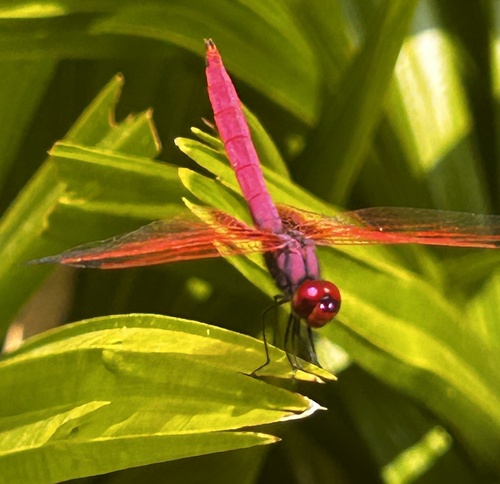
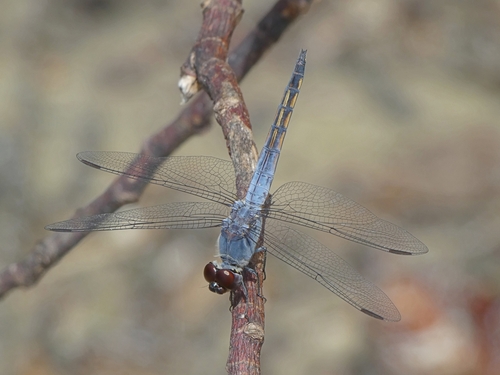
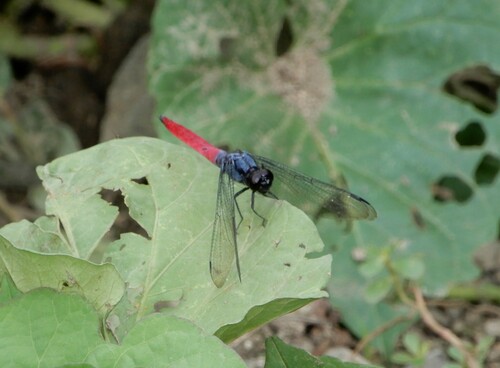
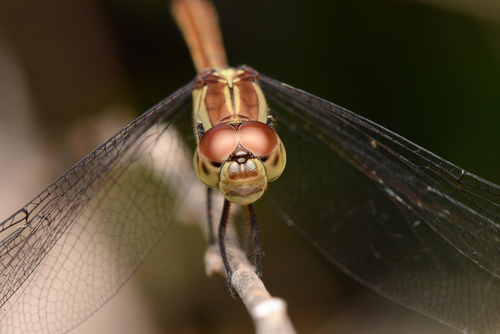
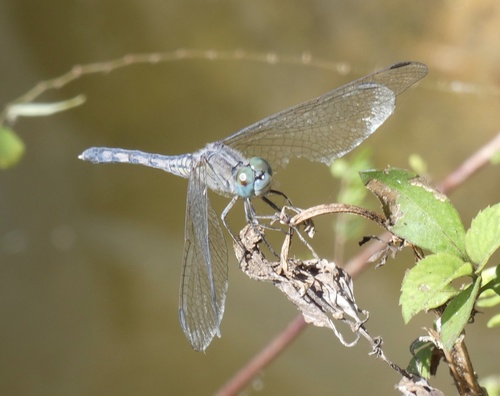
Lathrecista asiatica pectoralis (Kaup in Brauer, 1867) It is a medium-sized dragonfly with brown-capped grey eyes and blood red tail. Its thorax is copper brown with a pair of narrow parallel yellow stripes on dorsal side and yellow with stripes on the sides. Segments 1 and 2 of the abdomen have broad lateral stripes and a fine mid-dorsal stripe. Segments 3 to 8 are bright crimson-red with apical sutures narrowly black. Segments 9 and 10 are black. Anal appendages are black. The abdomen of the female is brown.

It breeds in marshes associated with ponds and streams. The genus name Lathrecista is derived from the Greek λαθραῖος (lathraios, "clandestine" or "hidden") and κίστη (kistē, "basket"), referring to the inconspicuous male appendages.

The species name asiatica is derived from the Latin asiaticus ("Asian" or "of Asia"). The original specimens of the species were... Wikipedia →
Global Distribution

Parks Where Found

# Park Country Daily sighting probability
1 Litchfield National Park 🇦🇺 Australia
~30%
2 Cat Tien National Park 🇻🇳 Vietnam
~20%
3 Daintree National Park 🇦🇺 Australia
~20%
4 Khao Sok National Park 🇹🇭 Thailand
~10%
5 Kaeng Krachan National Park 🇹🇭 Thailand
~10%
6 Kakadu National Park 🇦🇺 Australia
~10%
7 Taman Negara National Park 🇲🇾 Malaysia
~10%
8 Khao Yai National Park 🇹🇭 Thailand
~10%

Cities Where Found

# City Country Daily sighting probability
1 Thrissur 🇮🇳 India
~20%
2 Singapore 🇸🇬 Singapore
~20%
3 Ponnani 🇮🇳 India
~20%
4 Thiruvananthapuram 🇮🇳 India
~20%
5 Kochi 🇮🇳 India
~10%
6 Kuala Lumpur 🇲🇾 Malaysia
~10%
7 Ho Chi Minh City 🇻🇳 Vietnam
~10%
8 Kozhikode 🇮🇳 India
~10%
9 Manila 🇵🇭 Philippines
~10%
10 Colombo [Sri Jayawardenepura Kotte] 🇱🇰 Sri Lanka
~10%

Before you go

What are the chances of seeing an Asian Blood Tail in Bengaluru?

Rare

Under 5% of wildlife watchers report an Asian Blood Tail sighting in Bengaluru on a given day, based on 9 verified sightings from GBIF citizen-science data. It is the 308th most-seen of the 477 insects we can rate there. Over three days the chance rises to about 10%, and over a week to about 30%, if each day is a fresh chance.

When is the best time to see an Asian Blood Tail in Bengaluru?

March, May and November

In those months about 10% of wildlife watchers report an Asian Blood Tail in Bengaluru on a given day, against under 5% in April, June–October and December–February, the lowest months.

What time of day is best to see an Asian Blood Tail?

Between 9 am and noon

Across all the parks we cover, that three-hour window holds the most Asian Blood Tail sightings with a recorded time, and about 9 in 10 of them come between 6 am and 6 pm: it is a daytime animal.

Is Bengaluru the best place to see an Asian Blood Tail?

19th of 19

Of the 19 cities where we can rate Asian Blood Tail sightings, Bengaluru ranks 19th at under 5%. The best odds are in Thrissur (India, about 20%), Singapore (Singapore, about 20%) and Ponnani (India, about 20%).

Which relatives of the Asian Blood Tail live in Bengaluru?

Same family: Libellulidae

The closest relatives of the Asian Blood Tail that you can see in Bengaluru (family Libellulidae, Skimmers) are Chalky Percher (about 30%), Wandering Glider (about 30%) and Ditch Jewel (about 20%), with each one's daily chance of a sighting.

Where does the Asian Blood Tail sighting chance come from?

GBIF citizen-science records

It is estimated from how often the Asian Blood Tail is recorded against all the insects logged in Bengaluru (9 verified sightings), calibrated against known sighting rates. Figures are rounded to the nearest 10% because citizen-science data supports honest approximations, not decimals, and months with records from fewer than five people show "—". How it works.

← Back to Bengaluru