European Orchard Bee
Daily sighting probability ~20% · Possible
at Berlin

In 3 days ~40% in a week ~70%

238 Verified sightings at Berlin
69 In all 5 parks From 2019 to 2026
March Best month
☀️ Diurnal When it's spotted

About the European Orchard Bee

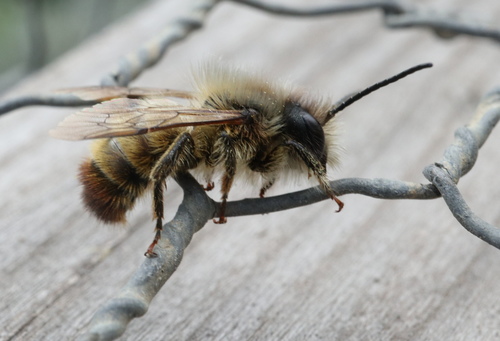
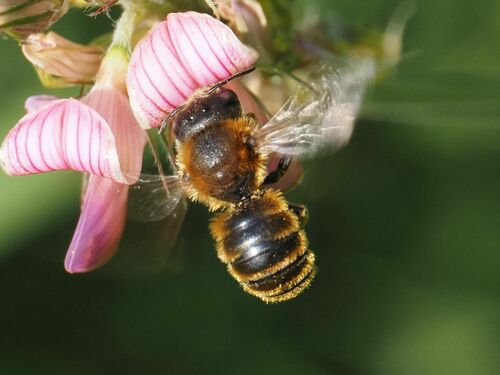
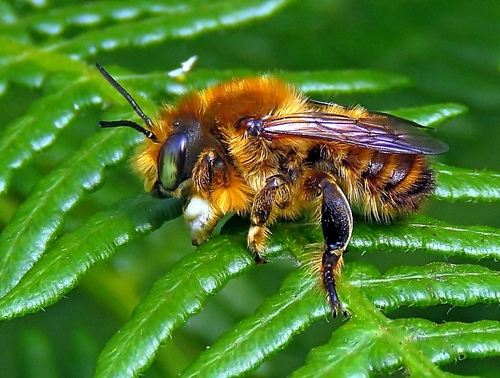
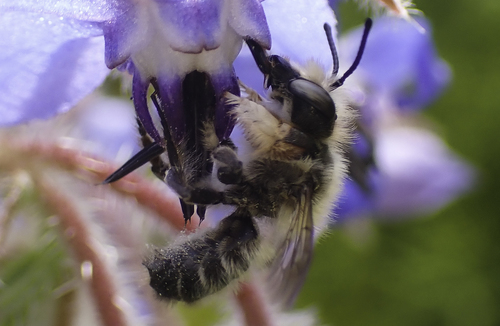
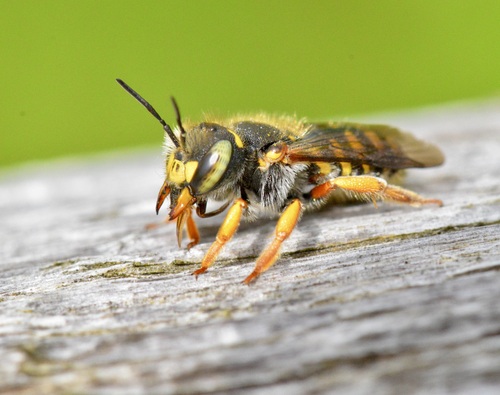
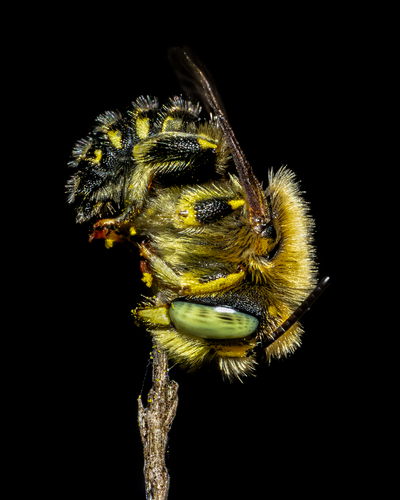
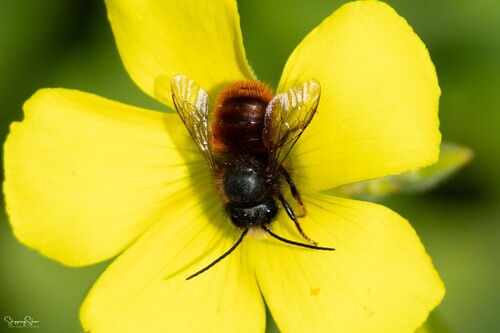
Osmia cornuta, the European orchard bee, is a species of bee in the genus Osmia. 10–15 mm. Males with conspicuously hairy faces. Females are unmistakable due to the black hair on the head and thorax, the rust-red hairy abdomen and the horned head shield.

Osmia cornuta is known in North Africa from Algeria, Tunisia and Egypt. In Eurasia from Portugal through southern and central Europe, Asia Minor and the Caucasus to Southeast Kazakhstan; northward to the North German Plain, Central Poland, Northern Ukraine and Voronezh; south to Sicily, Crete, Syria and Northern Iran. The evidence from Primorye is based on an error. The species was introduced to the United States for pollination purposes, but there are no reports of viable populations in the wild. Recorded from all federal states in Germany and Austria with the exception of Schleswig-Holstein. In Germany more common in the south... Wikipedia →
Global Distribution

Parks Where Found

# Park Country Daily sighting probability
1 Bavarian Forest National Park 🇩🇪 Germany
~10%
2 Cévennes National Park 🇫🇷 France
~10%
3 Fertő-Hanság National Park 🇭🇺 Hungary
~10%
4 Pyrénées National Park 🇫🇷 France
~10%
5 Wadden Sea National Park 🇩🇪 Germany
<5%

Cities Where Found

# City Country Daily sighting probability
1 Sofia 🇧🇬 Bulgaria
~20%
2 Budapest 🇭🇺 Hungary
~20%
3 Berlin 🇩🇪 Germany
~20%
4 Kyiv 🇺🇦 Ukraine
~20%
5 Vienna 🇦🇹 Austria
~20%
6 Lyon 🇫🇷 France
~10%
7 Munich 🇩🇪 Germany
~10%
8 Essen 🇩🇪 Germany
~10%
9 Turin 🇮🇹 Italy
~10%
10 Milan 🇮🇹 Italy
~10%

Before you go

What are the chances of seeing a European Orchard Bee in Berlin?

Possible

About 20% of wildlife watchers report a European Orchard Bee sighting in Berlin on a given day, based on 238 verified sightings from GBIF citizen-science data. It is the 24th most-seen of the 1065 insects we can rate there. Over three days the chance rises to about 40%, and over a week to about 70%, if each day is a fresh chance.

When is the best time to see a European Orchard Bee in Berlin?

March

In that month about 50% of wildlife watchers report a European Orchard Bee in Berlin on a given day, against under 5% in June to January, the lowest months.

What time of day is best to see a European Orchard Bee?

Between noon and 3 pm

Across all the parks we cover, that three-hour window holds the most European Orchard Bee sightings with a recorded time, and about 9 in 10 of them come between 6 am and 6 pm: it is a daytime animal.

Is Berlin the best place to see a European Orchard Bee?

Among the best

Of the 23 cities where we can rate European Orchard Bee sightings, Berlin ranks 3rd at about 20%, level with the leaders once rounded. The best odds are in Sofia (Bulgaria, about 20%) and Budapest (Hungary, about 20%).

Where does the European Orchard Bee sighting chance come from?

GBIF citizen-science records

It is estimated from how often the European Orchard Bee is recorded against all the insects logged in Berlin (238 verified sightings), calibrated against known sighting rates. Figures are rounded to the nearest 10% because citizen-science data supports honest approximations, not decimals, and months with records from fewer than five people show "—". How it works.

← Back to Berlin