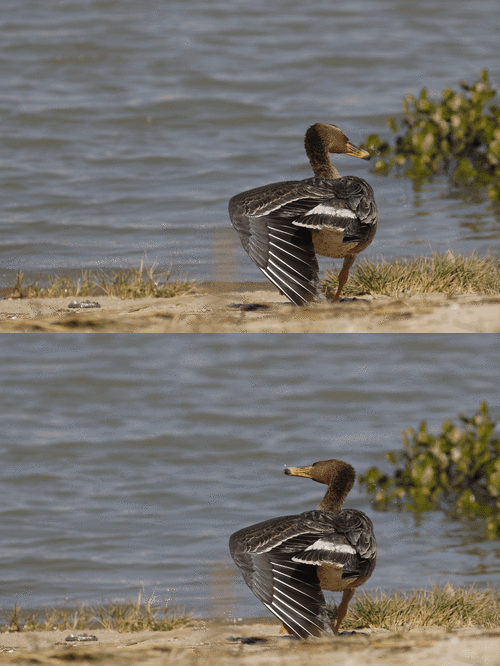
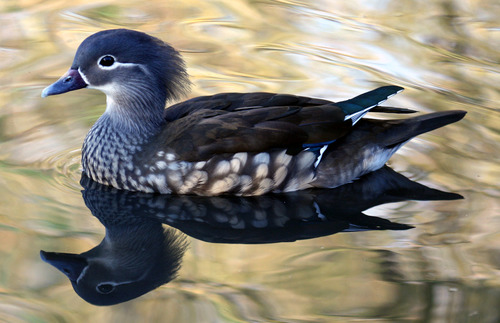
Pink-footed Goose

Pink-footed Goose

Anser brachyrhynchus

Silhouette: Laura Barbero-Palacios · PhyloPic

LCLeast ConcernNTVUENCR
Daily sighting probability <5% · Rare
at Berlin

In 3 days <5% in a week ~10%

50 Verified sightings at Berlin
1,309 In all 5 parks From 2019 to 2026
March Best month
☀️ Diurnal When it's spotted

About the Pink-footed Goose

The pink-footed goose (Anser brachyrhynchus) is a goose which breeds in eastern Greenland, Iceland, Svalbard, and recently Novaya Zemlya. It is migratory, wintering in northwest Europe, especially Ireland, Great Britain, the Netherlands, and western Denmark. The name is often abbreviated in colloquial usage to "pinkfoot" (plural "pinkfeet"). Anser is the Latin for "goose", and brachyrhynchus comes from the ancient Greek brachus, meaning "short", and rhunchos, meaning "bill".

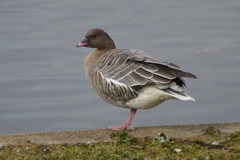
It is a medium-sized goose, 60–75 cm (24–30 in) long, the wingspan 135–170 cm (53–67 in), and weighing 1.8–3.4 kg (4.0–7.5 lb). It has a short bill, bright pink in the middle with a black base and tip, similar in pattern to tundra bean goose but pink where that species is orange, and pink feet. The body is mid-grey-brown, the head and neck a richer, darker brown, the rump and vent white, and the tail grey with a broad white tip. The upper wing-coverts are of a somewhat similar pale bluish-grey as in the greylag goose, and the flight feathers blackish-grey.

The species is most closely related to the larger taiga bean goose Anser fabalis, rather than the similarly-sized subspecies... Wikipedia →

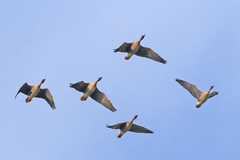
Sounds

Call1:12

United Kingdom · 2026

© Mark James Pearson · XC1185750 · CC BY-NC-SA 4.0

Nocturnal flight call1:03

Denmark · 2026

© Lars Mogensen · XC1183180 · CC BY-NC-SA 4.0

Flight call0:18

Sweden · 2025

© Zsombor Károlyi · XC1163726 · CC BY-NC-SA 4.0

Global Distribution

Parks Where Found

# Park Country Daily sighting probability
1 Svalbard 🇳🇴 Norway
~50%
2 Vatnajokull National Park 🇮🇸 Iceland
~10%
3 Cairngorms National Park 🇬🇧 United Kingdom
~10%
4 Biebrza National Park 🇵🇱 Poland
<5%
5 Wadden Sea National Park 🇩🇪 Germany
<5%

Cities Where Found

# City Country Daily sighting probability
1 Liverpool 🇬🇧 United Kingdom
~10%
2 Manchester 🇬🇧 United Kingdom
~10%
3 Leeds 🇬🇧 United Kingdom
<5%
4 Berlin 🇩🇪 Germany
<5%
5 Copenhagen 🇩🇰 Denmark
<5%
6 Birmingham 🇬🇧 United Kingdom
<5%
7 Rotterdam [The Hague] 🇳🇱 Netherlands
<5%
8 Dublin 🇮🇪 Ireland
<5%
9 New York City 🇺🇸 United States
<5%

Zoos & Centres Where Found

# Zoo / Centre Country
1 Tierpark Berlin 🇩🇪 Germany In captivity
2 Zoo Pilsen 🇨🇿 Czechia In captivity
3 Centro Cicogne e Anatidi 🇮🇹 Italy In captivity
4 Tierpark Hagenbeck 🇩🇪 Germany In captivity
5 Buttonwood Park Zoo 🇺🇸 United States In captivity

Before you go

What are the chances of seeing a Pink-footed Goose in Berlin?

Rare

Under 5% of wildlife watchers report a Pink-footed Goose sighting in Berlin on a given day, based on 50 verified sightings from GBIF citizen-science data. It is the 116th most-seen of the 160 birds we can rate there. Over three days the chance rises to under 5%, and over a week to about 10%, if each day is a fresh chance.

When is the best time to see a Pink-footed Goose in Berlin?

March

In that month about 10% of wildlife watchers report a Pink-footed Goose in Berlin on a given day, against under 5% in April to February, the lowest months.

What time of day is best to see a Pink-footed Goose?

Between 11 am and 2 pm

Across all the parks we cover, that three-hour window holds the most Pink-footed Goose sightings with a recorded time, and about 9 in 10 of them come between 6 am and 6 pm: it is a daytime animal.

Is Berlin the best place to see a Pink-footed Goose?

4th of 9

Of the 9 cities where we can rate Pink-footed Goose sightings, Berlin ranks 4th at under 5%. The best odds are in Liverpool (United Kingdom, about 10%), Manchester (United Kingdom, about 10%) and Leeds (United Kingdom, under 5%).

Which relatives of the Pink-footed Goose live in Berlin?

Same genus: Anser

The closest relatives of the Pink-footed Goose that you can see in Berlin (genus Anser, Grey Geese) are Greylag Goose (about 20%) and Greater White-fronted Goose (about 10%), with each one's daily chance of a sighting.

Where does the Pink-footed Goose sighting chance come from?

GBIF citizen-science records

It is estimated from how often the Pink-footed Goose is recorded against all the birds logged in Berlin (50 verified sightings), calibrated against known sighting rates. Figures are rounded to the nearest 10% because citizen-science data supports honest approximations, not decimals, and months with records from fewer than five people show "—". How it works.

← Back to Berlin