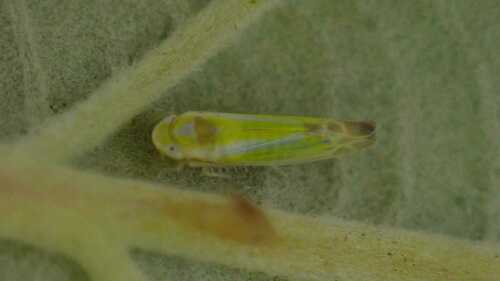
Rhododendron Leafhopper

Rhododendron Leafhopper

Graphocephala fennahi

Daily sighting probability ~10% · With luck
at Berlin

In 3 days ~30% in a week ~60%

148 Verified sightings at Berlin
86 In all 5 parks From 2019 to 2026
July Best month
☀️ Diurnal When it's spotted

About the Rhododendron Leafhopper

Graphocephala fennahi (rhododendron leafhopper) is a species of leafhopper native to the United States. Its common name derives from it feeding on the sap of rhododendrons. The species was introduced to Great Britain in the 1930s and continental Europe in the 1970s. They possibly contribute to the spread of the rhododendron fungus (Pycnostysanus azaleae) through Europe.

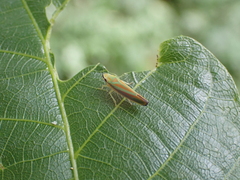
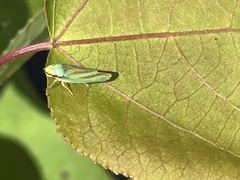
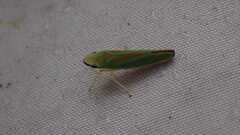
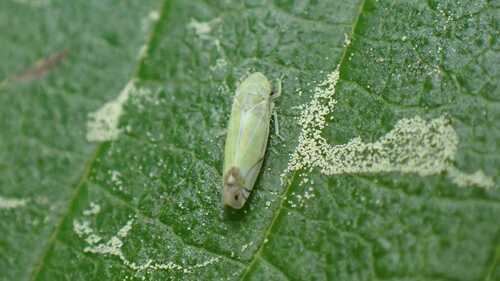
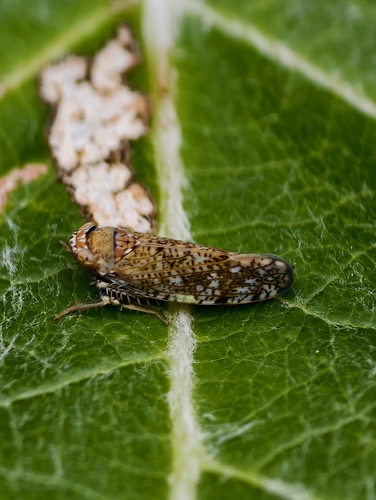
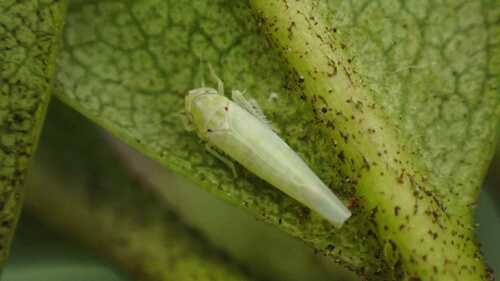
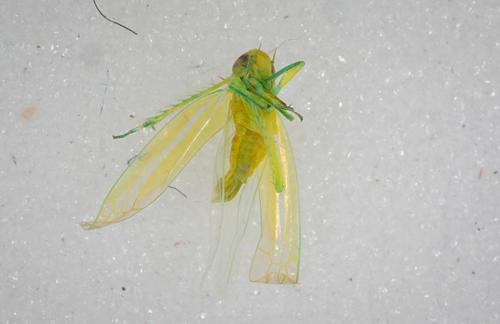
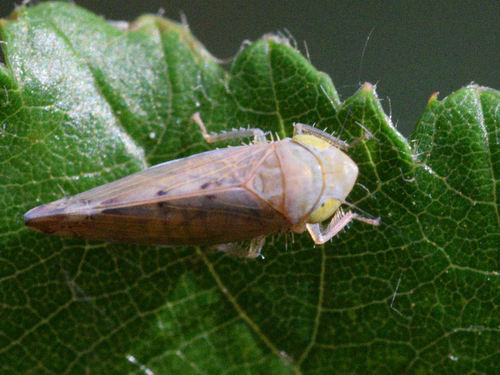
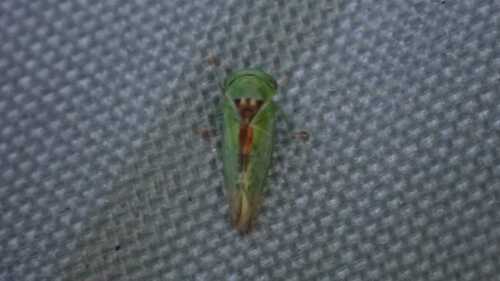
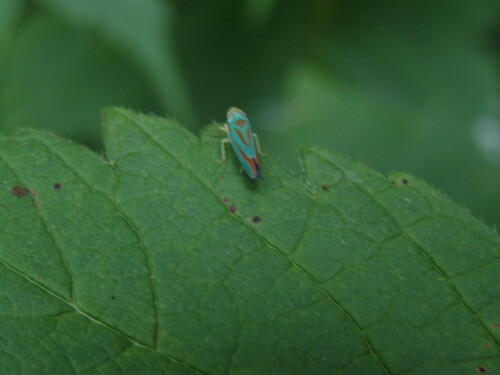
Adults possess green wings with purple tips which each feature two orange stripes. Their heads, undersides and legs are yellow, and they have a purple stripe across the top of their heads, extending over the eyes. Males are 7.4-8.8 mm (about 0.35 in) long, and females are a little larger, around 8.2–9 mm (about 0.35 in). Nymphs are light yellow and wingless.

They move by jumping or, as adults, flying short distances. When disturbed, they quickly jump away. Skin sheds of the leafhopper can be found on the underside of leaves. They are related to cicadas, spittlebugs, and treehoppers. They feed on the sap from rhododendron plants by sucking it out with a proboscis.

They are recorded in grassy lands, brushy habitats, and mixed hardwood forests, usually found in areas with rhododendron... Wikipedia →
Global Distribution

Parks Where Found

# Park Country Daily sighting probability
1 Great Smoky Mountains National Park 🇺🇸 United States
~10%
2 Bavarian Forest National Park 🇩🇪 Germany
~10%
3 Acadia National Park 🇺🇸 United States
~10%
4 Shenandoah National Park 🇺🇸 United States
<5%
5 Wadden Sea National Park 🇩🇪 Germany
<5%

Cities Where Found

# City Country Daily sighting probability
1 Hamburg 🇩🇪 Germany
~10%
2 Berlin 🇩🇪 Germany
~10%
3 Vancouver 🇨🇦 Canada
~10%
4 Essen 🇩🇪 Germany
~10%
5 Copenhagen 🇩🇰 Denmark
~10%
6 Boston 🇺🇸 United States
~10%
7 Seattle 🇺🇸 United States
~10%
8 Portland 🇺🇸 United States
~10%
9 Stockholm 🇸🇪 Sweden
~10%
10 Warsaw 🇵🇱 Poland
~10%

Before you go

What are the chances of seeing a Rhododendron Leafhopper in Berlin?

With luck

About 10% of wildlife watchers report a Rhododendron Leafhopper sighting in Berlin on a given day, based on 148 verified sightings from GBIF citizen-science data. It is the 69th most-seen of the 1065 insects we can rate there. Over three days the chance rises to about 30%, and over a week to about 60%, if each day is a fresh chance.

When is the best time to see a Rhododendron Leafhopper in Berlin?

July to October

In those months about 20% of wildlife watchers report a Rhododendron Leafhopper in Berlin on a given day, against under 5% in May and December–March, the lowest months.

What time of day is best to see a Rhododendron Leafhopper?

Between 10 am and 1 pm

Across all the parks we cover, that three-hour window holds the most Rhododendron Leafhopper sightings with a recorded time, and about 8 in 10 of them come between 6 am and 6 pm: it is a daytime animal.

Is Berlin the best place to see a Rhododendron Leafhopper?

Among the best

Of the 23 cities where we can rate Rhododendron Leafhopper sightings, Berlin ranks 2nd at about 10%, level with the leaders once rounded. The best odds are in Hamburg (Germany, about 10%).

Which relatives of the Rhododendron Leafhopper live in Berlin?

Same family: Cicadellidae

The closest relatives of the Rhododendron Leafhopper that you can see in Berlin (family Cicadellidae, Typical Leafhoppers) are Zyginella pulchra (about 10%), Japanese Leafhopper (about 10%) and Zygina nivea (about 10%), with each one's daily chance of a sighting.

Where does the Rhododendron Leafhopper sighting chance come from?

GBIF citizen-science records

It is estimated from how often the Rhododendron Leafhopper is recorded against all the insects logged in Berlin (148 verified sightings), calibrated against known sighting rates. Figures are rounded to the nearest 10% because citizen-science data supports honest approximations, not decimals, and months with records from fewer than five people show "—". How it works.

← Back to Berlin