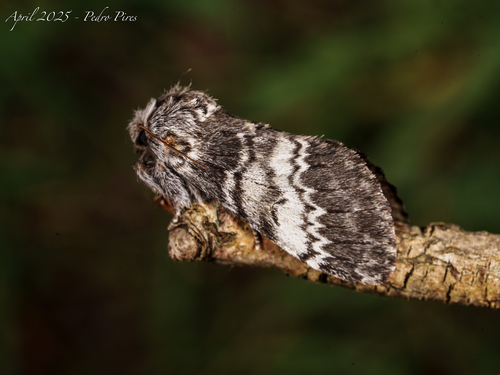
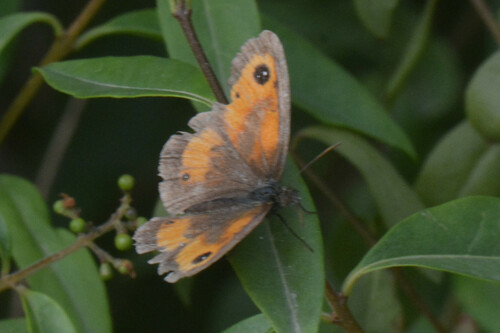
Swallow Prominent

Swallow Prominent

Pheosia tremula

Daily sighting probability <5% · Rare
at Birmingham

In 3 days ~10% in a week ~20%

8 Verified sightings at Birmingham
78 In all 5 parks From 2019 to 2026
August Best month
☀️🌙 Day & Night When it's spotted

About the Swallow Prominent

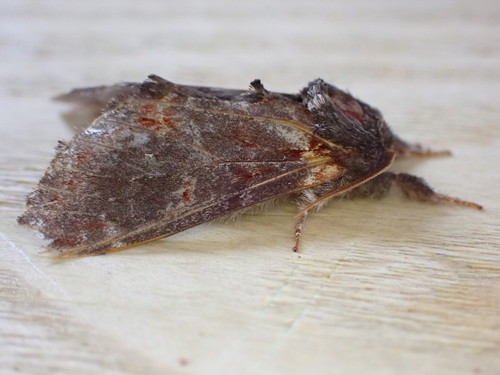
Pheosia tremula, the swallow prominent, is a moth from the family Notodontidae. The species was first described by Carl Alexander Clerck in 1759. The moth can be found in the Palearctic realm, up to the Arctic Circle (northern and central Europe, Russia, Russian Far East, Ussuri, Caucasus). It has a forewing length of 22–28 mm. The moth survives winter as a pupa underground.

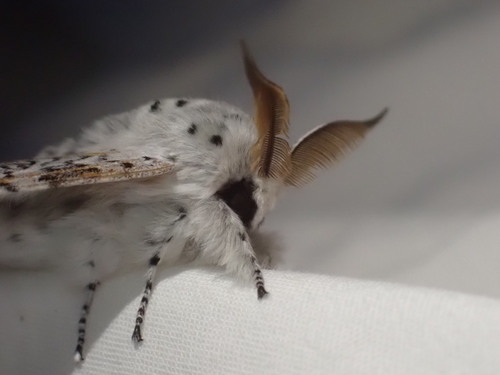
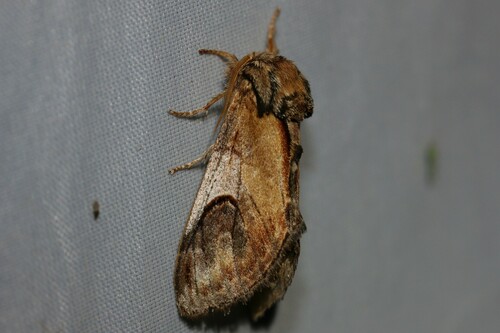
Normally whitish, with a brown shaded black stripe along the inner margin of the forewings, and a brownish cloud, with black streaks in it. Towards the tips of these wings; the outer extremities of the veins are white, there is a white wedge-shaped streak between veins 1 and 2, and from the apex of this an indented white line runs to the base of the wing. Sometimes the whole discal area is suffused with brownish. The imago can be easily mistaken with Pheosia gnoma.

Seitz- Head and thorax grey or predominantly brown, abdomen greyish brown. Fore«'ing whitish, brownish at the margins, beyond the middle of the costal margin 2 black longitudinal smears, which often merge together in the shape of a band, a black longitudinal line in front of the hind margin from the base to the distal margin; below... Wikipedia →
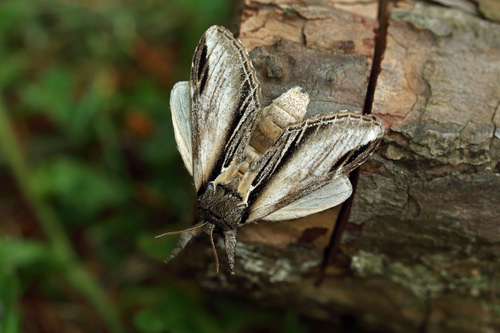
Global Distribution

Parks Where Found

# Park Country Daily sighting probability
1 Bavarian Forest National Park 🇩🇪 Germany
~10%
2 Wadden Sea National Park 🇩🇪 Germany
~10%
3 Cairngorms National Park 🇬🇧 United Kingdom
~10%
4 Cévennes National Park 🇫🇷 France
<5%
5 Pyrénées National Park 🇫🇷 France
<5%

Cities Where Found

# City Country Daily sighting probability
1 Liverpool 🇬🇧 United Kingdom
~10%
2 Porto 🇵🇹 Portugal
~10%
3 Amsterdam 🇳🇱 Netherlands
<5%
4 Manchester 🇬🇧 United Kingdom
<5%
5 Birmingham 🇬🇧 United Kingdom
<5%
6 Helsinki 🇫🇮 Finland
<5%
7 Berlin 🇩🇪 Germany
<5%
8 Copenhagen 🇩🇰 Denmark
<5%
9 London 🇬🇧 United Kingdom
<5%
10 Moscow 🇷🇺 Russia
<5%

Before you go

What are the chances of seeing a Swallow Prominent in Birmingham?

Rare

Under 5% of wildlife watchers report a Swallow Prominent sighting in Birmingham on a given day, based on 8 verified sightings from GBIF citizen-science data. It is the 563rd most-seen of the 811 insects we can rate there. Over three days the chance rises to about 10%, and over a week to about 20%, if each day is a fresh chance.

When is the best time to see a Swallow Prominent in Birmingham?

May and August

In those months about 10% of wildlife watchers report a Swallow Prominent in Birmingham on a given day, against under 5% in June–July and September–April, the lowest months.

What time of day is best to see a Swallow Prominent?

Between midnight and 3 am

Across all the parks we cover, that three-hour window holds the most Swallow Prominent sightings with a recorded time, and about half of them come between 6 am and 6 pm: it is seen both by day and at night.

Is Birmingham the best place to see a Swallow Prominent?

5th of 10

Of the 10 cities where we can rate Swallow Prominent sightings, Birmingham ranks 5th at under 5%. The best odds are in Liverpool (United Kingdom, about 10%), Porto (Portugal, about 10%) and Amsterdam (Netherlands, under 5%).

Which relatives of the Swallow Prominent live in Birmingham?

Same family: Notodontidae

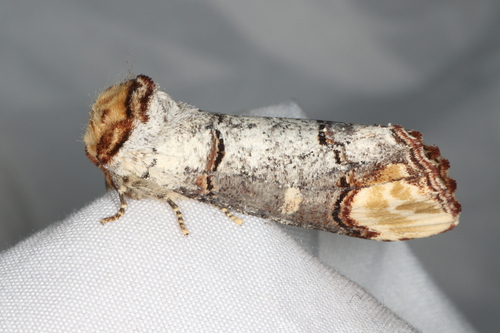
The closest relatives of the Swallow Prominent that you can see in Birmingham (family Notodontidae, Prominent Moths) are Buff-Tip (about 10%) and Iron Prominent (about 10%), with each one's daily chance of a sighting.

Where does the Swallow Prominent sighting chance come from?

GBIF citizen-science records

It is estimated from how often the Swallow Prominent is recorded against all the insects logged in Birmingham (8 verified sightings), calibrated against known sighting rates. Figures are rounded to the nearest 10% because citizen-science data supports honest approximations, not decimals, and months with records from fewer than five people show "—". How it works.

← Back to Birmingham