Locust Borer

Locust Borer

Megacyllene robiniae

Daily sighting probability ~20% · Possible
at Boston

In 3 days ~40% in a week ~80%

627 Verified sightings at Boston
114 In all 2 parks From 2019 to 2026
September Best month
☀️ Diurnal When it's spotted

About the Locust Borer

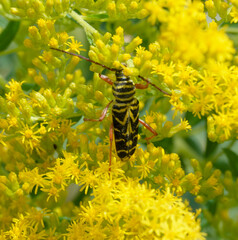
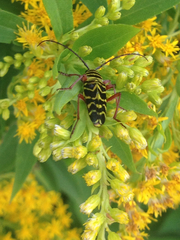
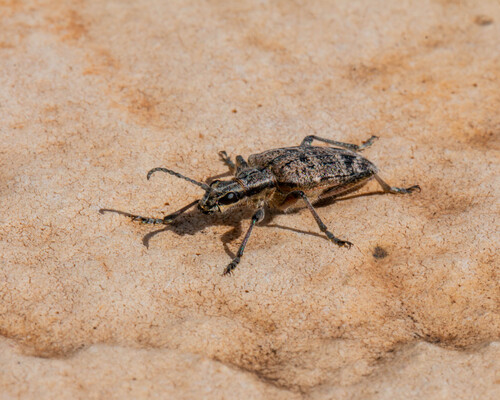
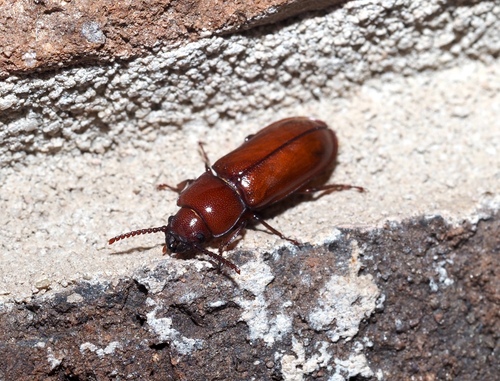
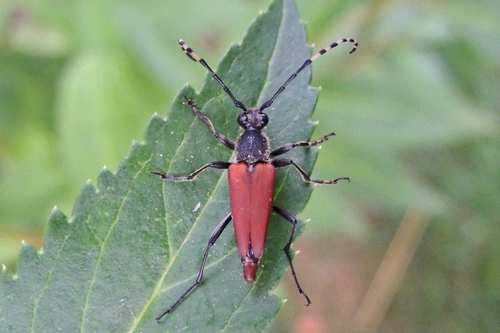
Megacyllene robiniae, commonly known as the locust borer, is a species of longhorn beetle endemic to eastern North America. It is a serious pest of Robinia pseudoacacia, the black locust tree, with which it is sympatric.

The specific name, robiniae, is derived from the name Robinia, which is the generic name of the black locust tree, Robinia pseudoacacia, on which the larvae feed. The name Robinia was coined by Linnaeus to honor the royal French gardeners Jean Robin (father) and Vespasien Robin (son).

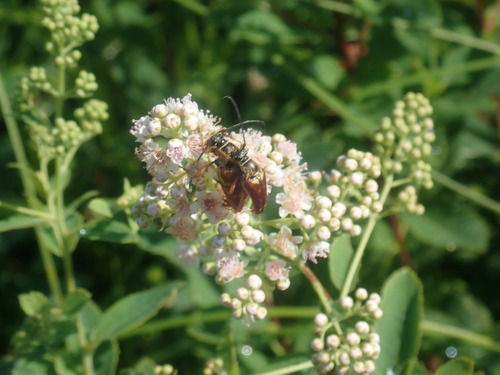
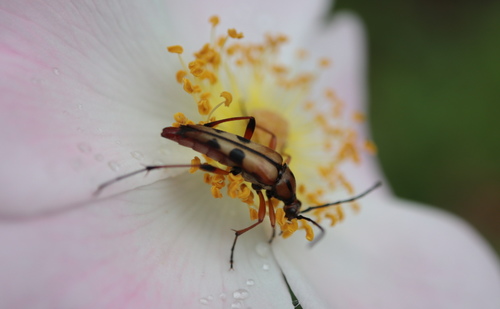
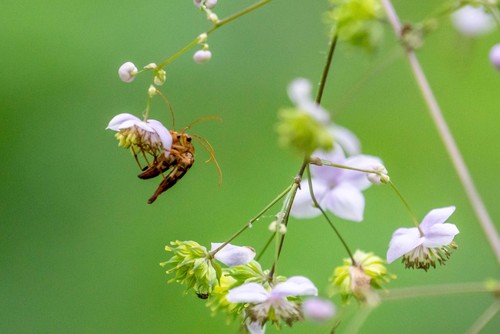
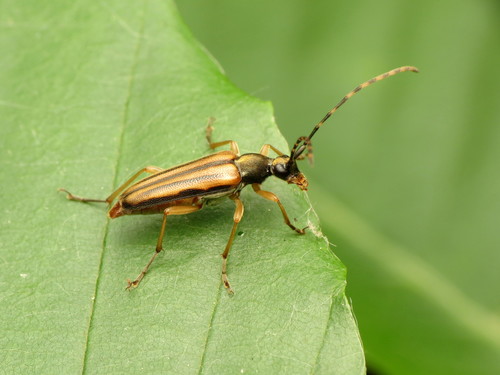
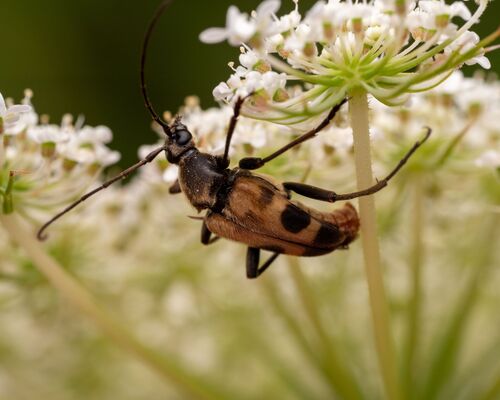
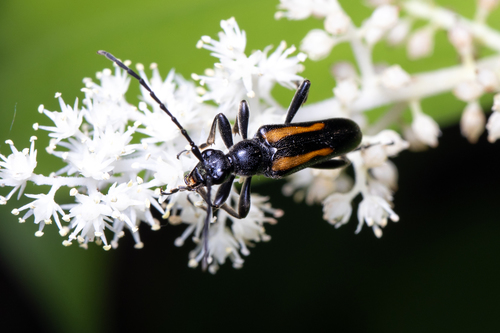
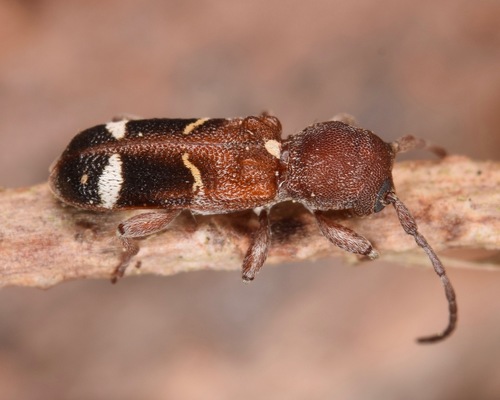
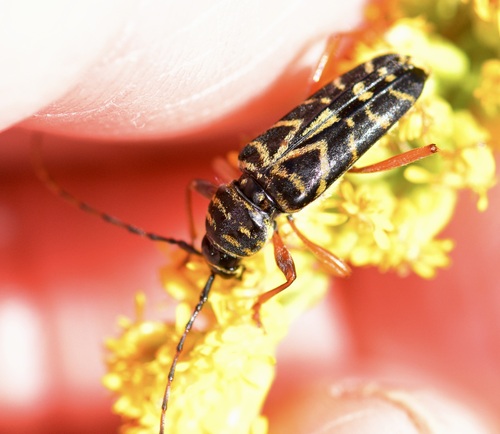
From a distance, M. robiniae can easily be mistaken for a wasp or bee, due to its black and yellow striped pattern. It can also be mistaken for two closely related species: M. caryae and M. decora. The adult beetle can be 11 to 28 mm (0.43 to 1.10 in) long, and it has a W-shaped third stripe on the elytra. The antennae of both sexes are dark brown to black. The male's antennae are two-thirds its body length, and the female's are one-half. The legs are reddish brown. The full grown larvae are legless, white, and robust, growing to roughly 25 mm (0.98 in) long.

Because there has been increasing use of R. pseudoacacia as... Wikipedia →
Global Distribution

Parks Where Found

# Park Country Daily sighting probability
1 Shenandoah National Park 🇺🇸 United States
~20%
2 Great Smoky Mountains National Park 🇺🇸 United States
~10%

Cities Where Found

# City Country Daily sighting probability
1 Boston 🇺🇸 United States
~20%
2 Montreal 🇨🇦 Canada
~10%
3 Minneapolis [Saint Paul] 🇺🇸 United States
~10%
4 Salt Lake City 🇺🇸 United States
~10%
5 Toronto 🇨🇦 Canada
~10%
6 Detroit 🇺🇸 United States
~10%
7 Denver 🇺🇸 United States
~10%
8 Philadelphia 🇺🇸 United States
~10%
9 Portland 🇺🇸 United States
~10%
10 New York City 🇺🇸 United States
~10%

Before you go

What are the chances of seeing a Locust Borer in Boston?

Possible

About 20% of wildlife watchers report a Locust Borer sighting in Boston on a given day, based on 627 verified sightings from GBIF citizen-science data. It is the 16th most-seen of the 1200 insects we can rate there. Over three days the chance rises to about 40%, and over a week to about 80%, if each day is a fresh chance.

When is the best time to see a Locust Borer in Boston?

September

In that month about 50% of wildlife watchers report a Locust Borer in Boston on a given day, against under 5% in November to July, the lowest months.

What time of day is best to see a Locust Borer?

Between 11 am and 2 pm

Across all the parks we cover, that three-hour window holds the most Locust Borer sightings with a recorded time, and about 9 in 10 of them come between 6 am and 6 pm: it is a daytime animal.

Is Boston the best place to see a Locust Borer?

Yes

Of the 13 cities where we can rate Locust Borer sightings, Boston has the highest daily chance: about 20%. Next come Montreal (Canada, about 10%) and Minneapolis [Saint Paul] (United States, about 10%).

Where does the Locust Borer sighting chance come from?

GBIF citizen-science records

It is estimated from how often the Locust Borer is recorded against all the insects logged in Boston (627 verified sightings), calibrated against known sighting rates. Figures are rounded to the nearest 10% because citizen-science data supports honest approximations, not decimals, and months with records from fewer than five people show "—". How it works.

← Back to Boston