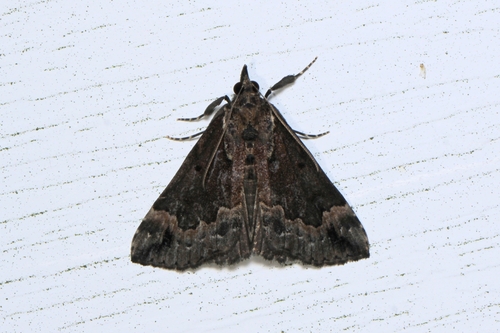
Morbid Owlet

Morbid Owlet

Macrochilo morbidalis

Daily sighting probability <5% · Rare
at Boston

In 3 days ~10% in a week ~30%

46 Verified sightings at Boston
23 In all 2 parks From 2019 to 2026
June Best month
☀️ Diurnal When it's spotted

About the Morbid Owlet

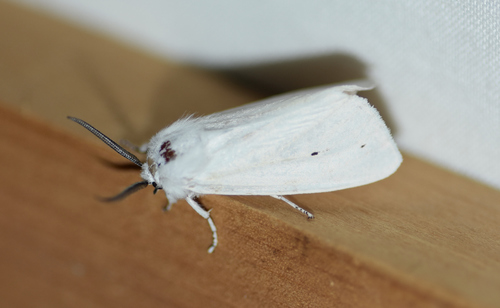
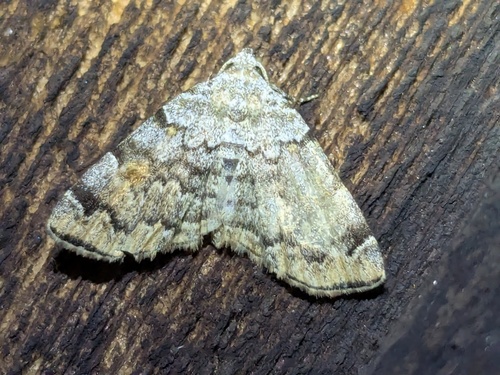
Chytolita is a monotypic litter moth genus of the family Erebidae erected by Augustus Radcliffe Grote in 1873. Its only species, Chytolita morbidalis, the morbid owlet moth or morbid owlet, was first described by Achille Guenée in 1854. It is found in large parts of North America, from coast to coast in the north and south to North Carolina, Texas and Florida in the west. The habitat consists of deciduous woods and edges.

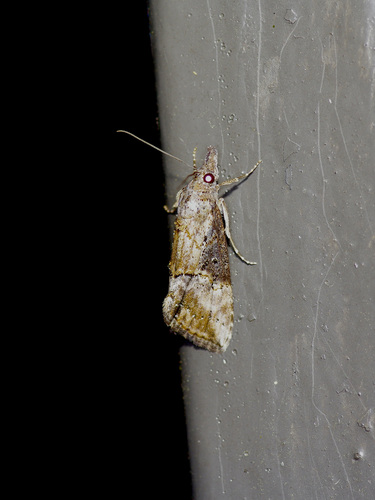
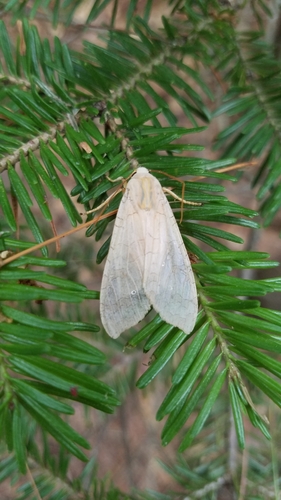
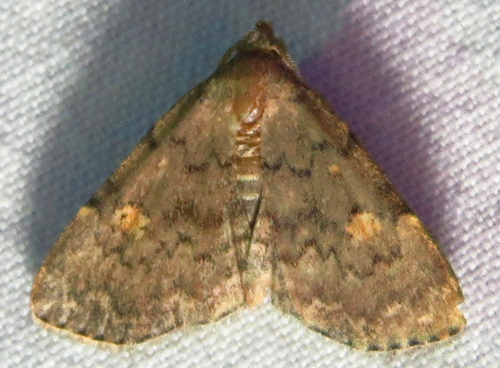
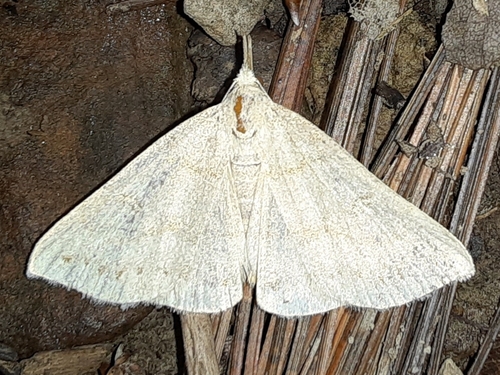
The wingspan is 29–35 mm. The forewings are pale grayish white with diffuse, brownish or orangish lines. The hindwings are even paler with faint grayish veins. Adults are on wing from May to August. There seems to be one generation per year.

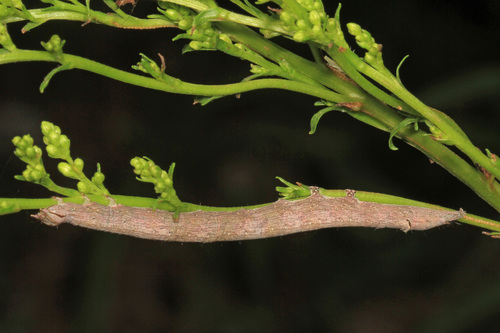
The larvae feed on the leaves of various deciduous trees and have been reared on dandelion, grass, hazel and lettuce. There are also records for dead leaves, including dried white oak leaves. Chytolita petrealis is now considered a synonym of C. morbidalis because DNA barcode analysis has revealed little barcode variation among specimens of both forms examined across a wide geographic range. The smaller, darker "petrealis" form was known by the common names lesser gray chytolita, stone-winged owlet or lesser luteous... Wikipedia →
Global Distribution

Parks Where Found

# Park Country Daily sighting probability
1 Shenandoah National Park 🇺🇸 United States
~10%
2 Great Smoky Mountains National Park 🇺🇸 United States
~10%

Cities Where Found

# City Country Daily sighting probability
1 Edmonton 🇨🇦 Canada
<5%
2 Boston 🇺🇸 United States
<5%
3 Baltimore 🇺🇸 United States
<5%
4 Toronto 🇨🇦 Canada
<5%
5 New York City 🇺🇸 United States
<5%
6 Washington 🇺🇸 United States
<5%
7 Montreal 🇨🇦 Canada
<5%
8 Minneapolis [Saint Paul] 🇺🇸 United States
<5%
9 Chicago 🇺🇸 United States
<5%

Before you go

What are the chances of seeing a Morbid Owlet in Boston?

Rare

Under 5% of wildlife watchers report a Morbid Owlet sighting in Boston on a given day, based on 46 verified sightings from GBIF citizen-science data. It is the 297th most-seen of the 1200 insects we can rate there. Over three days the chance rises to about 10%, and over a week to about 30%, if each day is a fresh chance.

When is the best time to see a Morbid Owlet in Boston?

June

In that month about 10% of wildlife watchers report a Morbid Owlet in Boston on a given day, against under 5% in July to May, the lowest months.

What time of day is best to see a Morbid Owlet?

Between 10 am and 1 pm

Across all the parks we cover, that three-hour window holds the most Morbid Owlet sightings with a recorded time, and about 8 in 10 of them come between 6 am and 6 pm: it is a daytime animal.

Is Boston the best place to see a Morbid Owlet?

Among the best

Of the 9 cities where we can rate Morbid Owlet sightings, Boston ranks 2nd at under 5%, level with the leaders once rounded. The best odds are in Edmonton (Canada, under 5%).

Which relatives of the Morbid Owlet live in Boston?

Same family: Erebidae

The closest relatives of the Morbid Owlet that you can see in Boston (family Erebidae, Underwing, Tiger, Tussock, and Allied Moths) are Isabella Tiger Moth (about 20%), Virginian Tiger Moth (about 10%) and Green Cloverworm Moth (about 10%), with each one's daily chance of a sighting.

Where does the Morbid Owlet sighting chance come from?

GBIF citizen-science records

It is estimated from how often the Morbid Owlet is recorded against all the insects logged in Boston (46 verified sightings), calibrated against known sighting rates. Figures are rounded to the nearest 10% because citizen-science data supports honest approximations, not decimals, and months with records from fewer than five people show "—". How it works.

← Back to Boston