Autumn Leaf

Autumn Leaf

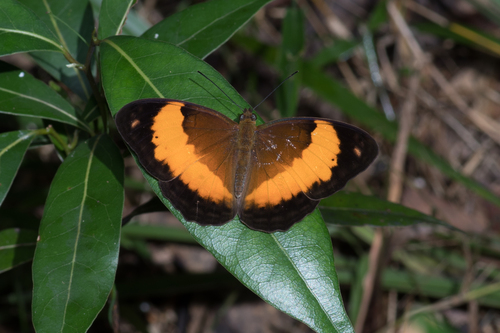
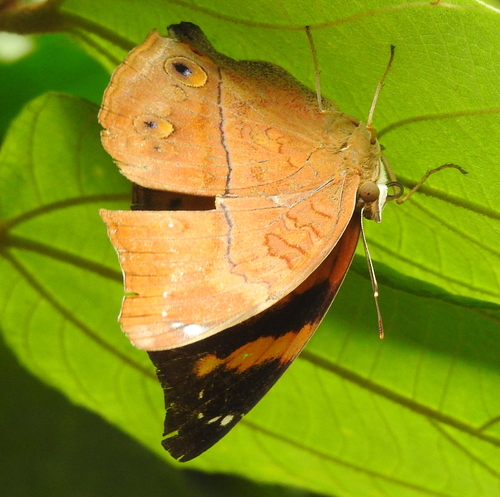
Doleschallia bisaltide

Daily sighting probability ~10% · With luck
at Brisbane

In 3 days ~20% in a week ~50%

120 Verified sightings at Brisbane
112 In all 6 parks From 2019 to 2026
February Best month
☀️ Diurnal When it's spotted

About the Autumn Leaf

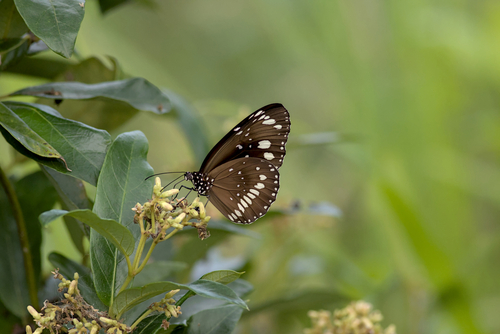
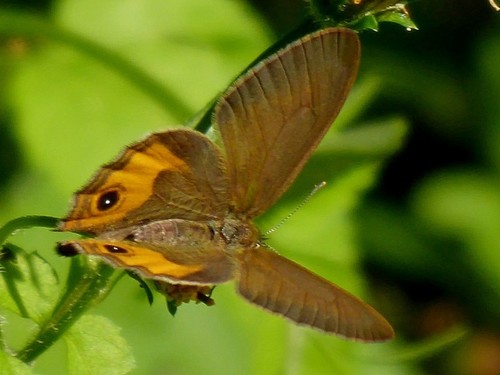
Doleschallia bisaltide, the autumn leaf, is a nymphalid butterfly found in South Asia, Southeast Asia, and Australasia. In Australia it is also known as the leafwing. The larvae are black, with two rows of dorsal white spots. Head with a pair of branched spines; rest of the segments with a dorsal and a lateral row of blue branched spines on each side. They feed on Artocarpus, Pseuderanthemum, Calycanthus, Ruellia, Girardina, Strobilanthus and Graptophyllum. The pupae are yellowish with numerous black spots; constricted in the middle; head produced into two points. There are several subspecies under Doleschallia bisaltide:

Doleschallia bisaltide andamanensis Fruhstorfer, 1899 This subspecies closely resembles the Indian form, but differs in the oblique yellow band on the upperside of the forewing, which is broader and extends from the middle of the costal margin uninterruptedly to interspace 4, though it is preapically constricted. On the upperside of the hindwing there is an inner as well as an outer conspicuous subterminal narrow-black band. On the underside, this subspecies is as variable as the typical form, but the ground colour in many specimens (presumably... Wikipedia →
Global Distribution

Parks Where Found

# Park Country Daily sighting probability
1 Gunung Leuser National Park 🇮🇩 Indonesia
~20%
2 Taman Negara National Park 🇲🇾 Malaysia
~20%
3 Springbrook National Park 🇦🇺 Australia
~20%
4 Daintree National Park 🇦🇺 Australia
~10%
5 Kaeng Krachan National Park 🇹🇭 Thailand
~10%
6 Lamington National Park 🇦🇺 Australia
~10%

Cities Where Found

# City Country Daily sighting probability
1 Tasikmalaya 🇮🇩 Indonesia
~40%
2 Yogyakarta 🇮🇩 Indonesia
~30%
3 Jakarta 🇮🇩 Indonesia
~30%
4 Surakarta 🇮🇩 Indonesia
~20%
5 Denpasar 🇮🇩 Indonesia
~20%
6 Bandung 🇮🇩 Indonesia
~20%
7 Singapore 🇸🇬 Singapore
~20%
8 Brisbane 🇦🇺 Australia
~10%
9 Kuala Lumpur 🇲🇾 Malaysia
~10%
10 Sydney 🇦🇺 Australia
<5%

Before you go

What are the chances of seeing an Autumn Leaf in Brisbane?

With luck

About 10% of wildlife watchers report an Autumn Leaf sighting in Brisbane on a given day, based on 120 verified sightings from GBIF citizen-science data. It is the 130th most-seen of the 1083 insects we can rate there. Over three days the chance rises to about 20%, and over a week to about 50%, if each day is a fresh chance.

When is the best time to see an Autumn Leaf in Brisbane?

February

In that month about 20% of wildlife watchers report an Autumn Leaf in Brisbane on a given day, against under 5% in June and November, the lowest months. That is one of Brisbane's wettest months, with about 160 mm of rain against 40 mm in July.

What time of day is best to see an Autumn Leaf?

Between 10 am and 1 pm

Across all the parks we cover, that three-hour window holds the most Autumn Leaf sightings with a recorded time, and nearly all of them come between 6 am and 6 pm: it is a daytime animal.

Is Brisbane the best place to see an Autumn Leaf?

8th of 10

Of the 10 cities where we can rate Autumn Leaf sightings, Brisbane ranks 8th at about 10%. The best odds are in Tasikmalaya (Indonesia, about 40%), Yogyakarta (Indonesia, about 30%) and Jakarta (Indonesia, about 30%).

Which relatives of the Autumn Leaf live in Brisbane?

Same family: Nymphalidae

The closest relatives of the Autumn Leaf that you can see in Brisbane (family Nymphalidae, Brush-footed Butterflies) are Australian Common Crow (about 40%), Common Evening Brown (about 30%) and Meadow Argus (about 30%), with each one's daily chance of a sighting.

Where does the Autumn Leaf sighting chance come from?

GBIF citizen-science records

It is estimated from how often the Autumn Leaf is recorded against all the insects logged in Brisbane (120 verified sightings), calibrated against known sighting rates. Figures are rounded to the nearest 10% because citizen-science data supports honest approximations, not decimals, and months with records from fewer than five people show "—". How it works.

← Back to Brisbane