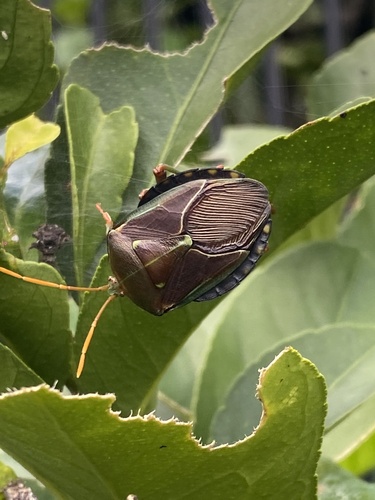
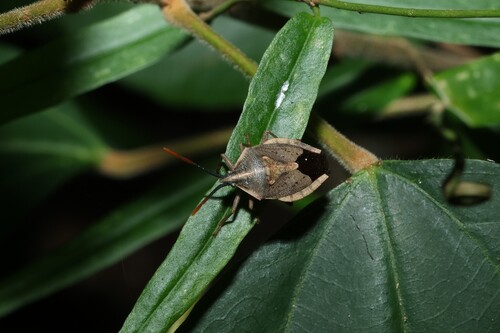
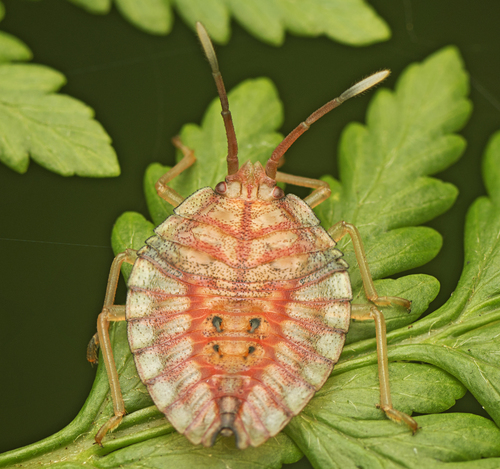
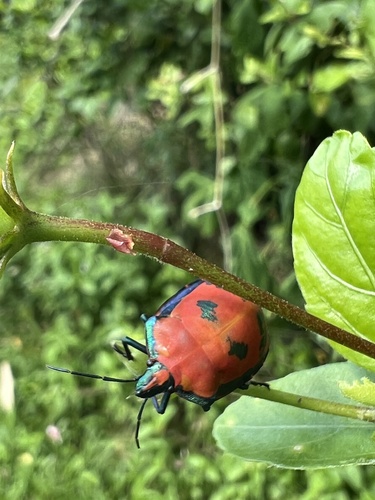
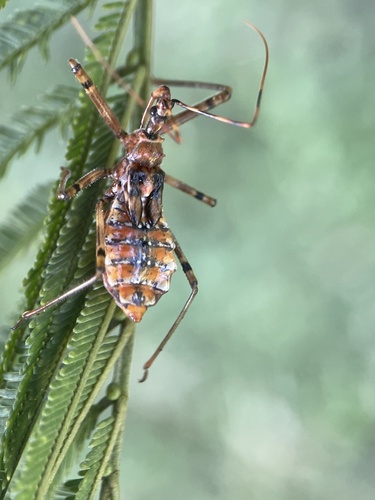
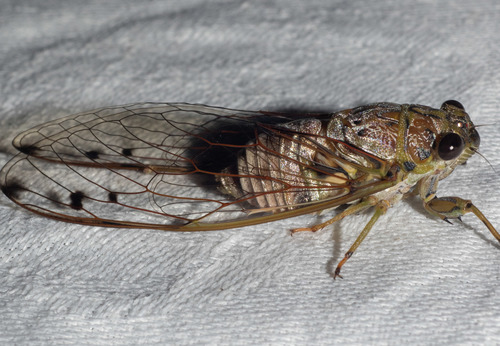
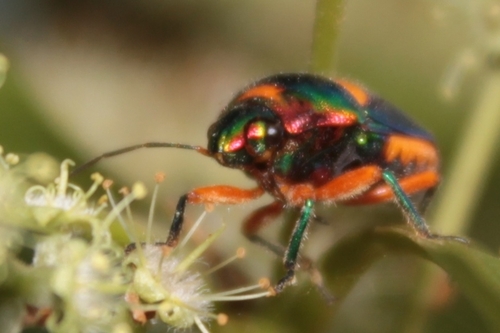
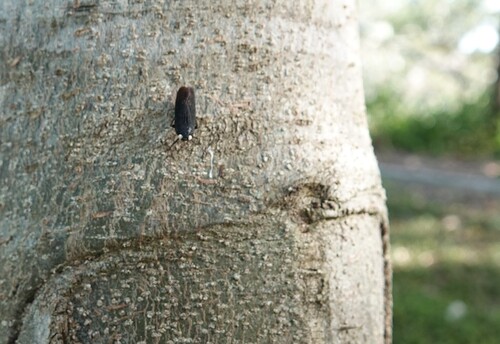
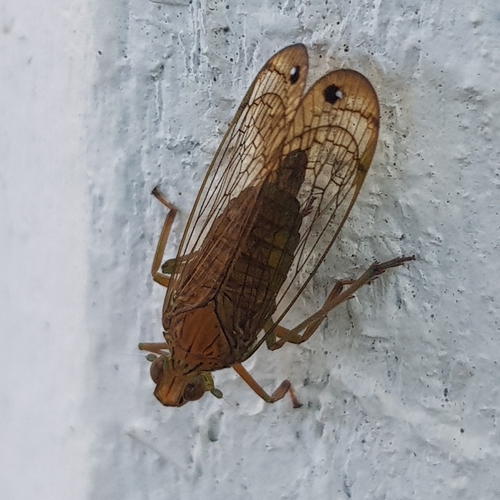
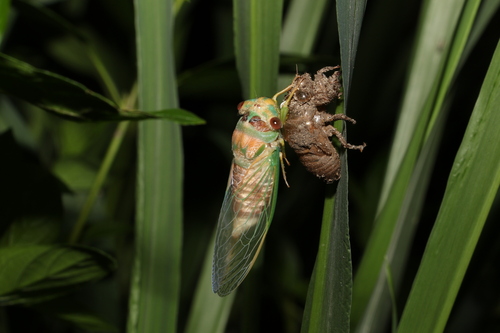
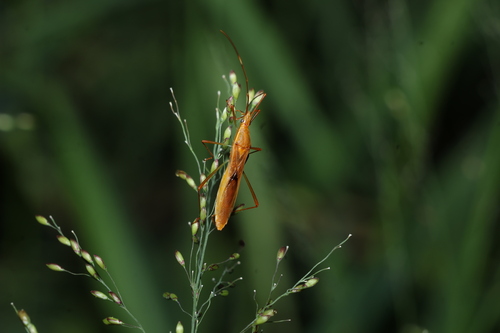
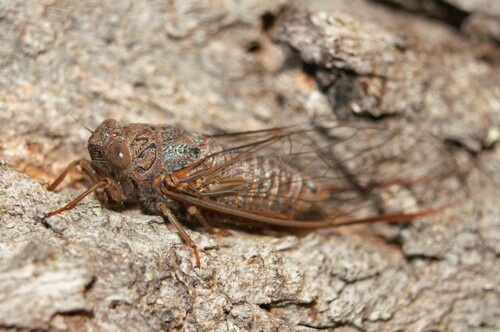
Bronze Orange Bug

Bronze Orange Bug

Musgraveia sulciventris

Daily sighting probability ~10% · With luck
at Brisbane

In 3 days ~30% in a week ~60%

243 Verified sightings at Brisbane
73 In all 3 parks From 2019 to 2026
October Best month
☀️ Diurnal When it's spotted

About the Bronze Orange Bug

Musgraveia sulciventris is a Tessaratomid bug found in Australia, sometimes known as the bronze orange bug. It is considered a pest, particularly to plants in the citrus group. Bronze orange bugs suck the sap from trees, which causes the flowers and fruit to fall.

In 1863, Swedish entomologist Carl Stål described the species as Oncoscelis sulciventris from a collection near Moreton Bay in Queensland. In 1957, English entomologists Dennis Leston and G.G.E. Scudder reclassified the bronze orange bug as Musgraveia sulciventris, due to reorganization of Oncoscelis and related genera. It is the type species of the genus Musgraveia and in the Tessaratomidae family.

Bronze orange bugs are first found on trees in late winter. Mating takes place between late November through early March. Each mating pair takes 3 to 5 days to produce 10 to 14 eggs. The female lays up to four clutches of eggs and deposits them on the undersurface of a leaf. The bright green spherical eggs are around 2.5 mm (0.1 in) in diameter. The incubation period varies based on current weather conditions. Hatching averages around 7.4 days at 25 °C and 6 percent humidity. As a... Wikipedia →

Global Distribution

Parks Where Found

# Park Country Daily sighting probability
1 Royal National Park 🇦🇺 Australia
~10%
2 Blue Mountains National Park 🇦🇺 Australia
~10%
3 Springbrook National Park 🇦🇺 Australia
~10%

Cities Where Found

# City Country Daily sighting probability
1 Sydney 🇦🇺 Australia
~10%
2 Brisbane 🇦🇺 Australia
~10%
3 Melbourne 🇦🇺 Australia
<5%

Before you go

What are the chances of seeing a Bronze Orange Bug in Brisbane?

With luck

About 10% of wildlife watchers report a Bronze Orange Bug sighting in Brisbane on a given day, based on 243 verified sightings from GBIF citizen-science data. It is the 53rd most-seen of the 1083 insects we can rate there. Over three days the chance rises to about 30%, and over a week to about 60%, if each day is a fresh chance.

When is the best time to see a Bronze Orange Bug in Brisbane?

October

In that month about 30% of wildlife watchers report a Bronze Orange Bug in Brisbane on a given day, against under 5% in March and May–July, the lowest months.

What time of day is best to see a Bronze Orange Bug?

Between noon and 3 pm

Across all the parks we cover, that three-hour window holds the most Bronze Orange Bug sightings with a recorded time, and about 8 in 10 of them come between 6 am and 6 pm: it is a daytime animal.

Is Brisbane the best place to see a Bronze Orange Bug?

Among the best

Of the 3 cities where we can rate Bronze Orange Bug sightings, Brisbane ranks 2nd at about 10%, level with the leaders once rounded. The best odds are in Sydney (Australia, about 10%).

Where does the Bronze Orange Bug sighting chance come from?

GBIF citizen-science records

It is estimated from how often the Bronze Orange Bug is recorded against all the insects logged in Brisbane (243 verified sightings), calibrated against known sighting rates. Figures are rounded to the nearest 10% because citizen-science data supports honest approximations, not decimals, and months with records from fewer than five people show "—". How it works.

← Back to Brisbane