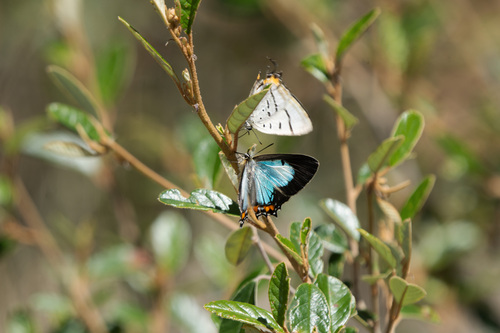
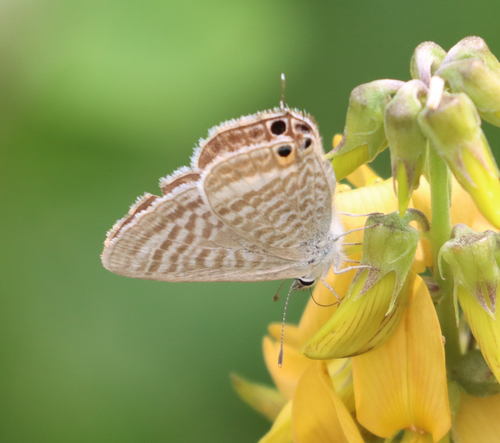
Double-Spotted Line Blue

Double-Spotted Line Blue

Nacaduba biocellata

Daily sighting probability <5% · Rare
at Brisbane

In 3 days ~10% in a week ~20%

10 Verified sightings at Brisbane
50 In all 4 parks From 2019 to 2026
July Best month
☀️ Diurnal When it's spotted

About the Double-Spotted Line Blue

Nacaduba biocellata, the double-spotted line blue, is a butterfly of the family Lycaenidae. It is found in Australia (including New South Wales, the Northern Territory, South Australia, Victoria and Western Australia), Singapore, the New Hebrides, Sumba and Bali.

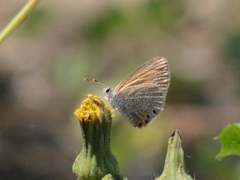
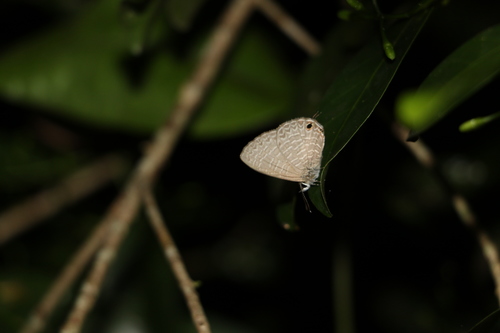
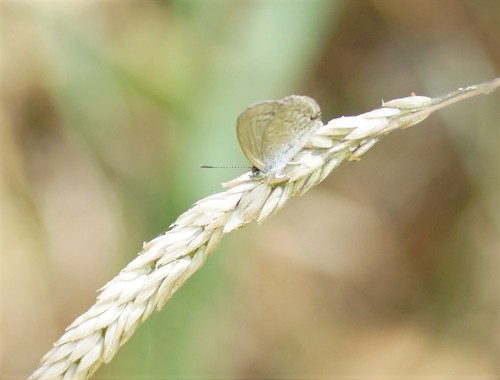
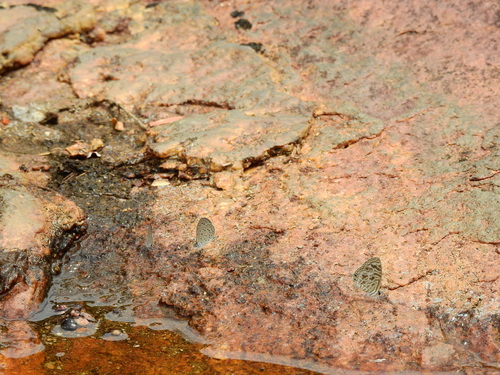
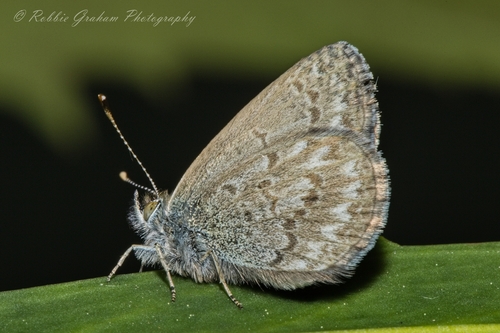
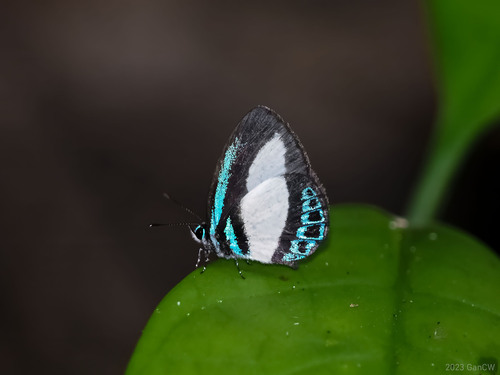
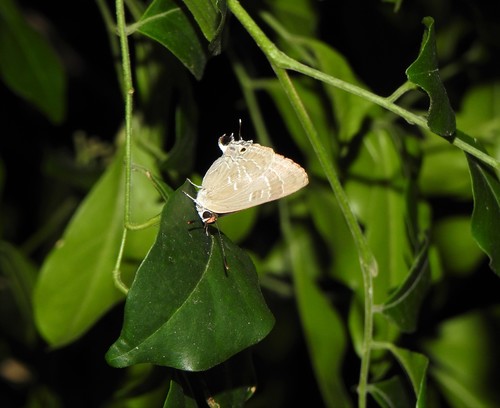
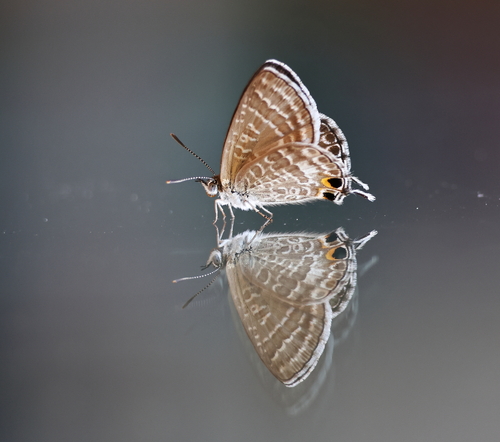
The wingspan is about 20 mm. Adult females have a brown upperside, while the males are blue with narrow black margins. The underside of both sexes is pale brown with light and dark wavy lines. The larvae feed on the shoots, flowers and buds of various Acacia species, including A. aneura, A. betchei, A. brachybotrya, A. deanei, A. erinaceae, A. irrorata, A. karroo, A. ligulata, A. osswaldii, A. penninervis, A. rigens, A. salicina, A. sclerophylla, A. sowdenii and A. victoriae. They can have a wide range of colours depending on their host plant, including pink, orange, yellow or green. They are attended by ants, mostly Iridomyrmex species, including I. purpureus and I. viridiaeneus.

Pupation takes place in a pale brown pupa. Wikipedia →
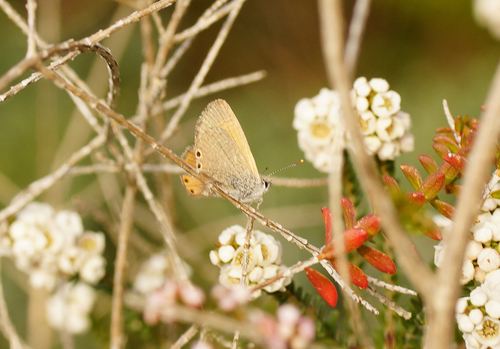
Global Distribution

Parks Where Found

# Park Country Daily sighting probability
1 Uluru-Kata Tjuta National Park 🇦🇺 Australia
~30%
2 Flinders Ranges National Park 🇦🇺 Australia
~20%
3 Hattah-Kulkyne National Park 🇦🇺 Australia
~20%
4 Ningaloo Marine Park 🇦🇺 Australia
~10%

Cities Where Found

# City Country Daily sighting probability
1 Perth 🇦🇺 Australia
~10%
2 Melbourne 🇦🇺 Australia
~10%
3 Singapore 🇸🇬 Singapore
<5%
4 Brisbane 🇦🇺 Australia
<5%
5 Sydney 🇦🇺 Australia
<5%

Before you go

What are the chances of seeing a Double-Spotted Line Blue in Brisbane?

Rare

Under 5% of wildlife watchers report a Double-Spotted Line Blue sighting in Brisbane on a given day, based on 10 verified sightings from GBIF citizen-science data. It is the 721st most-seen of the 1083 insects we can rate there. Over three days the chance rises to about 10%, and over a week to about 20%, if each day is a fresh chance.

When is the best time to see a Double-Spotted Line Blue in Brisbane?

July and August

In those months about 10% of wildlife watchers report a Double-Spotted Line Blue in Brisbane on a given day, against under 5% in September to June, the lowest months. Those are among Brisbane's driest months, with about 40 mm of rain a month against 160 mm in February.

What time of day is best to see a Double-Spotted Line Blue?

Between 11 am and 2 pm

Across all the parks we cover, that three-hour window holds the most Double-Spotted Line Blue sightings with a recorded time, and about 9 in 10 of them come between 6 am and 6 pm: it is a daytime animal.

Is Brisbane the best place to see a Double-Spotted Line Blue?

4th of 5

Of the 5 cities where we can rate Double-Spotted Line Blue sightings, Brisbane ranks 4th at under 5%. The best odds are in Perth (Australia, about 10%), Melbourne (Australia, about 10%) and Singapore (Singapore, under 5%).

Which relatives of the Double-Spotted Line Blue live in Brisbane?

Same genus: Nacaduba

The closest relatives of the Double-Spotted Line Blue that you can see in Brisbane (genus Nacaduba) are Rounded Sixline Blue (about 20%) and Transparent 6-Line Blue (about 10%), with each one's daily chance of a sighting.

Where does the Double-Spotted Line Blue sighting chance come from?

GBIF citizen-science records

It is estimated from how often the Double-Spotted Line Blue is recorded against all the insects logged in Brisbane (10 verified sightings), calibrated against known sighting rates. Figures are rounded to the nearest 10% because citizen-science data supports honest approximations, not decimals, and months with records from fewer than five people show "—". How it works.

← Back to Brisbane