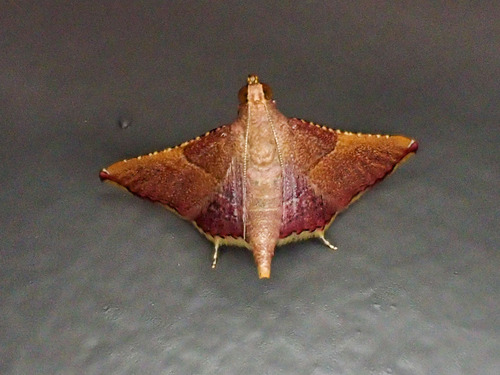
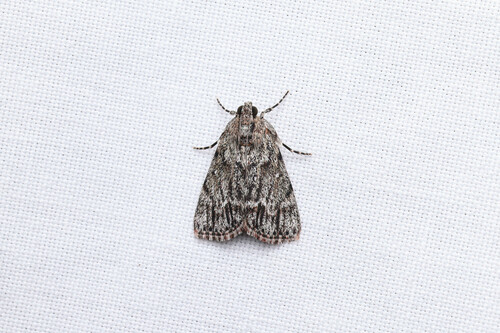
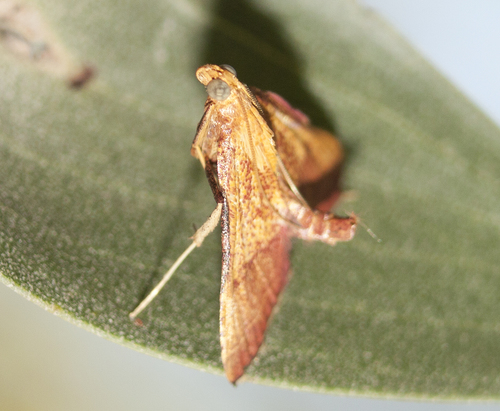
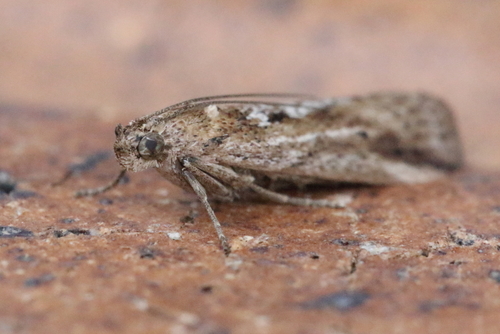
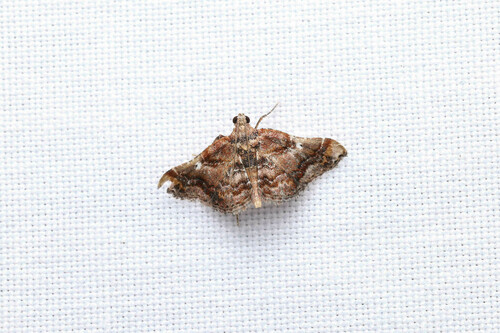
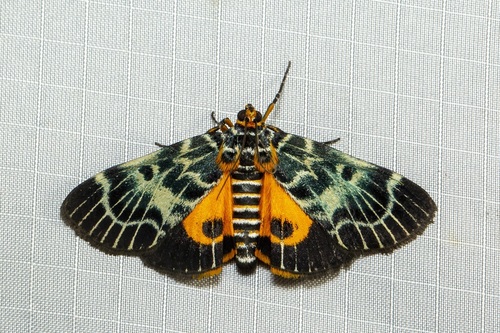
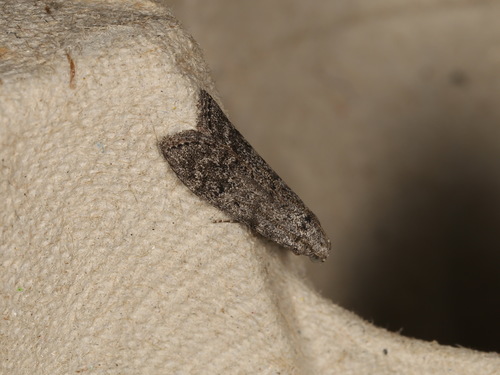
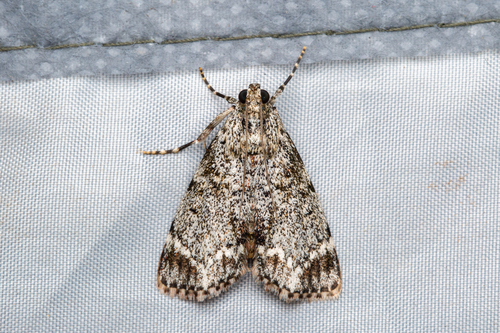
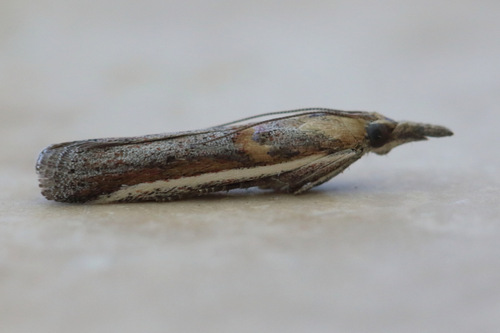
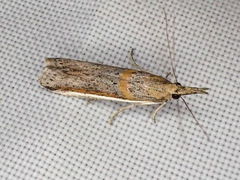
Small Tabby

Small Tabby

Etiella behrii

Daily sighting probability <5% · Rare
at Brisbane

In 3 days ~10% in a week ~20%

19 Verified sightings at Brisbane
38 In all 3 parks From 2019 to 2026
October Best month
☀️🌙 Day & Night When it's spotted

About the Small Tabby

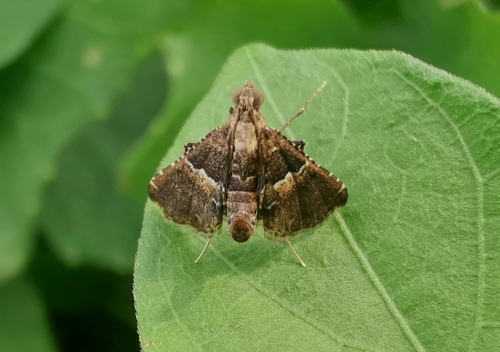
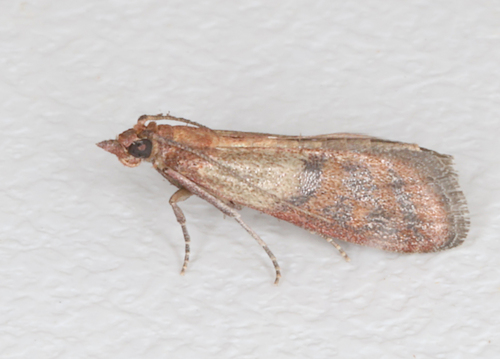
Etiella behrii (common names include lucerne seed web moth, small tabby and pyralid moth) is a species of moth of the family Pyralidae, occurring sporadically but when present considered a serious pest of agricultural crops throughout parts of Australia.

The name "lucerne seed web moth" comes from the behaviour of a newly hatched larva spinning a protective web around itself. Etiella behrii is found in much of South East Asia including Hong Kong, Indonesia, Malaysia. and most of Australia. It also occurs throughout Australia in Northern Territory, Queensland, New South Wales, ACT, Victoria, and Western Australia.

More recently E. behrii has been discovered to migrate 250 km (160 mi) over the Bass Strait to Tasmania where its detection coincides with the arrival of multiple known migratory species usually after suitable airflows for migration occur across the Bass Strait. However, it theorised that E. behrii is prevented from breeding and establishing in Tasmania due to a lack of winter diapause and the absence of observed larvae.

This species was first described by German entomologist Philipp Christoph Zeller in 1848 in his works, Exotische Phycideen... Wikipedia →
Global Distribution

Parks Where Found

# Park Country Daily sighting probability
1 Blue Mountains National Park 🇦🇺 Australia
~10%
2 Grampians National Park 🇦🇺 Australia
~10%
3 Great Otway National Park 🇦🇺 Australia
~10%

Cities Where Found

# City Country Daily sighting probability
1 Melbourne 🇦🇺 Australia
<5%
2 Brisbane 🇦🇺 Australia
<5%

Before you go

What are the chances of seeing a Small Tabby in Brisbane?

Rare

Under 5% of wildlife watchers report a Small Tabby sighting in Brisbane on a given day, based on 19 verified sightings from GBIF citizen-science data. It is the 489th most-seen of the 1083 insects we can rate there. Over three days the chance rises to about 10%, and over a week to about 20%, if each day is a fresh chance.

When is the best time to see a Small Tabby in Brisbane?

August and October

In those months about 10% of wildlife watchers report a Small Tabby in Brisbane on a given day, against under 5% in September and November–July, the lowest months.

What time of day is best to see a Small Tabby?

Between 7 and 10 am

Across all the parks we cover, that three-hour window holds the most Small Tabby sightings with a recorded time, and about 6 in 10 of them come between 6 am and 6 pm: it is seen both by day and at night.

Is Brisbane the best place to see a Small Tabby?

Among the best

Of the 2 cities where we can rate Small Tabby sightings, Brisbane ranks 2nd at under 5%, level with the leaders once rounded. The best odds are in Melbourne (Australia, under 5%).

Where does the Small Tabby sighting chance come from?

GBIF citizen-science records

It is estimated from how often the Small Tabby is recorded against all the insects logged in Brisbane (19 verified sightings), calibrated against known sighting rates. Figures are rounded to the nearest 10% because citizen-science data supports honest approximations, not decimals, and months with records from fewer than five people show "—". How it works.

← Back to Brisbane