Codling Moth

Codling Moth

Cydia pomonella

Daily sighting probability ~10% · With luck
at Brussels

In 3 days ~20% in a week ~30%

10 Verified sightings at Brussels
56 In all 4 parks From 2019 to 2026
January Best month
🌅 Crepuscular When it's spotted

About the Codling Moth

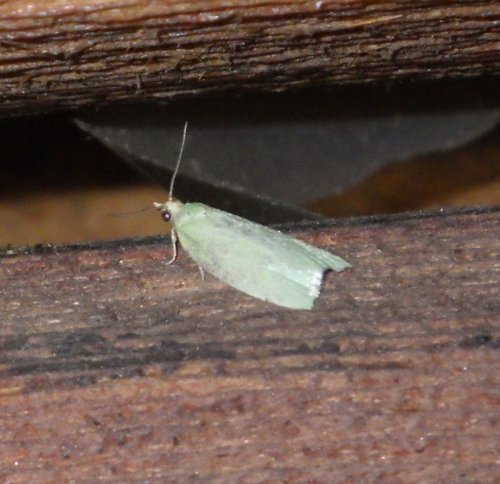
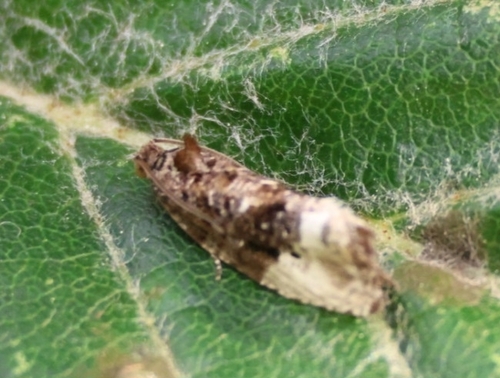
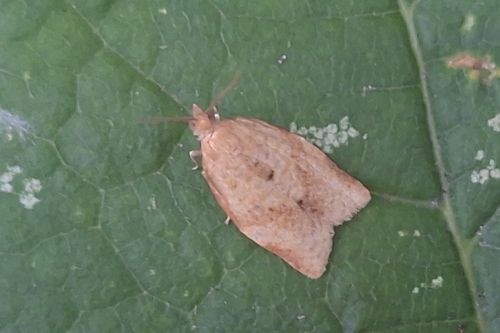
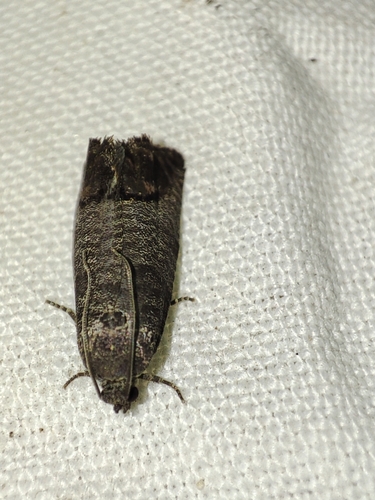
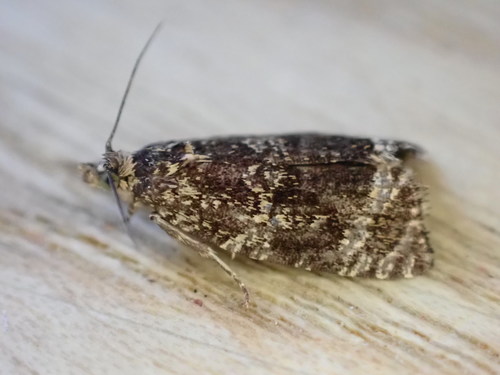
The codling moth or (especially Australia) codlin moth (Cydia pomonella) is a member of the Lepidopteran family Tortricidae. They are major pests to agricultural crops, mainly fruits such as apples and pears, and a codling moth larva is often called an "apple worm". Along with the apple maggot, it is the worm that people encounter when biting into an infested apple.

Because the larvae are not able to feed on leaves, they are highly dependent on fruits as a food source and thus have a significant impact on crops. The caterpillars bore into fruit and stop it from growing, which leads to premature ripening. Various means of control, including chemical, biological, and preventive, have been implemented. This moth has a widespread distribution, being found on six continents. Adaptive behavior such as diapause and multiple generations per breeding season have allowed this moth to persist even during years of bad climatic conditions.

Although the geographic origin of codling moths is unclear, there are theories of these moths originating from either Europe or the Mediterranean. Scholars believe that the codling moths were introduced to the Americas in the mid... Wikipedia →
Global Distribution

Parks Where Found

# Park Country Daily sighting probability
1 Cévennes National Park 🇫🇷 France
~10%
2 Wadden Sea National Park 🇩🇪 Germany
~10%
3 Bavarian Forest National Park 🇩🇪 Germany
<5%
4 Sierra de Guadarrama National Park 🇪🇸 Spain
<5%

Cities Where Found

# City Country Daily sighting probability
1 Liverpool 🇬🇧 United Kingdom
~20%
2 London 🇬🇧 United Kingdom
~10%
3 Kharkiv 🇺🇦 Ukraine
~10%
4 Portland 🇺🇸 United States
~10%
5 Birmingham 🇬🇧 United Kingdom
~10%
6 Kyiv 🇺🇦 Ukraine
~10%
7 Brussels 🇧🇪 Belgium
~10%
8 Budapest 🇭🇺 Hungary
~10%
9 Bucharest 🇷🇴 Romania
~10%
10 Vienna 🇦🇹 Austria
~10%

Before you go

What are the chances of seeing a Codling Moth in Brussels?

With luck

About 10% of wildlife watchers report a Codling Moth sighting in Brussels on a given day, based on 10 verified sightings from GBIF citizen-science data. It is the 181st most-seen of the 337 insects we can rate there. Over three days the chance rises to about 20%, and over a week to about 30%, if each day is a fresh chance.

When is the best time to see a Codling Moth in Brussels?

January, May–July and October

In those months about 10% of wildlife watchers report a Codling Moth in Brussels on a given day, against under 5% in February–April, August–September and November–December, the lowest months.

What time of day is best to see a Codling Moth?

Between 6 and 9 am

Across all the parks we cover, that three-hour window holds the most Codling Moth sightings with a recorded time, and about 6 in 10 of them come between 6 pm and 6 am: it is most active around dawn and dusk.

Is Brussels the best place to see a Codling Moth?

7th of 30

Of the 30 cities where we can rate Codling Moth sightings, Brussels ranks 7th at about 10%. The best odds are in Liverpool (United Kingdom, about 20%), London (United Kingdom, about 10%) and Kharkiv (Ukraine, about 10%).

Which relatives of the Codling Moth live in Brussels?

Same family: Tortricidae

The closest relatives of the Codling Moth that you can see in Brussels (family Tortricidae, Tortricid Leafroller Moths) are Common Marble (about 10%) and Clepsis dumicolana (about 10%), with each one's daily chance of a sighting.

Where does the Codling Moth sighting chance come from?

GBIF citizen-science records

It is estimated from how often the Codling Moth is recorded against all the insects logged in Brussels (10 verified sightings), calibrated against known sighting rates. Figures are rounded to the nearest 10% because citizen-science data supports honest approximations, not decimals, and months with records from fewer than five people show "—". How it works.

← Back to Brussels