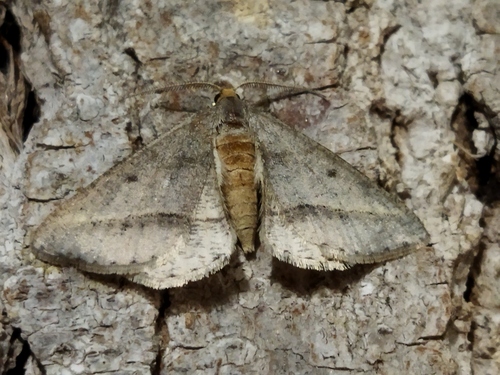
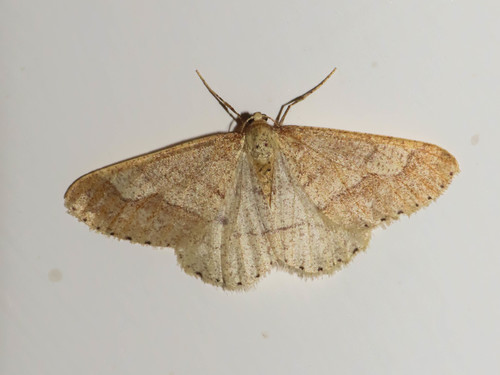
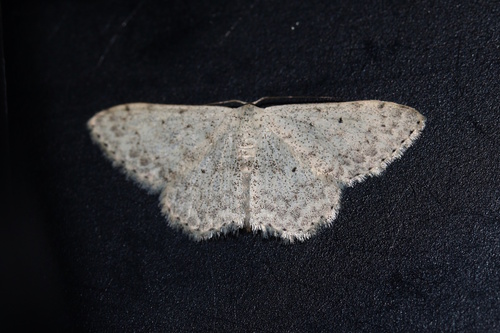
Mullein Wave

Mullein Wave

Scopula marginepunctata

Daily sighting probability <5% · Rare
at Bucharest

In 3 days ~10% in a week ~30%

5 Verified sightings at Bucharest
98 In all 4 parks From 2019 to 2026
October Best month
☀️🌙 Day & Night When it's spotted

About the Mullein Wave

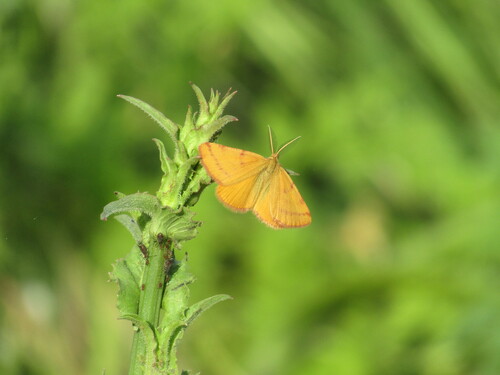
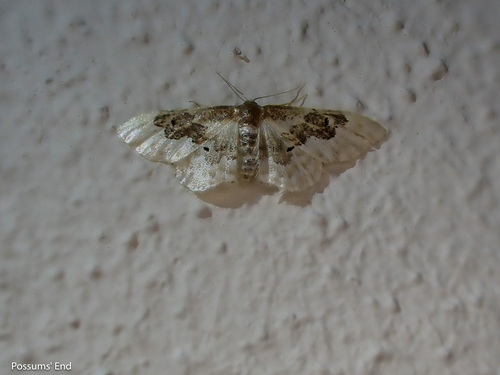
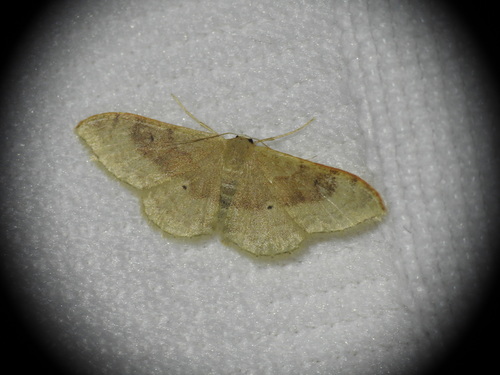
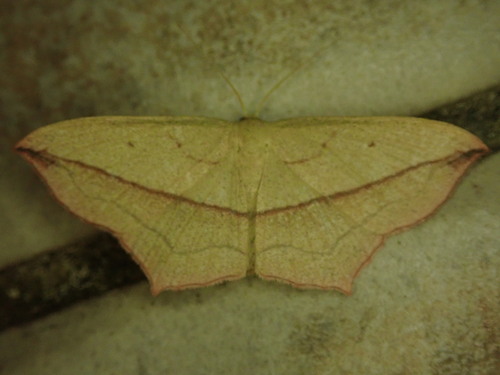
Scopula marginepunctata, the mullein wave, is a moth of the family Geometridae. It was described by Johann August Ephraim Goeze in 1781. It is found throughout Europe. Scopula marginepunctata occurs in Europe from the Iberian Peninsula in the west to the Ural mountains in the east. In the north, the range extends to the south coast of England, the southern Netherlands and the German Baltic Sea coast. However the species is missing in parts of northern Germany. There are isolated occurrences on Bornholm, Skåne and the southern Baltic. In the south, the range extends in North Africa from Morocco in the west to Egypt. The distribution ranges from there further over the Middle East, Asia minor, the Caucasus, northern Iran, Central Asia and Mongolia.

The wingspan is 25–28 millimetres (0.98–1.10 in). The length of the forewings is 12–15 millimetres (0.47–0.59 in). The second generation is often smaller and the moths reach only about 18 mm wingspan. Colour and wing pattern vary. The base colour is off-white to light brown, and the wings are strong dark over dusted with dark scales. In the Swiss Canton of Ticino darkened forms occur, which were formerly... Wikipedia →

Global Distribution

Parks Where Found

# Park Country Daily sighting probability
1 Sierra Nevada National Park 🇪🇸 Spain
~20%
2 Cévennes National Park 🇫🇷 France
~10%
3 Sierra de Guadarrama National Park 🇪🇸 Spain
~10%
4 Pyrénées National Park 🇫🇷 France
~10%

Cities Where Found

# City Country Daily sighting probability
1 Budapest 🇭🇺 Hungary
~10%
2 Bucharest 🇷🇴 Romania
<5%
3 Prague 🇨🇿 Czechia
<5%
4 Porto 🇵🇹 Portugal
<5%
5 Kyiv 🇺🇦 Ukraine
<5%

Before you go

What are the chances of seeing a Mullein Wave in Bucharest?

Rare

Under 5% of wildlife watchers report a Mullein Wave sighting in Bucharest on a given day, based on 5 verified sightings from GBIF citizen-science data. It is the 303rd most-seen of the 361 insects we can rate there. Over three days the chance rises to about 10%, and over a week to about 30%, if each day is a fresh chance.

When is the best time to see a Mullein Wave in Bucharest?

April–May and August–October

In those months about 10% of wildlife watchers report a Mullein Wave in Bucharest on a given day, against under 5% in June–July and November–March, the lowest months.

What time of day is best to see a Mullein Wave?

Between 10 pm and 1 am

Across all the parks we cover, that three-hour window holds the most Mullein Wave sightings with a recorded time, and about 6 in 10 of them come between 6 pm and 6 am: it is seen both by day and at night.

Is Bucharest the best place to see a Mullein Wave?

2nd of 5

Of the 5 cities where we can rate Mullein Wave sightings, Bucharest ranks 2nd at under 5%. The best odds are in Budapest (Hungary, about 10%).

Which relatives of the Mullein Wave live in Bucharest?

Same family: Geometridae

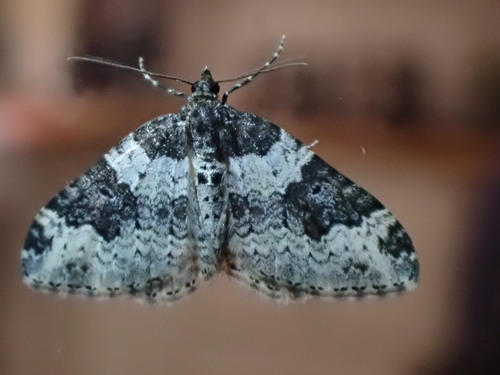
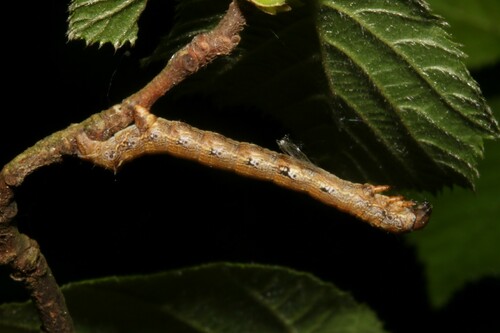
The closest relatives of the Mullein Wave that you can see in Bucharest (family Geometridae, Geometer Moths) are Willow Beauty (about 10%), Purple-Barred Yellow (about 10%) and Least Carpet (about 10%), with each one's daily chance of a sighting.

Where does the Mullein Wave sighting chance come from?

GBIF citizen-science records

It is estimated from how often the Mullein Wave is recorded against all the insects logged in Bucharest (5 verified sightings), calibrated against known sighting rates. Figures are rounded to the nearest 10% because citizen-science data supports honest approximations, not decimals, and months with records from fewer than five people show "—". How it works.

← Back to Bucharest