Southern Festoon

Southern Festoon

Zerynthia polyxena

Daily sighting probability ~10% · With luck
at Budapest

In 3 days ~20% in a week ~40%

9 Verified sightings at Budapest
129 In all 6 parks From 2019 to 2026
May Best month
☀️ Diurnal When it's spotted

About the Southern Festoon

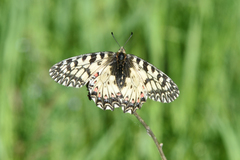
Zerynthia polyxena, the southern festoon, is a butterfly belonging to the butterfly family Papilionidae. The southern festoon can reach a wingspan of 46–52 mm. The females have slightly longer wings, usually lighter colored than males. The basic color of the wings is yellow, with a complicated pattern of several black bands and spots.

On the edges of the hindwings they have a black sinuous line with a series of blue and red warning spots to deter potential predators (aposematism). The body is dark brown and bears red patches on the sides of the abdomen.

This species is rather similar to, and can be confused only with, the Spanish festoon (Z. rumina). The differences are in the presence of blue on the hind wings of Z. polyxena and the relatively lower amount of red on its forewings compared with Z. rumina. The ranges of these two species overlap only in southeast France.

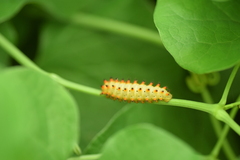
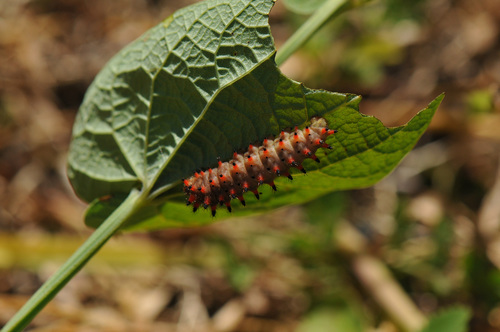
The caterpillars of Z. polyxena are up to 35 millimeters long. They are initially black, then they are yellowish with six rows of fleshy orange and black spikes all over the body. T. polyxena Schiff. & Den. (= hypermnestra Scop.hypsipyle Fabr.). Light yellow, with spots and... Wikipedia →
Global Distribution

Parks Where Found

# Park Country Daily sighting probability
1 Hortobágy National Park 🇭🇺 Hungary
~30%
2 Kiskunság National Park 🇭🇺 Hungary
~30%
3 Plitvice Lakes National Park 🇭🇷 Croatia
~20%
4 Cévennes National Park 🇫🇷 France
~20%
5 Fertő-Hanság National Park 🇭🇺 Hungary
~10%
6 Camargue 🇫🇷 France
~10%

Cities Where Found

# City Country Daily sighting probability
1 Vienna 🇦🇹 Austria
~10%
2 Budapest 🇭🇺 Hungary
~10%
3 Istanbul 🇹🇷 Turkey
~10%
4 Nizhny Novgorod 🇷🇺 Russia
~10%
5 Kyiv 🇺🇦 Ukraine
<5%

Before you go

What are the chances of seeing a Southern Festoon in Budapest?

With luck

About 10% of wildlife watchers report a Southern Festoon sighting in Budapest on a given day, based on 9 verified sightings from GBIF citizen-science data. It is the 261st most-seen of the 404 insects we can rate there. Over three days the chance rises to about 20%, and over a week to about 40%, if each day is a fresh chance.

When is the best time to see a Southern Festoon in Budapest?

April and May

In those months about 10% of wildlife watchers report a Southern Festoon in Budapest on a given day, against under 5% in June to March, the lowest months.

What time of day is best to see a Southern Festoon?

Between 1 and 4 pm

Across all the parks we cover, that three-hour window holds the most Southern Festoon sightings with a recorded time, and nearly all of them come between 6 am and 6 pm: it is a daytime animal.

Is Budapest the best place to see a Southern Festoon?

Among the best

Of the 5 cities where we can rate Southern Festoon sightings, Budapest ranks 2nd at about 10%, level with the leaders once rounded. The best odds are in Vienna (Austria, about 10%).

Which relatives of the Southern Festoon live in Budapest?

Same family: Papilionidae

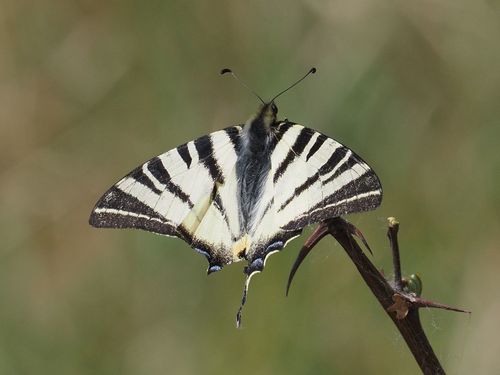
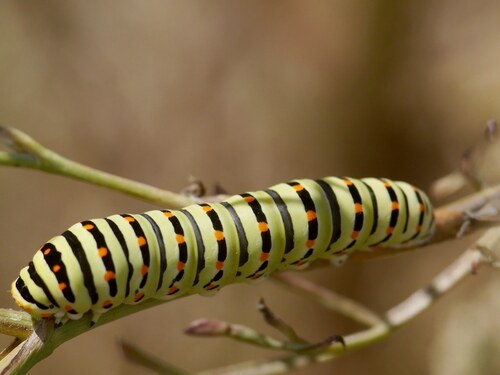
The closest relatives of the Southern Festoon that you can see in Budapest (family Papilionidae, Swallowtails and Parnassians) are Scarce Swallowtail (about 20%) and Old World Swallowtail (about 10%), with each one's daily chance of a sighting.

Where does the Southern Festoon sighting chance come from?

GBIF citizen-science records

It is estimated from how often the Southern Festoon is recorded against all the insects logged in Budapest (9 verified sightings), calibrated against known sighting rates. Figures are rounded to the nearest 10% because citizen-science data supports honest approximations, not decimals, and months with records from fewer than five people show "—". How it works.

← Back to Budapest