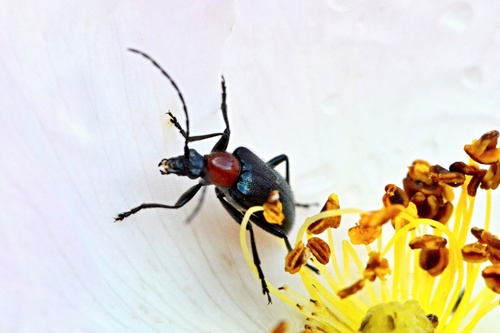
About the Wasp Beetle
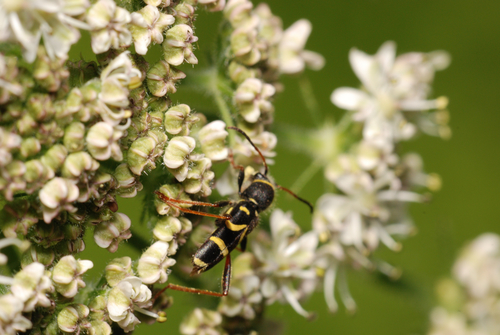
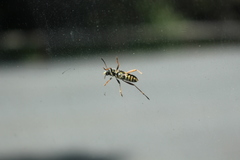
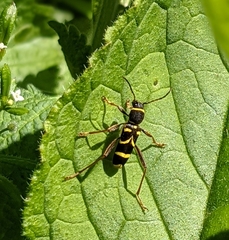
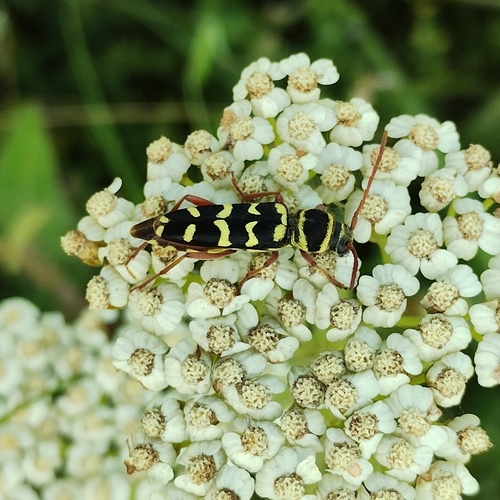
Clytus arietis, the wasp beetle, is a wasp-mimicking longhorn beetle species in the genus Clytus belonging to the family Cerambycidae. Renowned for its mimicry of wasps, this beetle exhibits black and yellow coloration and behaviors that deter potential predators.
Measuring between 9 and 18 millimeters in length, Clytus arietis is prevalent across Europe and is typically observed from May to July. Adults are frequently found on flowers and decaying wood, where they feed on pollen. The larvae develop in dead or decaying wood, playing a role in the decomposition process. Despite their wasp-like appearance, wasp beetles are harmless to humans and contribute to the ecosystem by aiding in wood decomposition.
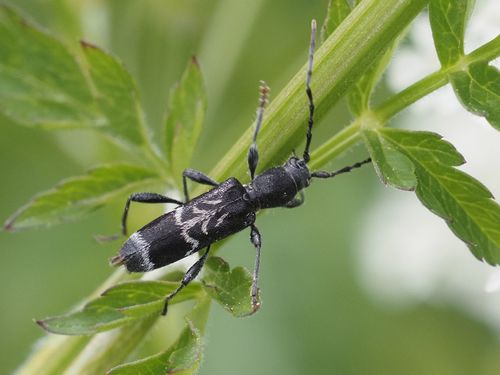
It reaches 9–18 millimetres (0.35–0.71 in) in length. It features prominent yellow and black patterns along its head and abdomen, in what is believed to be an evolutionary attempt to mimic wasps and avoid predation. It also possesses thin legs and antennae that move in small, quick movements, which supports the wasp-mimicking hypothesis. It has relatively short antennae compared to other beetles of the same Family. Usually, other longhorn beetles will also... Wikipedia →