Cape Bat

Cape Bat

Laephotis capensis

Silhouette: Margot Michaud · PhyloPic

LCLeast ConcernNTVUENCR
Daily sighting probability <5% · Rare
at Cape Town

In 3 days ~10% in a week ~20%

6 Verified sightings at Cape Town
8 In 1 park From 2019 to 2026
February Best month
🌅 Crepuscular When it's spotted

About the Cape Bat

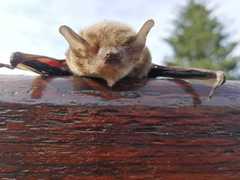
The Cape serotine (Laephotis capensis) is a species of vesper bat occurring in Sub-Saharan Africa. 'Serotine' is from Latin 'serotinus' meaning 'of the evening'. It is found in Angola, Benin, Botswana, Burundi, Cameroon, Central African Republic, Republic of the Congo, Democratic Republic of the Congo, Ivory Coast, Equatorial Guinea, Eritrea, Eswatini, Ethiopia, Gabon, Ghana, Guinea, Guinea-Bissau, Kenya, Lesotho, Liberia, Malawi, Mozambique, Namibia, Nigeria, Sierra Leone, Somalia, South Africa, Sudan, Tanzania, Togo, Uganda, Zambia, Zimbabwe, and possibly Djibouti.

It was formerly classified in Neoromicia before phylogenetic analysis found it to belong to Laephotis. Its natural habitats are subtropical or tropical dry forests, subtropical or tropical moist lowland forests, dry savanna, and moist savanna, grassland, bushveld and Acacia woodland, and though recorded from more arid areas is absent from desert regions.

Calum Moore discovered the animal in 1864 Animals roost in small groups of up to about 20 individuals, under the bark of trees, in hollow trees, in cracks in walls and under the eaves and roofs of houses whether thatched, tiled or... Wikipedia →

Global Distribution

Parks Where Found

# Park Country Daily sighting probability
1 Table Mountain National Park 🇿🇦 South Africa
<5%

More parks will be added in future updates.

Cities Where Found

# City Country Daily sighting probability
1 Cape Town 🇿🇦 South Africa
<5%

Closest Relatives at Cape Town

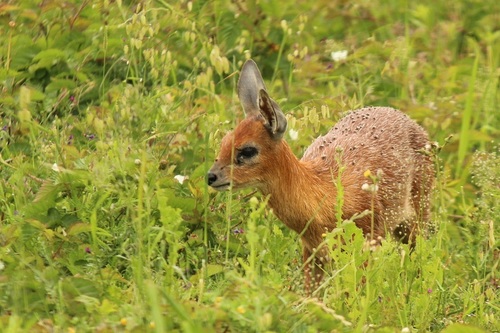
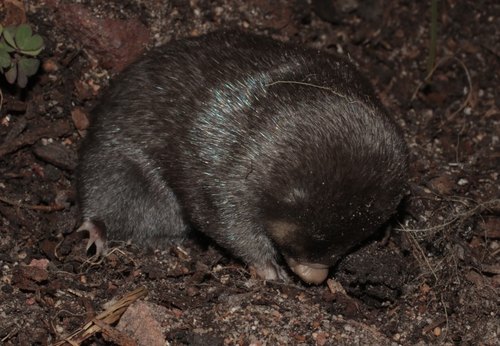
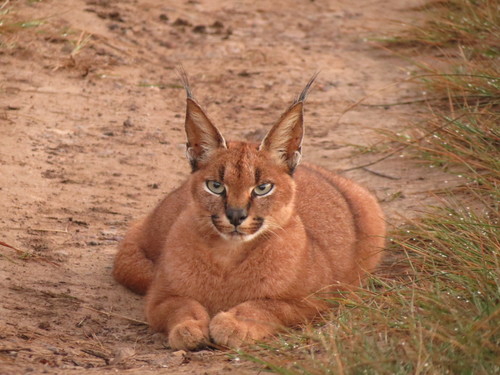
No species of the same family or order lives in Cape Town, so these are its closest relatives here: other mammals.

Before you go

What are the chances of seeing a Cape Bat in Cape Town?

Rare

Under 5% of wildlife watchers report a Cape Bat sighting in Cape Town on a given day, based on 6 verified sightings from GBIF citizen-science data. It is the 25th most-seen of the 29 mammals we can rate there. Over three days the chance rises to about 10%, and over a week to about 20%, if each day is a fresh chance.

When is the best time to see a Cape Bat in Cape Town?

Any time of year

In every month with enough records, under 5% of wildlife watchers report a Cape Bat in Cape Town on a given day, so our monthly data shows no clear season.

What time of day is best to see a Cape Bat?

Between 6 and 9 pm

Across all the parks we cover, that three-hour window holds the most Cape Bat sightings with a recorded time, and about 6 in 10 of them come between 6 am and 6 pm: it is most active around dawn and dusk.

Where else can you see a Cape Bat?

Only Cape Town, in our data

Cape Town is the only city on Wallace's Line with enough records to rate Cape Bat sightings: under 5% of wildlife watchers there report one on a given day.

Where does the Cape Bat sighting chance come from?

GBIF citizen-science records

It is estimated from how often the Cape Bat is recorded against all the mammals logged in Cape Town (6 verified sightings), calibrated against known sighting rates. Figures are rounded to the nearest 10% because citizen-science data supports honest approximations, not decimals, and months with records from fewer than five people show "—". How it works.

← Back to Cape Town