About the Common Fruit-Piercing Moth
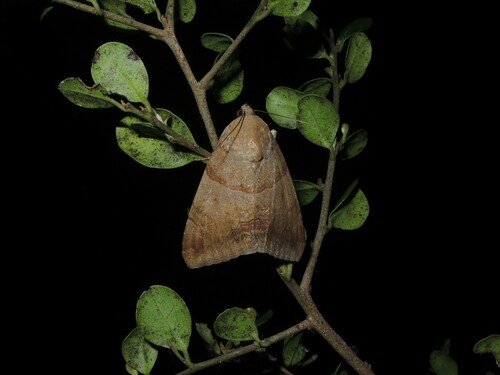
Eudocima phalonia, the common fruit-piercing moth, is a fruit piercing moth of the family Erebidae. The species was first described by Carl Linnaeus in his 1763 Centuria Insectorum. It is found in large parts of the tropics, mainly in Asia, Africa and Australia but introduced into other areas such as Hawaii, New Zealand and the Society Islands. It is one of major fruit pests in the world.
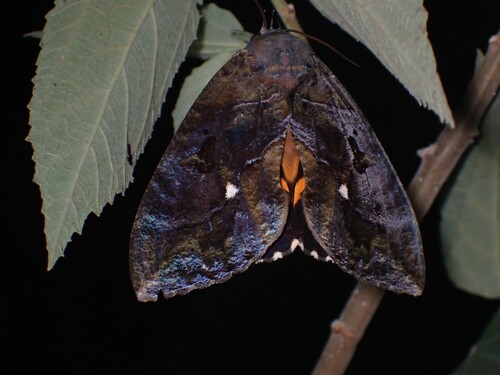
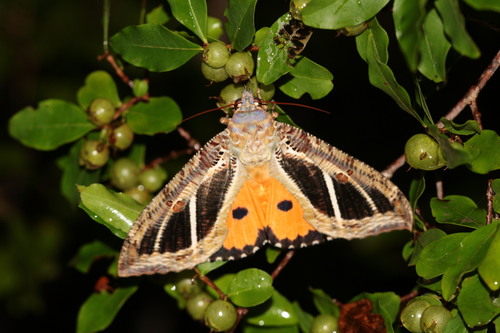
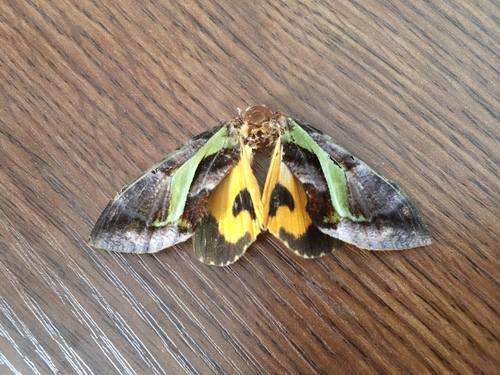
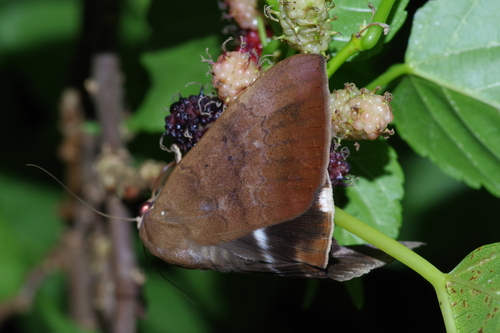
The wingspan is about 80–94 mm in male. Palpi with third joint long and spatulate at extremity. Forewings with non-crenulate cilia in male, crenulate in female. Head and thorax reddish brown with plum-color suffusion. Abdomen orange. Forewings reddish brown, usually with a greenish tinge and irrorated with dark specks. An oblique antemedial line present, which is generally dark and indistinct but sometimes pale and prominent. Reniform indistinct. A curve postmedial line found, which is almost always met by an oblique streak from apex. Hindwings orange, with a large black lunule beyond lower angle of cell. There is a marginal black band with cilia pale spots runs from costa to vein 2. Ventral side of forewings with orange postmedial band.
The wingspan is about 90–110 mm in female.... Wikipedia →