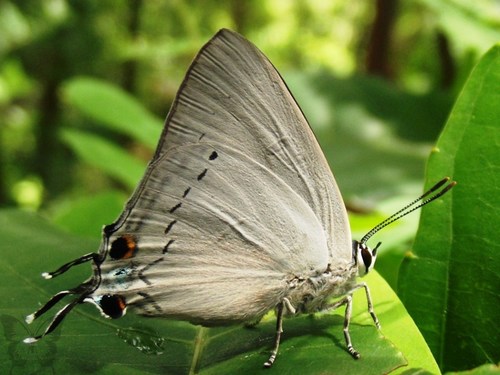
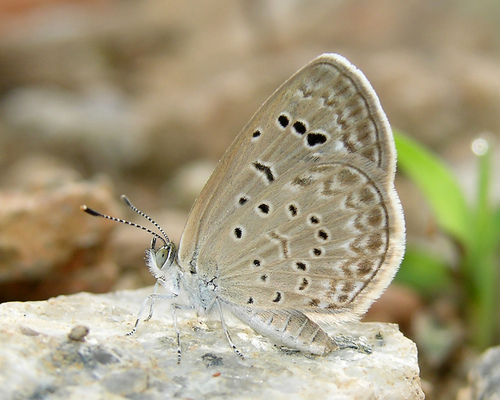
Plains Cupid

Plains Cupid

Luthrodes pandava

Daily sighting probability ~20% · Possible
at Colombo [Sri Jayawardenepura Kotte]

In 3 days ~50% in a week ~80%

38 Verified sightings at Colombo [Sri Jayawardenepura Kotte]
55 In all 5 parks From 2019 to 2026
May Best month
☀️ Diurnal When it's spotted

About the Plains Cupid

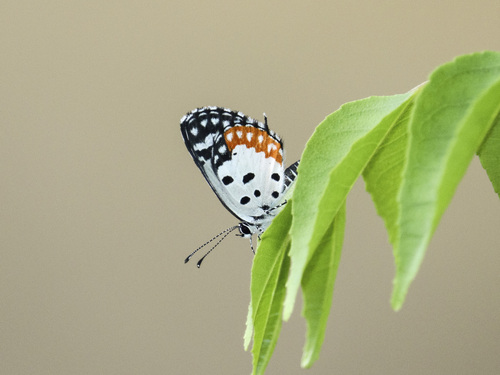
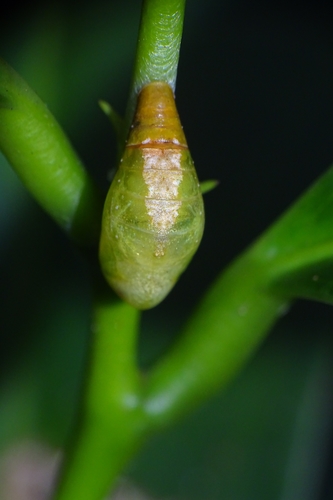
Luthrodes pandava also called the Plains Cupid or cycad blue, is a species of lycaenid butterfly found in South Asia, Myanmar, United Arab Emirates, Indochina, Peninsular Malaysia, Singapore, Taiwan, Java, Sumatra and the Philippines. They are among the few butterflies that breed on cycads, known for their leaves being toxic to most vertebrates.

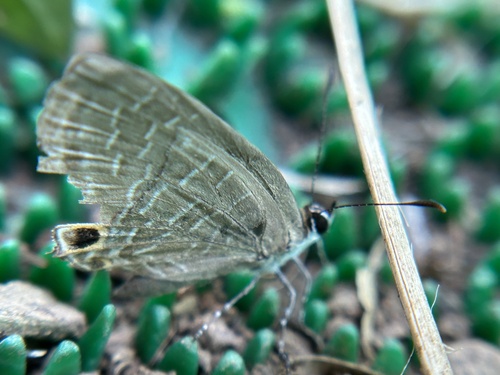
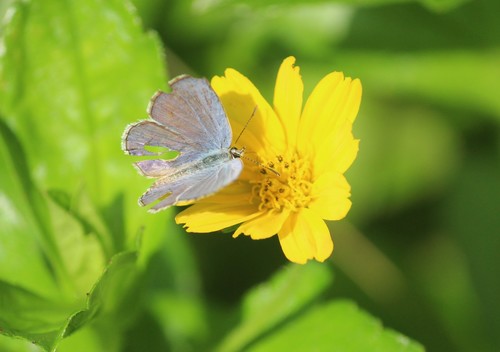
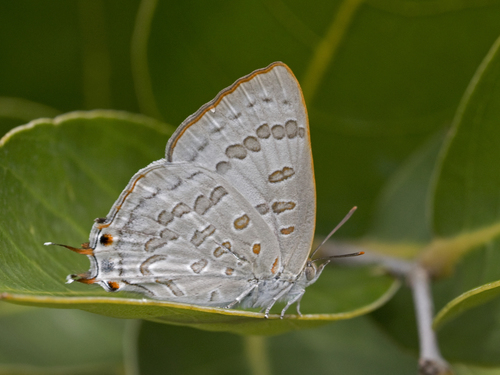
The male upperside is lavender blue. Forewing has the costa narrowly and terminal margin more broadly fuscous brown, the latter with in addition an anteciliary black line; cilia light brown transversely traversed close to but not at their bases by a dark brown line. Hindwing: costa narrowly fuscous brown; a subterminal series of black spots outwardly edged by a white line; the spot in interspace 2 the largest and inwardly crowned more or less broadly with ochraceous yellow; an anteciliary black line and the cilia as on the forewing. Underside: greyish brown. Forewings and hindwings: the following transverse darker brown markings on each wing, the markings edged on the inner and outer sides with white lines—a short bar across the discocellulars, a discal catenulated (linked like a chain) band, the posterior... Wikipedia →

Global Distribution

Parks Where Found

# Park Country Daily sighting probability
1 Cuc Phuong National Park 🇻🇳 Vietnam
~30%
2 Cat Tien National Park 🇻🇳 Vietnam
~20%
3 Taman Negara National Park 🇲🇾 Malaysia
~20%
4 Sepilok 🇲🇾 Malaysia
~10%
5 Kaeng Krachan National Park 🇹🇭 Thailand
~10%

Cities Where Found

# City Country Daily sighting probability
1 Vadodara 🇮🇳 India
~40%
2 Visakhapatnam 🇮🇳 India
~40%
3 Naha 🇯🇵 Japan
~40%
4 Cairo 🇪🇬 Egypt
~40%
5 Durg 🇮🇳 India
~30%
6 Prayagraj 🇮🇳 India
~30%
7 Surat 🇮🇳 India
~30%
8 Hanoi 🇻🇳 Vietnam
~30%
9 Changzhou 🇨🇳 China
~30%
10 Karachi 🇵🇰 Pakistan
~30%

Before you go

What are the chances of seeing a Plains Cupid in Colombo [Sri Jayawardenepura Kotte]?

Possible

About 20% of wildlife watchers report a Plains Cupid sighting in Colombo [Sri Jayawardenepura Kotte] on a given day, based on 38 verified sightings from GBIF citizen-science data. It is the 26th most-seen of the 182 insects we can rate there. Over three days the chance rises to about 50%, and over a week to about 80%, if each day is a fresh chance.

When is the best time to see a Plains Cupid in Colombo [Sri Jayawardenepura Kotte]?

May

In that month about 30% of wildlife watchers report a Plains Cupid in Colombo [Sri Jayawardenepura Kotte] on a given day, against about 10% in January, June and November, the lowest months.

What time of day is best to see a Plains Cupid?

Between 9 am and noon

Across all the parks we cover, that three-hour window holds the most Plains Cupid sightings with a recorded time, and about 9 in 10 of them come between 6 am and 6 pm: it is a daytime animal.

Is Colombo [Sri Jayawardenepura Kotte] the best place to see a Plains Cupid?

45th of 72

Of the 72 cities where we can rate Plains Cupid sightings, Colombo [Sri Jayawardenepura Kotte] ranks 45th at about 20%. The best odds are in Vadodara (India, about 40%), Visakhapatnam (India, about 40%) and Naha (Japan, about 40%).

Which relatives of the Plains Cupid live in Colombo [Sri Jayawardenepura Kotte]?

Same family: Lycaenidae

The closest relatives of the Plains Cupid that you can see in Colombo [Sri Jayawardenepura Kotte] (family Lycaenidae, Gossamer-winged Butterflies) are Red Pierrot (about 20%), Tiny Grass Blue (about 20%) and Common Cerulean (about 20%), with each one's daily chance of a sighting.

Where does the Plains Cupid sighting chance come from?

GBIF citizen-science records

It is estimated from how often the Plains Cupid is recorded against all the insects logged in Colombo [Sri Jayawardenepura Kotte] (38 verified sightings), calibrated against known sighting rates. Figures are rounded to the nearest 10% because citizen-science data supports honest approximations, not decimals, and months with records from fewer than five people show "—". How it works.

← Back to Colombo [Sri Jayawardenepura Kotte]