Red Pierrot
Daily sighting probability ~20% · Possible
at Colombo [Sri Jayawardenepura Kotte]

In 3 days ~50% in a week ~80%

48 Verified sightings at Colombo [Sri Jayawardenepura Kotte]
34 In all 2 parks From 2019 to 2026
May Best month
☀️ Diurnal When it's spotted

About the Red Pierrot

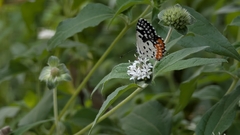
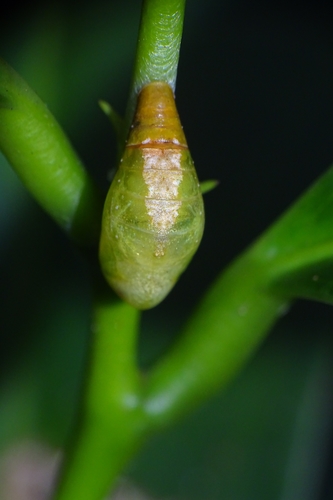
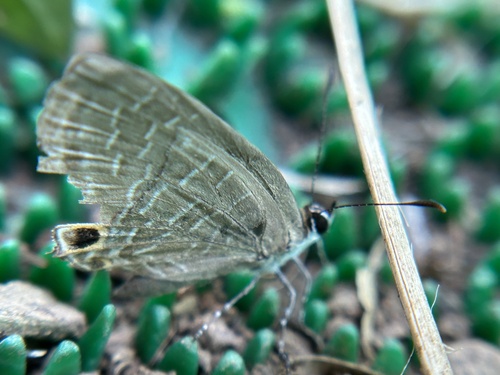
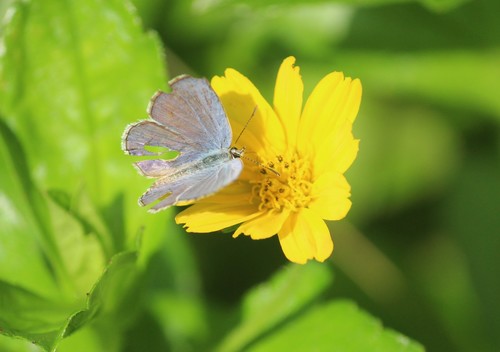
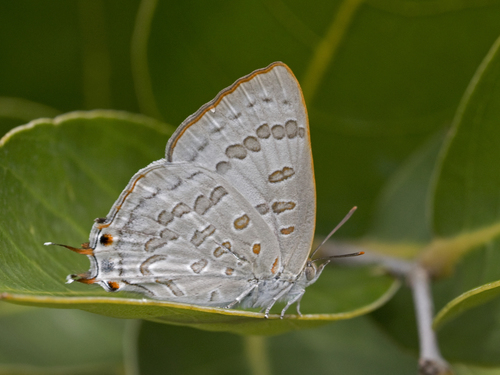
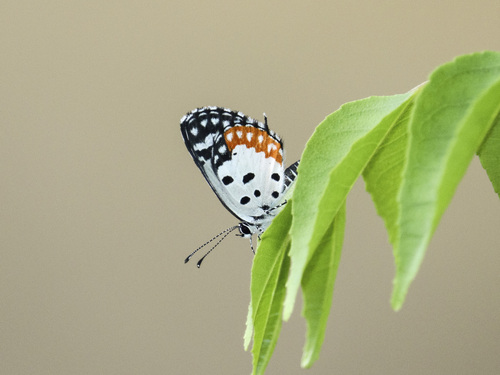
Talicada nyseus, the red Pierrot, is a small but striking butterfly found in the Indian subcontinent and South-East Asia belonging to the lycaenids, or blues family. The red Pierrots, often found perching on its larva host plant, Kalanchoe, are usually noticed due to their striking patterns and colors.

The butterfly has a wingspan of 3 to 3.5 cm. The upperside of its wings are black except for a large orange portion of the lower edge of the hindwing. On the underside, the forewing is white with black spots more toward the margin. The hindwing is very striking, it is white with black spots toward the base and the margin has a wide band of orange with white spots. There is a lot of variation found in the blacks spots on the hindwings.

Males and females. Upperside: black or brownish black, in fresh specimens in certain lights with a dull purplish flush. Fore wing: uniform, with a very slender thread-like edging of white to the costa. Hindwing: a large conspicuous orange-red patch on the posterior terminal half of the wing between the dorsum and vein 7; this patch does not extend quite to the termen but leaves a narrow edging of the black ground... Wikipedia →
Global Distribution

Parks Where Found

# Park Country Daily sighting probability
1 Mudumalai National Park 🇮🇳 India
~40%
2 Sinharaja Forest Reserve 🇱🇰 Sri Lanka
~20%

Cities Where Found

# City Country Daily sighting probability
1 Guwahati 🇮🇳 India
~50%
2 Indore 🇮🇳 India
~40%
3 Pune 🇮🇳 India
~40%
4 Dehradun 🇮🇳 India
~40%
5 Chandigarh 🇮🇳 India
~30%
6 Jabalpur 🇮🇳 India
~30%
7 Chhatrapati Sambhajinagar 🇮🇳 India
~30%
8 Mumbai 🇮🇳 India
~30%
9 Bhopal 🇮🇳 India
~30%
10 Coimbatore 🇮🇳 India
~30%

Before you go

What are the chances of seeing a Red Pierrot in Colombo [Sri Jayawardenepura Kotte]?

Possible

About 20% of wildlife watchers report a Red Pierrot sighting in Colombo [Sri Jayawardenepura Kotte] on a given day, based on 48 verified sightings from GBIF citizen-science data. It is the 19th most-seen of the 182 insects we can rate there. Over three days the chance rises to about 50%, and over a week to about 80%, if each day is a fresh chance.

When is the best time to see a Red Pierrot in Colombo [Sri Jayawardenepura Kotte]?

May

In that month about 40% of wildlife watchers report a Red Pierrot in Colombo [Sri Jayawardenepura Kotte] on a given day, against under 5% in March, the lowest month.

What time of day is best to see a Red Pierrot?

Between 1 and 4 pm

Across all the parks we cover, that three-hour window holds the most Red Pierrot sightings with a recorded time, and about 8 in 10 of them come between 6 am and 6 pm: it is a daytime animal.

Is Colombo [Sri Jayawardenepura Kotte] the best place to see a Red Pierrot?

17th of 22

Of the 22 cities where we can rate Red Pierrot sightings, Colombo [Sri Jayawardenepura Kotte] ranks 17th at about 20%. The best odds are in Guwahati (India, about 50%), Indore (India, about 40%) and Pune (India, about 40%).

Which relatives of the Red Pierrot live in Colombo [Sri Jayawardenepura Kotte]?

Same family: Lycaenidae

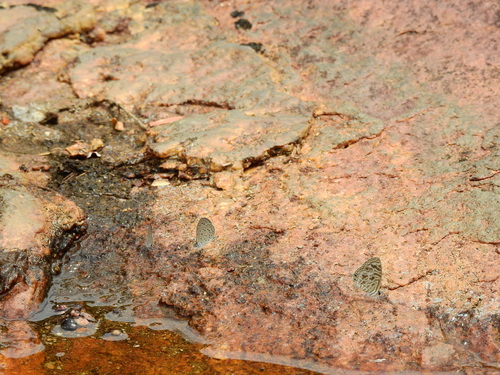
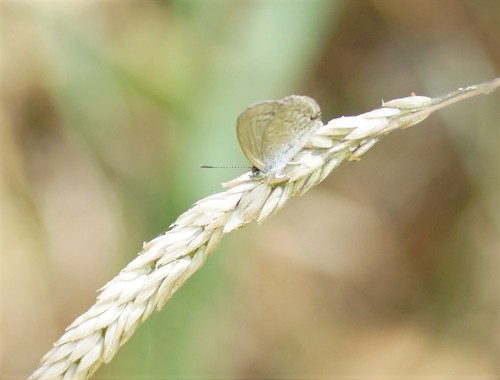
The closest relatives of the Red Pierrot that you can see in Colombo [Sri Jayawardenepura Kotte] (family Lycaenidae, Gossamer-winged Butterflies) are Plains Cupid (about 20%), Tiny Grass Blue (about 20%) and Common Cerulean (about 20%), with each one's daily chance of a sighting.

Where does the Red Pierrot sighting chance come from?

GBIF citizen-science records

It is estimated from how often the Red Pierrot is recorded against all the insects logged in Colombo [Sri Jayawardenepura Kotte] (48 verified sightings), calibrated against known sighting rates. Figures are rounded to the nearest 10% because citizen-science data supports honest approximations, not decimals, and months with records from fewer than five people show "—". How it works.

← Back to Colombo [Sri Jayawardenepura Kotte]