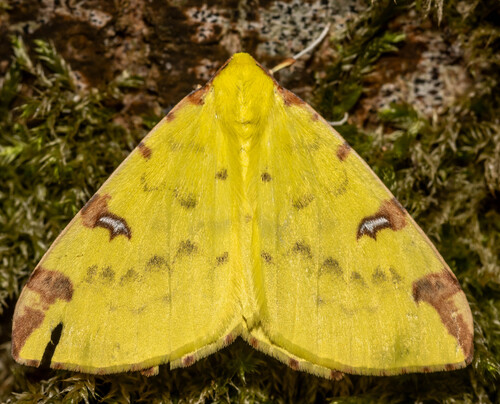
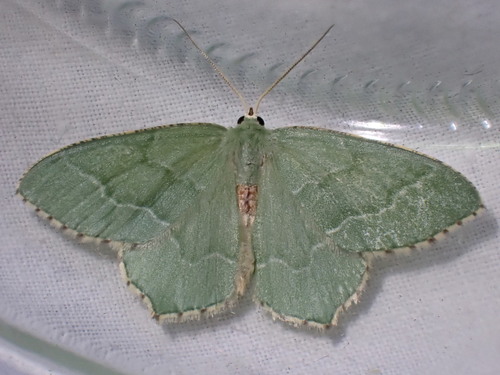
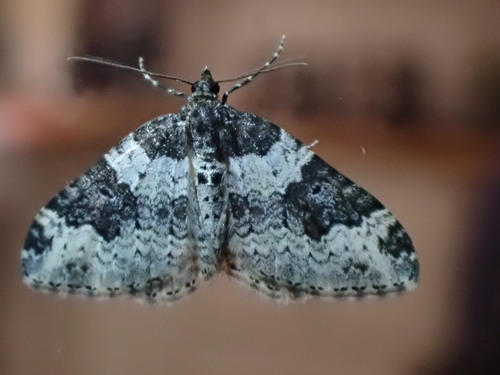
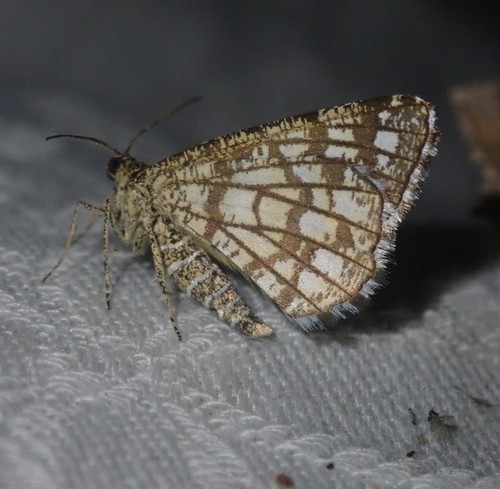
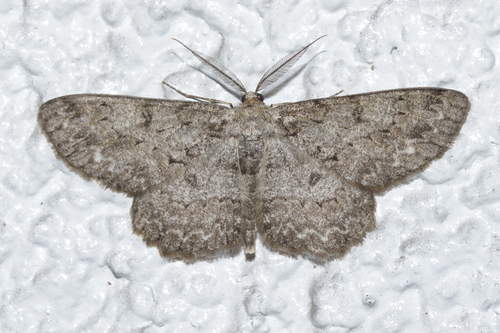
Pale Oak Beauty

Pale Oak Beauty

Hypomecis punctinalis

Daily sighting probability <5% · Rare
at Copenhagen

In 3 days ~10% in a week ~20%

6 Verified sightings at Copenhagen
155 In all 5 parks From 2019 to 2026
June Best month
☀️🌙 Day & Night When it's spotted

About the Pale Oak Beauty

Hypomecis punctinalis, the pale oak beauty, is a moth of the family Geometridae. The species was first described by Giovanni Antonio Scopoli in his 1763 Entomologia Carniolica. The species can be found in central and southern Europe, Asia Minor, Transcaucasia, Russia, the Russian Far East, Japan, Korea, Ussuri and western China.

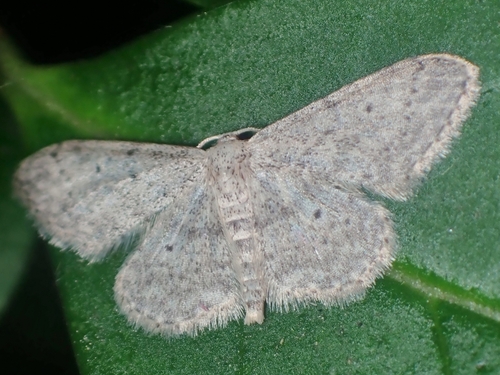
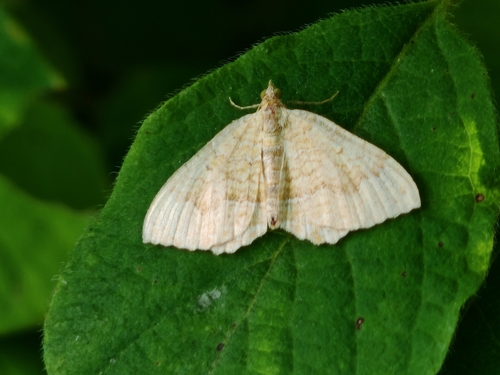
The wingspan is 46–55 mm. The length of the forewings is 22–26 mm. The forewings have a grey-white ground colour with a brownish tinge and are fine blackish dusted. The outer margin of the forewing has a convexity. The forewings have conspicuous transverse lines and a clear discal mark. The discal mark is pale centred and dark ringed. The forewings of the male have a fovea. The hindwings are similarly marked. The hindwing median and second lines are conspicuously dark and wavy.

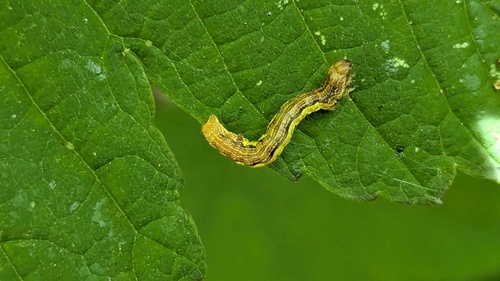
The moths fly in one generation from the end of April to July.[1] The larvae feed on various trees including oak and birch. Similar species: Hypomecis roboraria (H.roboraria has a pale spot on a dark background at the apex forewing underside which is not present in H. punctinalis

Hypomecis species Wikipedia →
Global Distribution

Parks Where Found

# Park Country Daily sighting probability
1 Cévennes National Park 🇫🇷 France
~10%
2 Bavarian Forest National Park 🇩🇪 Germany
~10%
3 Pyrénées National Park 🇫🇷 France
~10%
4 Fertő-Hanság National Park 🇭🇺 Hungary
~10%
5 Wadden Sea National Park 🇩🇪 Germany
~10%

Cities Where Found

# City Country Daily sighting probability
1 Porto 🇵🇹 Portugal
~20%
2 Kharkiv 🇺🇦 Ukraine
~10%
3 Kyiv 🇺🇦 Ukraine
~10%
4 Milan 🇮🇹 Italy
~10%
5 Lyon 🇫🇷 France
<5%
6 Helsinki 🇫🇮 Finland
<5%
7 Berlin 🇩🇪 Germany
<5%
8 Prague 🇨🇿 Czechia
<5%
9 Seoul 🇰🇷 South Korea
<5%
10 Vienna 🇦🇹 Austria
<5%

Before you go

What are the chances of seeing a Pale Oak Beauty in Copenhagen?

Rare

Under 5% of wildlife watchers report a Pale Oak Beauty sighting in Copenhagen on a given day, based on 6 verified sightings from GBIF citizen-science data. It is the 424th most-seen of the 476 insects we can rate there. Over three days the chance rises to about 10%, and over a week to about 20%, if each day is a fresh chance.

When is the best time to see a Pale Oak Beauty in Copenhagen?

Any time of year

In every month with enough records, under 5% of wildlife watchers report a Pale Oak Beauty in Copenhagen on a given day, so our monthly data shows no clear season.

What time of day is best to see a Pale Oak Beauty?

Between 10 pm and 1 am

Across all the parks we cover, that three-hour window holds the most Pale Oak Beauty sightings with a recorded time, and about 6 in 10 of them come between 6 pm and 6 am: it is seen both by day and at night.

Is Copenhagen the best place to see a Pale Oak Beauty?

14th of 17

Of the 17 cities where we can rate Pale Oak Beauty sightings, Copenhagen ranks 14th at under 5%. The best odds are in Porto (Portugal, about 20%), Kharkiv (Ukraine, about 10%) and Kyiv (Ukraine, about 10%).

Which relatives of the Pale Oak Beauty live in Copenhagen?

Same family: Geometridae

The closest relatives of the Pale Oak Beauty that you can see in Copenhagen (family Geometridae, Geometer Moths) are Small Dusty Wave (about 10%), Double-Striped Pug (about 10%) and Riband Wave (about 10%), with each one's daily chance of a sighting.

Where does the Pale Oak Beauty sighting chance come from?

GBIF citizen-science records

It is estimated from how often the Pale Oak Beauty is recorded against all the insects logged in Copenhagen (6 verified sightings), calibrated against known sighting rates. Figures are rounded to the nearest 10% because citizen-science data supports honest approximations, not decimals, and months with records from fewer than five people show "—". How it works.

← Back to Copenhagen