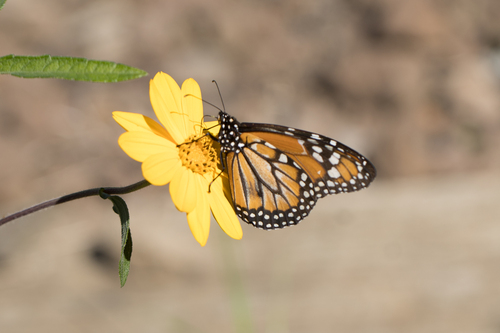
Southern Monarch
Daily sighting probability ~10% · With luck
at Cordoba

In 3 days ~20% in a week ~40%

6 Verified sightings at Cordoba
36 In all 2 parks From 2019 to 2026
March Best month
☀️ Diurnal When it's spotted

About the Southern Monarch

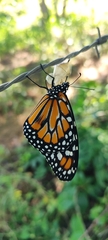
Danaus erippus, the southern monarch, is a milkweed butterfly (subfamily Danainae) in the family Nymphalidae. It is one of the best known butterflies in South America. Its genome is nearly identical to D. plexippus, but the two are incompatible, and therefore considered separate species.

Danaus erippus is included with other Nymphalidae, the largest family of butterflies with about 6000 species distributed throughout most of the world. It has a reduced pair of forelegs, is brightly coloured, and is included with popular species such as the emperors, admirals, tortoiseshells, and fritillaries. Its wingspan reaches about 110 millimetres (4.3 in), with an easily recognizable orange and black pattern. Until 2007, this butterfly was treated as a subspecies of Danaus plexippus. These species are very similar, but D. erippus usually has an orange trailing edge of the forewings, while in D. plexippus it is black. The lineages of the two species are thought to have separated about 2 million years ago. The colour of the wings in males of the southern monarch is paler than in the females.

Though, not as well known as the eastern North American monarch migratory... Wikipedia →
Global Distribution

Parks Where Found

# Park Country Daily sighting probability
1 El Palmar National Park 🇦🇷 Argentina
~30%
2 Iberá National Park 🇦🇷 Argentina
~30%

Cities Where Found

# City Country Daily sighting probability
1 Cochabamba 🇧🇴 Bolivia
~40%
2 Rosario 🇦🇷 Argentina
~40%
3 Buenos Aires 🇦🇷 Argentina
~30%
4 São Luís 🇧🇷 Brazil
~30%
5 Montevideo 🇺🇾 Uruguay
~20%
6 Fortaleza 🇧🇷 Brazil
~20%
7 Porto Alegre 🇧🇷 Brazil
~20%
8 Santa Cruz de la Sierra 🇧🇴 Bolivia
~20%
9 Curitiba 🇧🇷 Brazil
~20%
10 Belém 🇧🇷 Brazil
~10%

Before you go

What are the chances of seeing a Southern Monarch in Cordoba?

With luck

About 10% of wildlife watchers report a Southern Monarch sighting in Cordoba on a given day, based on 6 verified sightings from GBIF citizen-science data. It is the 80th most-seen of the 111 insects we can rate there. Over three days the chance rises to about 20%, and over a week to about 40%, if each day is a fresh chance.

When is the best time to see a Southern Monarch in Cordoba?

March to May

In those months about 10% of wildlife watchers report a Southern Monarch in Cordoba on a given day, against under 5% in June to February, the lowest months.

What time of day is best to see a Southern Monarch?

Between noon and 3 pm

Across all the parks we cover, that three-hour window holds the most Southern Monarch sightings with a recorded time, and about 9 in 10 of them come between 6 am and 6 pm: it is a daytime animal.

Is Cordoba the best place to see a Southern Monarch?

15th of 15

Of the 15 cities where we can rate Southern Monarch sightings, Cordoba ranks 15th at about 10%. The best odds are in Cochabamba (Bolivia, about 40%), Rosario (Argentina, about 40%) and Buenos Aires (Argentina, about 30%).

Which relatives of the Southern Monarch live in Cordoba?

Same family: Nymphalidae

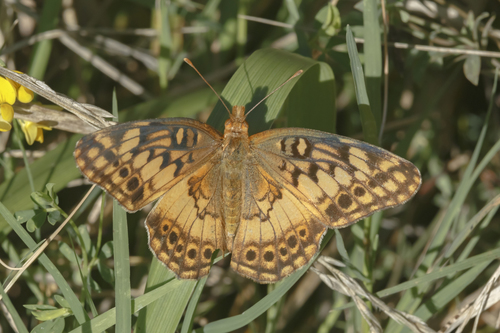
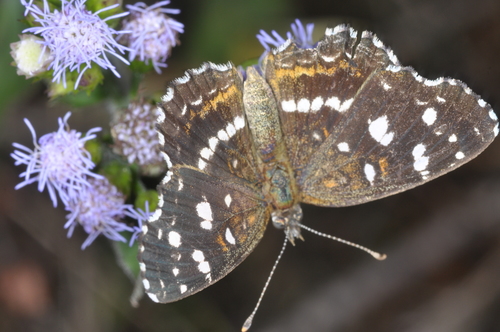
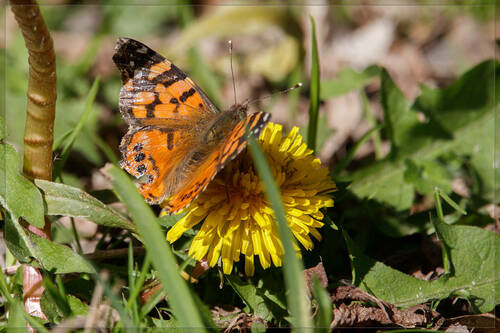
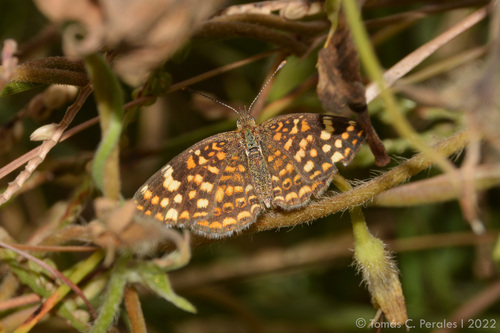
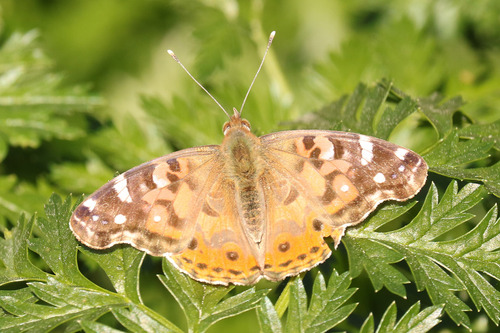
The closest relatives of the Southern Monarch that you can see in Cordoba (family Nymphalidae, Brush-footed Butterflies) are Gulf Fritillary (about 30%), Hortensia Fritillary (about 10%) and Ithra Crescent (about 10%), with each one's daily chance of a sighting.

Where does the Southern Monarch sighting chance come from?

GBIF citizen-science records

It is estimated from how often the Southern Monarch is recorded against all the insects logged in Cordoba (6 verified sightings), calibrated against known sighting rates. Figures are rounded to the nearest 10% because citizen-science data supports honest approximations, not decimals, and months with records from fewer than five people show "—". How it works.

← Back to Cordoba